
Reviewed · ASHANTI REGION TOURS
Kumasi City Tour
Kumasi can feel like three different cities in one day: palace traditions, military memory, and sacred landmark stories. This 4-hour city tour strings those threads together with a tight route and museum time, so you do not spend your morning guessing what matters.
I really like the clear focus on Ashanti Kingdom heritage through the Manhyia Palace Museum and Prempeh II Jubilee Museum. I also like the included admission tickets at every stop, which keeps the day simple and lets you spend more time looking, asking questions, and absorbing the details.
One thing to consider: this is a compact half-day plan with four 1-hour museum-style stops. If you want lots of free time wandering markets or lingering for shopping, you may feel slightly rushed.
Key highlights
- Manhyia Palace Museum: small in size, heavy on artifacts, war talismans, and treasures tied to the Asante Kingdom.
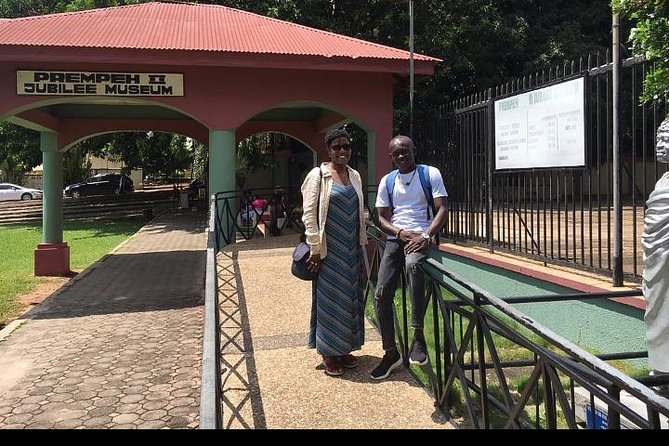
- Prempeh II Jubilee Museum: a compact, personalized look at royal items, protective talismans, brass gold measurement weights, and carved-symbol walls.
- Ghana Armed Forces Museum at Kumasi Fort: a practical way to understand Ghana’s change from colonial times through the Second World War.
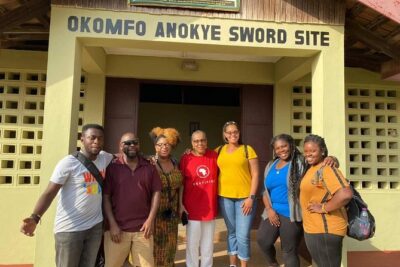
- Okomfo Anokye Sword Site: a simple stop with a focused story, centered on the immovable sword said to be driven into the ground by Okomfo Anokye.
- Small group up to 15: easier questions, better pacing, and less waiting at entrances.
Price and what $60 buys you in 4 hours
At $60 per person for about 4 hours, this tour prices itself as a structured cultural morning. The value comes from two things you can actually feel on the ground: you get pickup offered, and admission is included for the major stops.
That matters because museum fees and entrance lines add up fast in West Africa when you start to piece things together on your own. Here, you’re paying for a route that handles entry ahead of time and keeps the day moving.
You’re also booking for a small group, capped at 15 travelers. For a city like Kumasi, where you want your guide to be able to switch gears and answer questions, a smaller group often means you get more attention per person rather than watching the whole day flow past you.
More of the Ashanti region:
- Bonwire Namimg Ceremony and Kente Tourist Center
★ 5.0 · 40 reviews - Tour Kumasi City Like a Local
★ 4.5 · 34 reviews - Traditional naming ceremony For African Diasporas in Kumasi
★ 5.0 · 10 reviews
Your morning flow: pickup, the 8:00 am start, and an easy finish
The tour starts at 8:00 am, with the meeting point at Manhyia Palace (P93P+M2Q). Pickup is offered, which is a real advantage if you are not already settled near central Kumasi.
The route is designed as a straight run through the key sites, and the tour ends at Prempeh II Jubilee Museum (P929+HXX). That ending point helps because it leaves you close to another major cultural anchor, instead of dropping you back at a random roadside spot.
You’ll likely appreciate the mobile ticket. It reduces fuss when you arrive, especially when you are coordinating with a guide early in the day. Also note that the description says it’s near public transportation, so if you do have a connection issue, you should still have options.
One more practical note: confirmation is received at booking time, but there’s a requirement for minimum participant numbers for the tour to be confirmed. If you’re traveling at a busy time, it’s smart to book with some buffer.
Stop 1: Kumasi Fort and Ghana Armed Forces Museum
This is a strong opener because it sets context fast. You’ll spend about an hour at Kumasi Fort’s Ghana Armed Forces Museum, where the focus is on military equipment, artifacts, flags, decorations, armored vehicles, portraits, and photographs.
What I like about starting here is the way it gives you a framework for understanding Ghana’s modern story in layers. The museum includes material tied to the British Asante War of 1990, and it also covers the Second World War. Whether the exact dating is what you would expect from a textbook or not, the practical effect is the same: you walk in knowing this place is about how conflict and power shaped what came next.
Because you have a full hour, you can take your time with the objects, not just rush through. Look for the mix of uniforms, emblems, and vehicle-related pieces, since those often help a guide explain history in a way that feels concrete.
A possible drawback: if you were hoping for mostly palace and sacred landmark storytelling this morning, you may find this first stop more structured and factual than emotional. Still, it’s a useful trade, because it makes the rest of the day’s cultural items land with more meaning.
Stop 2: Manhyia Palace Museum and the Silver Jubilee connection
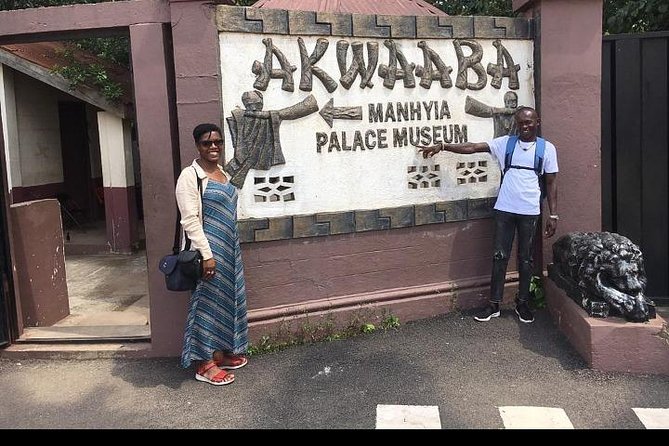
Next up is the Manhyia Palace Museum. Even though the museum is described as modest in size, it packs a lot into the space: historic artifacts, war talismans, and other treasures connected to the Asante Kingdom.
One detail I really appreciate is the museum’s origin story. It was inaugurated in 1995 as part of the Silver Jubilee celebration marking the ascension of the Golden Stool. That turns the visit from a simple museum walk into a moment with a time marker you can remember.
In real-world terms, you’ll get a guided sense of what’s being displayed and why. War talismans are especially interesting because they sit at the intersection of belief, protection, and identity. This is the kind of museum material that becomes easier to understand when someone explains what to look for.
If you prefer places where you can ask questions and get direct answers, this stop is usually a good fit. The museum format naturally leads to specifics, and the guide time helps you avoid leaving with only vague impressions.
More Accra city days:
- Kumasi City Tour
★ 4.5 · 7 reviews - Kumasi City Tour
★ 4.5 · 3 reviews - Kumasi: City Tour
★ 5.0 · 3 reviews - Accra Detailed City Tour
★ 4.5 · 118 reviews
Stop 3: Prempeh II Jubilee Museum for a close-up of royal Ashanti life
Prempeh II Jubilee Museum is another compact stop, but it’s designed for a guided introduction to Ashanti culture and history. What makes it worth your attention is the range of royal items presented, from war attire and ceremonial garments to jewelry and protective talismans.
You’ll also see personal accessories for bathing and dining, furniture, royal emblems, and finely crafted brass weights used for gold measurement. That last category is a sleeper hit for many visitors because it explains a practical side of power and trade, not only ceremony.
The setting matters too. The museum is arranged to resemble an Ashanti chief’s residence, with a front courtyard and walls adorned with traditional carved symbols. Even if you are not an architecture person, the layout helps you understand these objects as part of a living environment rather than items locked behind glass.
This stop works well if you want cultural meaning, not just dates. It’s the kind of place where the guide can help you connect what you see to the social world behind it.
Potential drawback: because the stop is about an hour, you’ll need to balance curiosity with pacing. If you want to linger on every brass weight detail and every symbol, you may feel slightly limited. Still, the structure keeps the whole day on schedule.
Stop 4: Okomfo Anokye Sword Site and the story of the immovable sword
The final stop is the Okomfo Anokye Sword Site. There’s a small museum attached to the site, and the focus stays clear: it marks the location where the immovable sword is said to have been driven into the ground by Okomfo Anokye.
This is a different style of stop than the palace museums. Instead of a wide collection of objects, you’re centered on one landmark and the story that gives it meaning. That makes it a good closing chapter for the day because it ties belief and heritage to a physical location.
In about an hour, you’ll have enough time to read, ask questions, and walk through at a relaxed pace without feeling like you’re sprinting to the finish.
Kejetia Market, street sounds, and what to do with the in-between moments
The broader tour concept includes a city-feel element, including the Kejetia Market area, plus the sounds of local music and the aromas of traditional Ghanaian street food. Since these moments are not always treated like formal sit-down stops, they work best if you stay alert and flexible.
Here’s how to make those in-between moments useful: keep your questions simple as you move. Ask what you’re seeing, what the market represents locally, or how the music and food fit into daily life. A good guide can turn passing scenes into something you actually remember.
Also, plan your expectations. This is not a food tour with guaranteed tastings listed in the program details. What you’re more likely to get is the atmosphere and the chance to notice what’s around you, then decide what you want to try on your own later.
Logistics that matter: group size, ticket style, and pacing
This tour runs with a maximum of 15 travelers, and that small-group limit shapes the experience. You can hear your guide better, you spend less time waiting around doors, and you’re less likely to feel swallowed by the group.
Duration is listed as about 4 hours, with four stops that each run about an hour. That means the schedule is museum-centered. If you like structured cultural time, that’s a plus. If you want long scenic stops or lots of independent wandering, you may want to complement this with additional time in Kumasi.
Confirmation happens at booking time, and the ticket format is mobile. You’ll also be in an area described as near public transportation, which helps if you need to plan your onward travel after the tour ends at Prempeh II Jubilee Museum.
One more practical point: because pickup is offered, you should be ready at the start time. Early in the day, waiting around is the easiest way to start your morning cranky.
Who should book this Kumasi City Tour?
This tour is best for you if you want a short, high-impact morning focused on Ashanti heritage and Ghana’s historical framing. It’s especially suitable for culture lovers and history-minded travelers who like museums and guided explanations more than open-ended walking.
It’s also a good fit if you are traveling in a small group or solo and want a reliable plan without having to negotiate entry tickets and routes. The included admissions and the small group size reduce friction.
You might consider another option if you want a long market day, extended shopping time, or lots of unstructured free time. This tour’s strength is the tight route, not the roaming.
Should you book? My take on SiBer Tours Ghana
I think this tour is a smart choice if you value organization, museum time, and clear cultural context. For $60, the included admission at each stop does a lot of the heavy lifting for value, and the small group size helps you get real answers rather than just hearing a rapid checklist.
Also, the experience is designed around heritage anchors: Manhyia Palace Museum, Prempeh II Jubilee Museum, and the Okomfo Anokye Sword Site. If you leave with a stronger mental map of Ashanti culture and how it connects to identity and power, you’ll feel like the morning was well spent.
Book it if:
- you want a guided route that removes uncertainty
- you enjoy museums and specific cultural artifacts
- you can handle a 4-hour schedule without needing extra downtime
Skip it or pair it with more time if:
- you want lots of open-ended hours at markets and shops
- you prefer fewer structured stops and more wandering
FAQ
How long is the Kumasi City Tour?
It runs for about 4 hours.
What does the price include?
Admission tickets are included for each of the listed stops.
Is pickup offered?
Yes, pickup is offered.
Where does the tour start and end?
It starts at Manhyia Palace and ends at Prempeh II Jubilee Museum.
What is the maximum group size?
The tour has a maximum of 15 travelers.
Is there free cancellation?
Yes. You can cancel for a full refund up to 24 hours before the experience starts.
Newly reviewed around Kumasi
- Discover kumasi Tours★ 5.0 · 3 reviews
- Kumasi City Tour★ 4.5 · 3 reviews
- Kumasi Culture and Heritage Tours★ 4.5 · 3 reviews
- Full Day Tour with Traditional Naming Ceremony in Kumasi★ 5.0 · 4 reviews
- Traditional Naming Ceremony For African Americans In Kumasi★ 5.0 · 5 reviews
- One day tour at Kumasi★ 5.0 · 6 reviews
- Lake Bosomtwe Boat Cruisely and Kumasi City Tours★ 4.5 · 6 reviews
- Kumasi City Tour★ 4.5 · 7 reviews
Ashanti Region Tours, compared.

Bonwire Namimg Ceremony and Kente Tourist Center
Read our review →
Kumasi Heritage Tours And Naming Ceremony In A Day
Read our review →
Traditional naming ceremony For African Diasporas in Kumasi
Read our review →
Full-Day Tour to Ashanti Region, Kumasi and Ghanaian History
Read our review →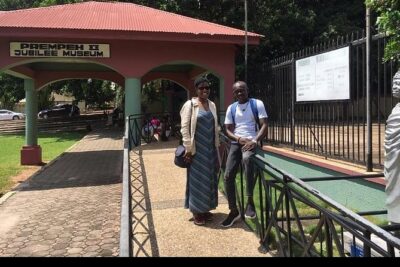

Lake Bosomtwe Boat Cruisely and Kumasi City Tours
Read our review →Browse the lists this tour appears in