
Reviewed · ASHANTI REGION TOURS
Bonwire Namimg Ceremony and Kente Tourist Center
What makes this experience truly interesting is the mix of hands-on craft and a live cultural ritual, in the same half day. You start in Bonwire, home linked to the invention of Kente cloth, and you end at Bonwire Palace for an Akan naming ceremony led by the chief and local leaders. It feels less like watching and more like participating.
I especially like two things. First, you get to try weaving yourself, not just pose for photos. Second, the naming ceremony is personal, with a traditional name and a certificate you can take home. One thing to consider, though, is that this is scheduled for several hours and depends on good weather, so plan for a day that stays flexible.
In practice, my favorite part is the way the day is handled with care. The guide Solomon and driver Kwame (in at least one recent booking) helped the group start smoothly and kept the experience respectful and organized from start to finish.
Key things you’ll notice on this Bonwire day
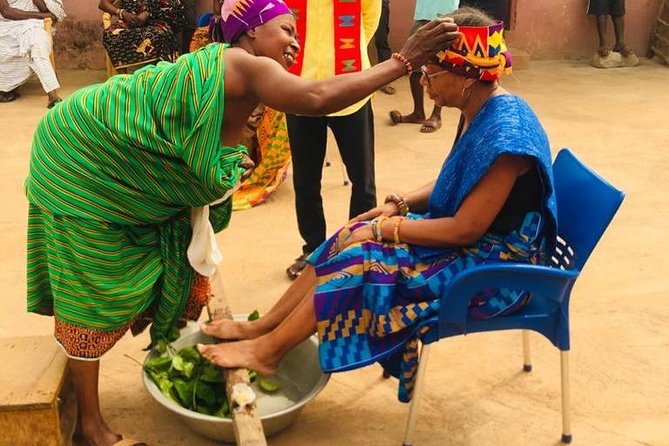
- Akan naming by local leadership, including the chief and leaders, plus a certificate with your name
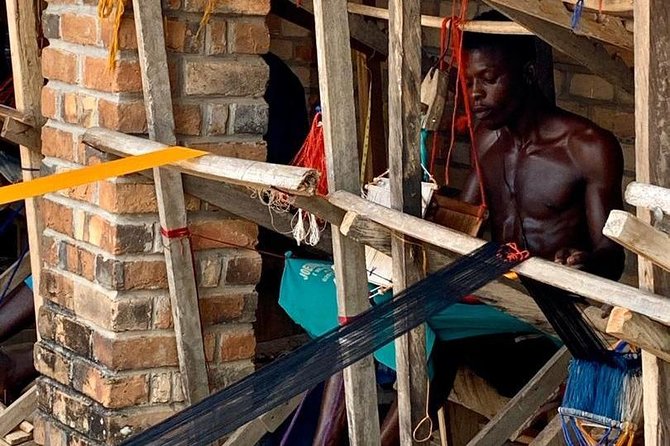
- Hands-on Kente weaving practice, with explanations of the cloth and its meaning
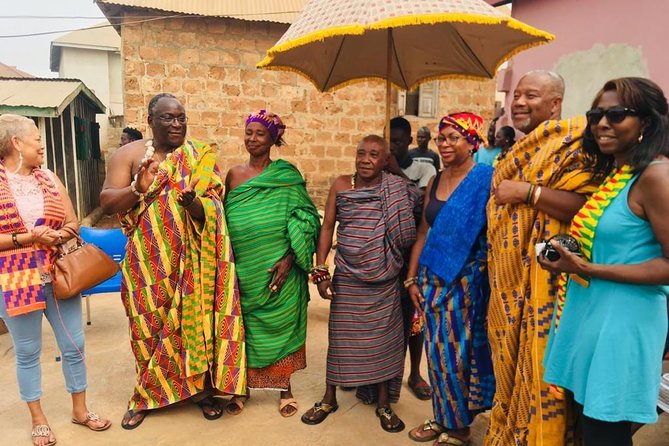
- Bonwire Palace ceremony setting, designed for the ritual rather than a staged performance
- Private group format, so your questions do not get lost in a crowd
- Real value bundle, with air-conditioned transport, bottled water, and a local lunch included
Why Bonwire’s Kente Weaving And Naming Ceremony Works So Well
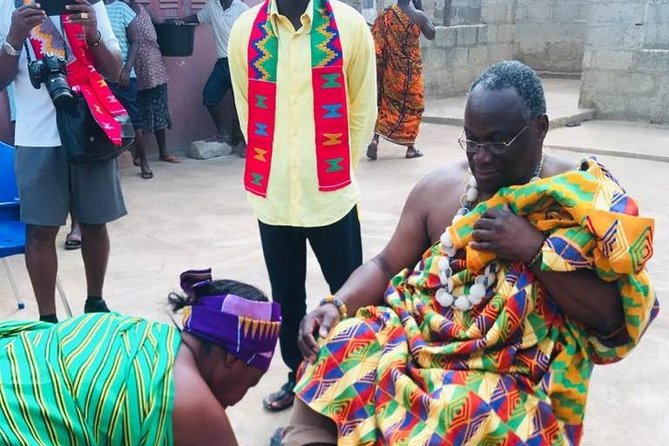
If you like culture that feels close up, this is the kind of tour that makes sense. You are not rushing through five photo stops. You are in one place, with a clear flow: learn a craft, then take part in a ceremony where your identity is acknowledged in a traditional way.
The Kente connection matters here. Bonwire is widely known as the home linked to the invention of Kente cloth, and the center focuses on more than just the fabric. You are taught how weaving works, and you also learn the meaning tied to the cloth. Even if you are not a craft person, you can still follow along, because the day is built around doing.
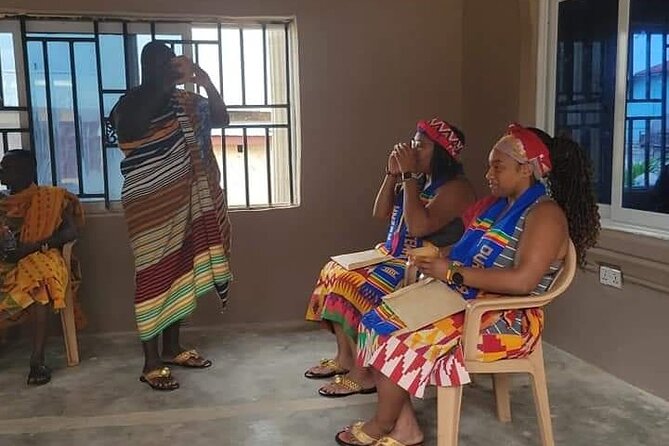
Then comes the naming. You do not just hear about it. You participate while the chief and leaders pray for you and designate you with an Akan traditional name connected to your soul and family. You leave with a certificate that attaches your new name to the experience in a real, keepable way.
More of the Ashanti region:
- Tour Kumasi City Like a Local
★ 4.5 · 34 reviews - Traditional naming ceremony For African Diasporas in Kumasi
★ 5.0 · 10 reviews - Kumasi City Tour
★ 5.0 · 8 reviews
The Kumasi Pickup And Timing That Keeps The Day Comfortable
This tour is designed as a half-day outing, roughly 5 hours 30 minutes. That matters, because you get the big moments without sacrificing your whole day to transit.
Pickup is offered, and you will use an air-conditioned vehicle for the drive. For Kumasi visitors, that is a practical plus, because you avoid the hassle of coordinating transport on your own while also arriving at the right time.
One detail worth planning around is that the tour requires good weather. If weather turns, the experience can be canceled and you are offered another date or a full refund. So if you hate schedule surprises, keep your later part of the day flexible.
At Bonwire’s Kente Weaving Centre: Hands-On Craft, Not Just Watching
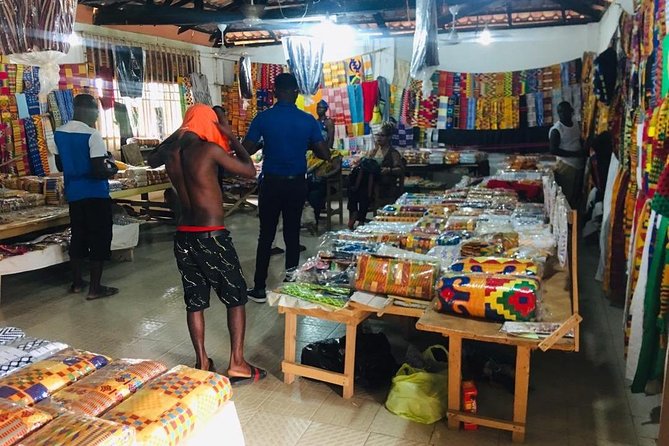
The day starts at the Bonwire Kente Weaving Centre. You are brought into the craft space and shown how Kente cloth is woven and why it matters. The focus is practical, and you get the chance to try your hand at weaving yourself.
Here is what I think you’ll appreciate most about this part. Weaving is one of those activities where the technique becomes the story. When you start threading and working with the materials, you understand the effort behind the final product. You also get a chance to learn the cloth’s meaning, which helps you see Kente as more than decoration.
A small timing note: the center portion includes time for the weaving practice and the learning component, and the ticket is included in the price. In a typical flow, you also transition from this craft time toward the ceremony setting afterward, so you are not spending forever between the two highlights.
What could feel like a drawback? If you are expecting lots of wide, free-roaming exploration, this is not that kind of tour. It is structured around the weaving lesson and then the naming ceremony. That structure is good for most people, but if you want wandering time, you may feel a bit tethered to the schedule.
Bonwire Palace And The Akan Naming Ceremony: What You’ll Do And What You’ll Receive
The naming ceremony is the cultural heart of the experience. It takes place at Bonwire Palace, where the chief and leaders pray for you and then designate you with a traditional Akan name that connects to your soul and family.
This is not a generic performance. It is described as a ceremony with leaders involved, and you receive a naming ceremony certificate attached to your new name. That certificate is included, and it becomes your tangible memory of the ritual. If you love meaningful souvenirs, this is one of the better options in Ghana, because it is tied to something personal happening in real time.
What to expect during the ceremony portion is a shift from craft to ritual. You move from working with hands to participating respectfully in a cultural process guided by local leadership. You should go in ready to slow down. Ask questions when invited, follow directions when you are guided, and let the moment be the moment.
Also, this tour is designed to avoid the kind of crowd and city bustle that can swallow personal interactions. In a private group, you can usually take things in at the speed of your own comfort.
A few more Kumasi days to weigh up
- Kumasi City Tour
★ 4.5 · 7 reviews - One day tour at Kumasi
★ 5.0 · 6 reviews - Lake Bosomtwe Boat Cruisely and Kumasi City Tours
★ 4.5 · 6 reviews - Traditional Naming Ceremony For African Americans In Kumasi
★ 5.0 · 5 reviews
The Inclusions That Actually Affect Your Day: Transport, Water, Lunch, Certificate
The price includes a bundle of things that keep your day from turning into constant add-ons. You get:
- An air-conditioned vehicle
- All fees and taxes
- Bottled water
- A local meal for lunch
- The naming ceremony certificate
- Admission ticket for the weaving centre portion
That last point can be easy to miss when you compare tours, but it matters. For cultural experiences, fees often stack up. Here, the major ceremony and entry pieces are packaged in, so you can focus on the experience, not the paperwork.
Food is also covered for lunch, which is a big deal on a half day. You can show up, participate fully, and then eat without having to find a place quickly. Dinner is not included, so you’ll want to plan that for later.
Price And Value: Is $180 Per Person Fair For This Kind Of Experience?
At $180 per person, this is not a bargain-basement tour. But it can still be good value, mainly because you are paying for multiple components that often cost separately: transport, entry to the craft center, and a ceremony where the chief and leaders designate a traditional name, plus the certificate.
The private-group setup is also part of what you are buying. When your group is the only group participating, you get fewer interruptions and more room for questions. That tends to improve the quality of the experience, especially for a naming ceremony where the tone should stay respectful and personal.
Booking timing is also relevant. The experience is listed as commonly booked around 12 days in advance on average. That usually means you’re not buying a last-minute slot in a chaotic scramble, which can translate into smoother logistics on the day.
If you only want one highlight, a cheaper tour might fit. But if you want both hands-on weaving and a real Akan naming moment, this price can make sense.
Who This Tour Is Best For In Real Life
This is a great fit if you like culture that you can touch, ask about, and understand in context. I’d especially recommend it if you:
- Want an experience that feels personal, guided by local leadership
- Prefer craft activities over pure sightseeing
- Like leaving with a meaningful item, like the certificate with your Akan name
- Are tired of big-city crowds and want a calmer, focused half-day
It is also described as suitable for most travelers. Service animals are allowed, and it is near public transportation, which can help if you are building other plans around it.
If you are the type who needs long free time, this might not satisfy you. It is structured, and the day follows a clear path from weaving to naming.
Practical Tips To Get The Most Out Of Your Bonwire Day
Pack for a craft and ceremony day, not a lounge day. Even without special guidance provided, you’ll be happier if you wear comfortable clothing that lets you move and focus while you try weaving.
A few practical pointers that always help on cultural tours:
- Bring a camera if you like photos, but be ready to pause and listen during the ceremony
- Wear something you feel respectful in, since you will be part of a ritual setting at Bonwire Palace
- Plan to stay hydrated. Bottled water is included, but it’s still smart to take small sips as you go
- Keep your questions simple and sincere. If you want your guide to explain the cloth’s meaning or the naming process, ask in a straightforward way
One more detail: because this is weather-dependent, keep your day plan sensible. If your schedule is tight with multiple must-do stops later, leave some buffer.
Should You Book This Bonwire Naming And Kente Tour?
If you want a half-day in Kumasi that delivers more than photos, I’d say book it. The combination of Kente weaving practice plus an Akan naming ceremony with a certificate is a strong match for travelers who care about authenticity and respectful participation.
You should consider skipping or choosing another option if you need long open time, or if you cannot be flexible due to weather risk. Also, if you mainly want sightseeing, not craft and ceremony, the structured format may feel limited.
For the right traveler, though, this is the kind of experience that stays with you because you leave with something personal: a traditional name tied to the moment, and the memory of making part of the cloth yourself.
FAQ
How long is the Bonwire Namimg Ceremony and Kente Tourist Center tour?
It runs for approximately 5 hours 30 minutes.
What is the price per person?
The price is $180.00 per person.
Does the tour include pickup and transport?
Pickup is offered, and the tour includes an air-conditioned vehicle.
What is included in the price?
Included are all fees and taxes, the naming ceremony certificate, bottled water, lunch (local meal), and the admission ticket for the weaving centre. The tour also includes the naming ceremony and certificate as part of the experience.
Do I receive anything after the Akan naming ceremony?
Yes. You receive a certificate with your traditional Akan name attached.
What if the weather is poor?
The experience requires good weather. If it is canceled due to poor weather, you will be offered a different date or a full refund. Free cancellation is available up to 24 hours before the experience’s start time for a full refund.
Newly reviewed around Kumasi
- Discover kumasi Tours★ 5.0 · 3 reviews
- Kumasi City Tour★ 4.5 · 3 reviews
- Kumasi Culture and Heritage Tours★ 4.5 · 3 reviews
- Full Day Tour with Traditional Naming Ceremony in Kumasi★ 5.0 · 4 reviews
- Traditional Naming Ceremony For African Americans In Kumasi★ 5.0 · 5 reviews
- One day tour at Kumasi★ 5.0 · 6 reviews
- Lake Bosomtwe Boat Cruisely and Kumasi City Tours★ 4.5 · 6 reviews
- Kumasi City Tour★ 4.5 · 7 reviews
Ashanti Region Tours, compared.

Kumasi Heritage Tours And Naming Ceremony In A Day
Read our review →
Traditional naming ceremony For African Diasporas in Kumasi
Read our review →
Full-Day Tour to Ashanti Region, Kumasi and Ghanaian History
Read our review →
Lake Bosomtwe Boat Cruisely and Kumasi City Tours
Read our review →Browse the lists this tour appears in