
Reviewed · ASHANTI REGION TOURS
Tour Kumasi City Like a Local
Kumasi is one of Ghana’s most rewarding cities if you like your culture tied to real places, not just stories on a page. This tour gives you a clear, walkable route through Ashanti landmarks and museum rooms, then finishes with the energy of Kejetia Market.
What I like most is the way the tour turns history into something physical. You move from the royal artifacts at Manhyia Palace Museum to the Okomfo Anokye sword site, where the legend is anchored to a specific spot.
One thing to think about is pace and sound. The day can involve a mix of local transport and some walking between sites, and one stop at the market area can get loud, which may make talking a bit harder.
Key highlights to know before you go
- A tight Ashanti storyline across three museums and one legend site so you do not feel like you are hopping randomly
- Manhyia Palace Museum video plus artifact rooms to set context before you start looking closely
- The Golden Stool legend at Okomfo Anokye Sword Site explained on the exact location tied to the Ashanti founding story
- Kejetia Market on foot gives you the real feel of everyday commerce in central Kumasi
- Local lunch is included so you do not waste time hunting for food
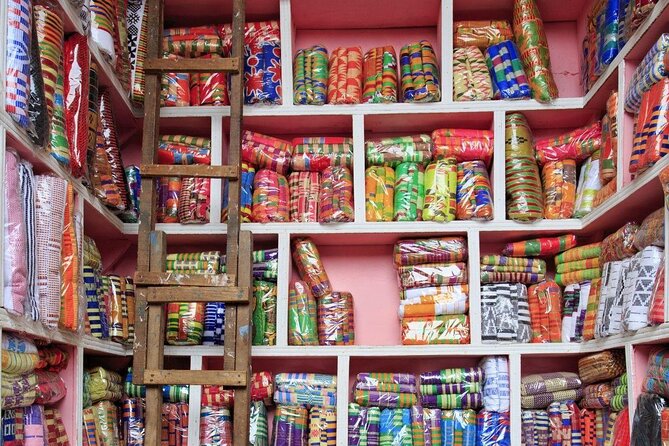
- Bilson tends to tailor the experience and has helped some groups extend to Kente villages outside Kumasi
Kumasi, the Garden City, explained through royal sites
Kumasi is often nicknamed the Garden City, and that makes sense once you start seeing how much of everyday life feels rooted in place. Even if you are not stopping at flower gardens on this route, the city’s reputation for plant life adds a nice layer to your mindset: you are visiting a cultural center, not just a set of photo backdrops.
This tour is built around Ashanti identity, especially the royal and spiritual angle. That matters because Kumasi is not only museums and monuments. It is also the living framework behind names, symbols, and social structure that you will hear again and again as you walk and talk.
I also like that the tour is private. You get your own group, plus pickup is offered, which helps you keep the day smooth. The duration is about 5 to 6 hours, so you can fit it without turning your whole day into a long transit marathon.
More of the Ashanti region:
- Bonwire Namimg Ceremony and Kente Tourist Center
★ 5.0 · 40 reviews - Traditional naming ceremony For African Diasporas in Kumasi
★ 5.0 · 10 reviews - Kumasi City Tour
★ 5.0 · 8 reviews
Manhyia Palace Museum, where a stool, a queen, and the empire connect
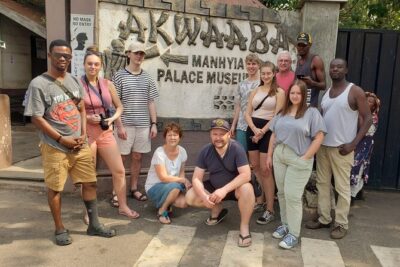
Your first big history stop is Manhyia Palace Museum. The visit starts with a video that sets the Ashanti story, so you have a mental map before you get into the rooms. Then you are guided through multiple spaces where you see original artifacts and learn why they mattered.
This is the kind of museum that works best when your guide talks and points. You are not just looking at objects behind glass. You are hearing how the Ashanti empire functioned, who held authority, and how key figures fit into the bigger picture. One example is the mention of Yaa Asantewaa, the war queen, who often comes up when people explain Ashanti resistance and power.
The tour also references the current king sitting on the stool as part of how authority is described in the palace setting. Even if you already know the basics, seeing how these symbols are explained in context helps your brain connect the dots.
A useful consideration: the museum is not right next to the field where the Akwasidee tribal chiefs gathering happens every six weeks. If you time your trip for that, you might want to plan separately, because this specific tour does not include that gathering itself. Still, the palace museum sets you up well so you understand what you would be seeing if your travel dates align.
Okomfo Anokye Sword Site, the Golden Stool story on the exact spot
Next comes the Okomfo Anokye Sword Site, and this stop is all about origin and belief. You learn the story behind the beginning of the Ashanti nation, including the moment tied to the Golden Stool.
The key line you will hear is that the Golden Stool is believed to have descended onto the laps of King Osei Tutu I, the founder of the Ashanti nation. After that, the site connects to the chief priest Okomfo Anokye, who is said to have driven the sword into the ground.
This part matters because the tour does not treat legend like a vague myth. It presents it as something located at a specific place, with a timeline that is described as roughly 300 years ago. You are also told the belief that no one could remove the sword, and that it has remained through attempts.
If you like cultural sites where the meaning is the main attraction, this stop is a strong one. If you prefer purely hands-on attractions or modern exhibits, you might find this more like a guided explanation at a place of significance. Either way, it gives you a real sense of why Kumasi is central to Ashanti identity.
Prempeh II Museum, royal clothing, daily life, and personal objects
Prempeh II Museum gives you a different angle from the palace visit. Here you see artifacts that focus more tightly on the life and authority of Prempeh II, including items that feel personal rather than only ceremonial.
Expect to spend time with displays that include the king’s war attire and ceremonial clothing, plus jewelry and protective amulets. These are the kinds of objects that help you understand how status and spirituality were intertwined. There are also details about personal equipment for bathing and dining, which can be a surprisingly effective way to humanize a ruler who might otherwise feel distant.
The museum also highlights furniture, royal insignia, and some weighing gold. That last element helps explain how wealth and political power could be measured and managed within the royal context.
One more thing to notice: the museum arrangement is described as constructed to assemble an Ashanti chiefs house. That makes your experience feel like you are stepping into a cultural setting, not only touring a storage space for artifacts.
A few more Kumasi days to weigh up
- Kumasi City Tour
★ 4.5 · 7 reviews - One day tour at Kumasi
★ 5.0 · 6 reviews - Lake Bosomtwe Boat Cruisely and Kumasi City Tours
★ 4.5 · 6 reviews - Traditional Naming Ceremony For African Americans In Kumasi
★ 5.0 · 5 reviews
Kejetia Market walk, local lunch, and how not to get overwhelmed

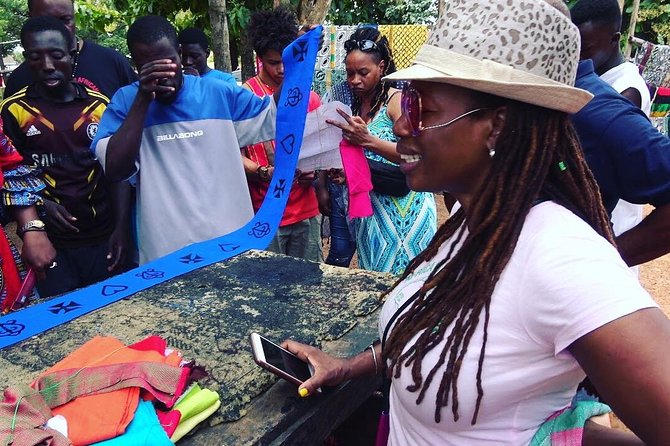
Then the tour shifts from museums and sacred stories to everyday life. Kejetia Market is a major centerpiece of central Kumasi, and it can hit you with a lot at once.
From a distance, it is described as looking like an alien mothership landing in the center of Kumasi. Up close, you notice the rusting tin roofs and the scale. The tour frames it as the largest market in West Africa, with an enormous number of stalls and many people working inside.
As you walk, it can feel disorienting at first, almost like a circular shanty town. But that is also where the value is. This is not a curated market built for tourists. It is an operating system, with a constant flow of people and activity that you only understand once you move through it.
Local food is included here, so you are not stuck deciding where to eat. I like that lunch is part of the plan because market meals can be easier when you have a guide who can point you to something appropriate and help you manage what is going on around you.
Sound and conversation can be a factor. In at least one experience shared by a previous group, the market lunch area got loud, which made it harder to chat. If that matters to you, I would ask your guide early to keep music volume lower when possible.
Transportation and pacing in a 5 to 6 hour city circuit

This is a 5 to 6 hour private tour, and it moves through four major stops. That means some of your time is transit, plus time for guided viewing at each place.
Pickup is offered, and the tour is described as near public transportation. In practice, that can translate to a day where you might use a mix of local transport. One strong theme from previous experiences is that the guide may not have a dedicated personal vehicle, so you may ride in options like tro tro, tuktuk, cabs, and also do some walking.
That can be fun because it is real local movement, but it also means you should keep a flexible mindset. If you are sensitive to stairs, uneven sidewalks, or long standing periods, wear comfortable shoes and plan for a bit of back-and-forth motion.
Pacing is another consideration. One group felt the overall structure felt like a trekking city tour, mostly because travel between stops can eat into time. If you want slower pacing, tell your guide at the start. A private format helps, since the itinerary can often be adjusted to your energy level.
Price, value, and what makes this a smart use of your time
At $80 per person, this tour sits in the mid-range for Ghana city experiences. What makes it feel reasonable is the bundle of basics you get without hunting for them separately.
Included are transportation, entrance fees, lunch, and a tour guide. For a half day in a city like Kumasi, that is a lot of friction removed. Museums can add up quickly once you pay entry and figure out how to get between sites. Having it handled means your day stays focused on the cultural points that actually matter.
You also get a mobile ticket, which can reduce the usual hassle of finding paper tickets or tracking confirmations on the spot. It is a small detail, but it helps when you are moving through busy areas.
The tour is priced for groups, but it is still private, meaning you are not sharing the day with strangers. That is a big value lever if you want your guide to answer questions specific to your interests, like Ashanti royal customs, market life, or how symbols connect to power.
One more reality check: this experience requires good weather. If conditions are poor, it can be canceled and you would be offered a different date or a full refund. If you are booking close to your travel window, keep a bit of flexibility.
Who this private Kumasi tour suits best
This is a great match if you want a guided route that connects symbols, artifacts, and daily life in the same day. It especially suits people who like history when it is explained in plain terms, tied to objects and specific locations.
It also works well for first-timers. If you are new to Ghana, you get an introduction to Kumasi’s role as the second largest city and a core cultural center. The structure makes it easier to understand how Ashanti history shows up in museums, sacred sites, and market culture.
If you travel with a parent or you want thoughtful pacing and photo support, there are positive signals about guides like Bilson who help people feel comfortable and also help with photography. One experience also noted that Bilson tailored the tour and even helped explore Kente villages further outside Kumasi, which is useful if you want extra cultural depth beyond the core stops.
If you only want modern shopping or nightlife, this is not built for that. The center here is heritage sites and market life, so your day should feel meaningful even if you are not chasing entertainment.
What to ask for on your day with Bilson Tours Gh
I would start with a simple question: what do you want me to notice today? That often changes the way a guide explains the artifacts and sites, especially in museums where a good guide can connect details into a story.
If you are interested in tailoring, ask directly about extensions like a Kente village visit outside Kumasi. Some past groups reported Bilson could help with that kind of add-on, so it is worth mentioning your preferences.
Also ask about sound level around lunch or market areas. If conversation is a priority for you, you can set expectations early.
Finally, since the tour includes lunch and market movement, I would plan to arrive hungry and ready to walk. Your time is limited, so going in with a clear energy level makes the day go better.
Should you book Tour Kumasi City Like a Local?
Book it if you want a focused half day that blends Ashanti royal sites, legend at a specific sacred location, and a real market walk, with lunch handled for you. The $80 price feels fair because entrance fees and transportation are included, and because a private guide can shape the experience to your interests.
Skip it or pick a different format if you hate guided explanations and prefer modern attractions, or if you need a very quiet day with minimal walking. The tour can involve a mix of local transport and busy-market sensory input, so it is best when you are ready for that kind of city feel.
If Kumasi is on your route, this one is a practical way to get your bearings fast, especially if you care about understanding the Ashanti story where it actually lives in museums and in places tied to founding legends.
FAQ
How long is the Kumasi city tour?
The tour lasts about 5 to 6 hours.
How much does the tour cost?
It costs $80.00 per person.
What is included in the price?
Transportation, entrance fee, lunch (local food), and a tour guide are included.
Is pickup included?
Yes, pickup is offered.
Do I get a ticket on my phone?
Yes, the tour includes a mobile ticket.
Is this tour private?
Yes, it is a private tour, meaning only your group participates.
How far in advance should I book?
On average, it is booked about 20 days in advance.
What happens if the weather is poor?
The experience requires good weather. If it is canceled due to poor weather, you will be offered a different date or a full refund.
What is the cancellation refund policy?
You can cancel up to 24 hours in advance for a full refund. If you cancel less than 24 hours before the experience, the amount paid will not be refunded.
Are entrance fees covered?
Yes, entrance fees are included.
Newly reviewed around Kumasi
- Discover kumasi Tours★ 5.0 · 3 reviews
- Kumasi City Tour★ 4.5 · 3 reviews
- Kumasi Culture and Heritage Tours★ 4.5 · 3 reviews
- Full Day Tour with Traditional Naming Ceremony in Kumasi★ 5.0 · 4 reviews
- Traditional Naming Ceremony For African Americans In Kumasi★ 5.0 · 5 reviews
- One day tour at Kumasi★ 5.0 · 6 reviews
- Lake Bosomtwe Boat Cruisely and Kumasi City Tours★ 4.5 · 6 reviews
- Kumasi City Tour★ 4.5 · 7 reviews
Ashanti Region Tours, compared.

Bonwire Namimg Ceremony and Kente Tourist Center
Read our review →
Kumasi Heritage Tours And Naming Ceremony In A Day
Read our review →
Traditional naming ceremony For African Diasporas in Kumasi
Read our review →
Full-Day Tour to Ashanti Region, Kumasi and Ghanaian History
Read our review →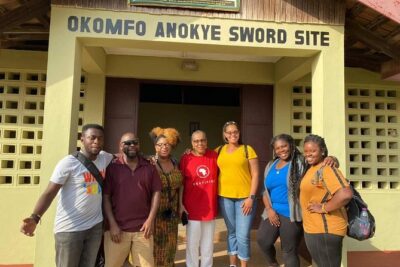

Lake Bosomtwe Boat Cruisely and Kumasi City Tours
Read our review →Browse the lists this tour appears in