
Reviewed · ASHANTI REGION TOURS
Full-Day Tour to Ashanti Region, Kumasi and Ghanaian History
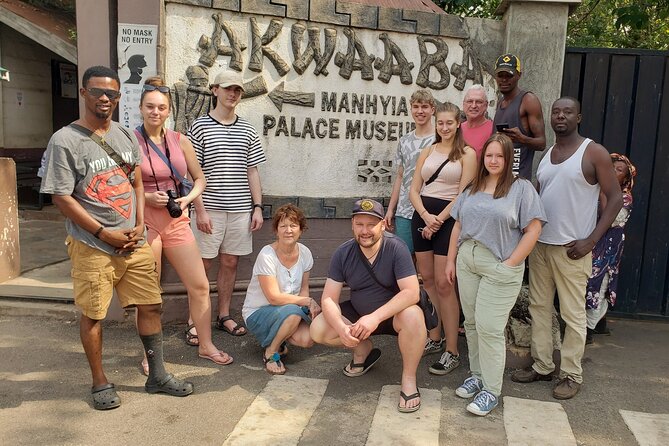
If you like history that you can actually see and touch, this full-day Kumasi trip is a strong pick. You’ll start in Manhyia Palace Museum, then move to the Okomfo Anokye Sword Site and the big Kejetia Market, and the day keeps turning through hands-on craft stops like kente weaving and adinkra banner making. My favorite part is that it connects the Ashanti story to everyday Ghanaian life, not just dates and names. One thing to consider is the schedule, it is a long day, and the travel time from Accra matters.
The second thing I like is the value mix: some museum and landmark entry is included, the guide handles the flow, and you get a full day’s worth of cultural stops. Also, the craft villages give you a chance to learn the process from start to finish, so you’re not just buying souvenirs. The main drawback is that you’ll move a lot, so plan for walking in markets and craft areas, and bring water and a light layer for the day.
Key takeaways before you go
- Manhyia Palace Museum gives context on Ashanti culture and Ghanaian ancestry before British colonization, with video presentations and artifacts
- Okomfo Anokye Sword Site is a major landmark tied to the beginning of the Ashanti Kingdom, protected for future generations
- Kejetia Market is huge and sectioned, so your guide’s help makes finding what you want much easier
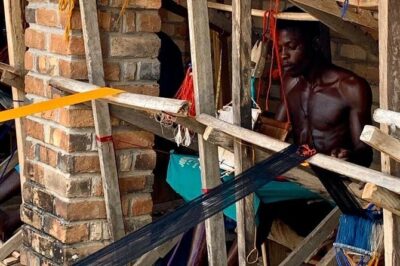
- Bonwire (or Adanwomase) kente weaving helps you see the full workflow, not just finished cloth
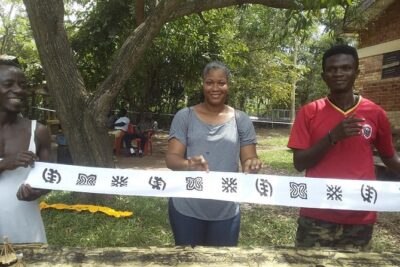
- Ntonso Adinkra Village is the place in Ghana where traditional adinkra is made locally from scratch, and you can make your own banners
- Lake Bosomtwe is a calm natural break, with optional boat cruise and optional horse rides for extra fees
A long Kumasi day that starts early, and why that matters
This is a 12 to 16 hour day, with pickup at Kotoka Airport in Accra and return back to the same meeting point. In real life, that kind of timeline only works well if you plan for the drive. Kumasi is about a six-hour drive from Accra, so starting early is not just nice, it’s how you protect time on the ground.
The tour is private, meaning it is just your group. That matters because it gives your guide flexibility to slow down when someone needs a rest, or speed up when you’re all moving smoothly. It also helps with shopping, your guide can stay with you inside the right market sections instead of sending you off on your own.
Price is $280 per person, and this is one of those trips where the value comes from the combination, not from one single stop. You get included admission at key sites (like the sword site and Kejetia), time at major cultural places, plus craft experiences that typically take longer than people expect.
More of the Ashanti region:
- Kumasi Heritage Tours And Naming Ceremony In A Day
★ 5.0 · 11 reviews - 4 Days Trip in Accra, Cape Coast,Kumasi culture & heritage tours
★ 5.0 · 5 reviews - Accra: Tafi Kente Village, Monkey Sanctuary &Wli Waterfalls
★ 4.5 · 4 reviews
Manhyia Palace Museum: Ashanti life explained with artifacts and videos
Your day begins at Manhyia Palace Museum in Kumasi. This museum focuses on Ashanti culture and Ghana’s cultural legacy from before British colonization. The approach is practical, you’re not only looking at objects, you’re getting explanation through video presentations and key historic items tied to Ashanti land and ancestry.
What makes this stop worth your time is that it sets a lens for the rest of the day. After you see how the Ashanti people organized their world and how their cultural symbols carried meaning, the sword landmark and the craft villages feel less random. Everything turns into part of one bigger story.
The main downside is pacing. One hour is enough time to get oriented, but not enough to read every label slowly. If you’re the type who likes to linger, take quick notes as you go, then come back to a single area for deeper looking if time allows.
The Okomfo Anokye Sword Site: a landmark tied to the kingdom’s start
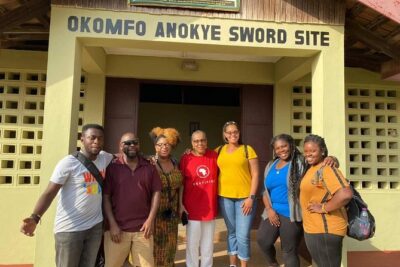
Next is the Okomfo Anokye Sword Site, on the grounds of the Komfo Anokye Teaching Hospital. This is the place known for the legendary sword wedged in the rockface, described as over 300 years old. It’s protected and treated as a landmark meant for future generations.
Why this stop works is simple: the “story” becomes physical. You’re standing at a site people link to the beginning of the Ashanti Kingdom, so you understand the context behind later sites like the palace and the craft traditions. If you’ve ever felt museum history is too abstract, this helps fix that.
It is also easy to appreciate because you’re not dealing with crowds the same way you do at markets. Still, expect a little walking and standing in one place while you take photos and listen.
Kejetia Market in Kumasi: big sections, and a guide saves time
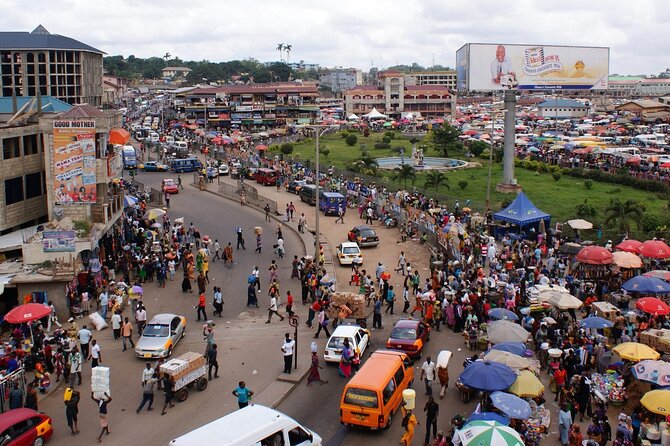
Then you hit Kejetia Market, described as the largest single market in West Africa. The market is newly refurbished and packed with people working across different categories: food, fabrics and footwear, gold and jewelry, pottery, household items, handcrafts, oils, soaps, and spices.
Kejetia can feel overwhelming if you walk in with no plan. A smart move is to tell your guide what you’re hunting for, because the market is divided into sections. If you start in food and then decide you want beads, you will need help getting to the right section.
This is also where bartering becomes part of the experience. From what I’ve seen on these kinds of trips, the difference between a stressful market scramble and a good shopping moment is often the guide. Having someone who can negotiate calmly while you keep your footing makes the whole thing more enjoyable.
Tip: bring small bills and be clear about what you want before you start bargaining. If you’re buying textiles, look at the weave and finish closely, then compare prices quickly instead of jumping at the first stall.
A few more Accra days to weigh up
- Experience the Beauty, History and the Culture Of Accra in a Day
★ 5.0 · 323 reviews - Ghana Heritage Tours – Beyond The Return
★ 5.0 · 36 reviews - 10 Days Ghana Cultural and Heritage Trip
★ 5.0 · 31 reviews - Cape Coast Historical Day Tour
★ 5.0 · 24 reviews
Craft stops at the Center for National Culture: watch work, then shop with a plan
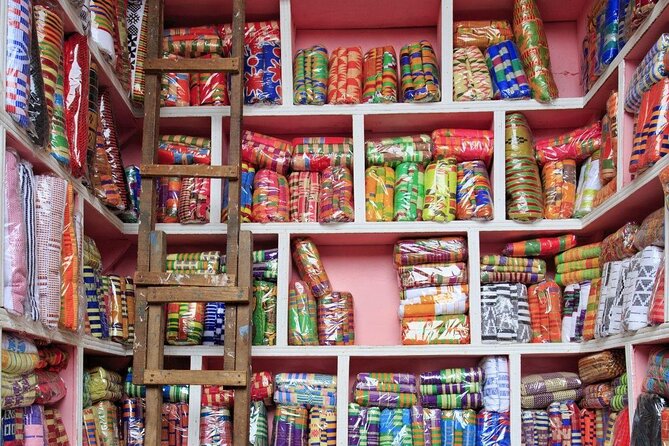
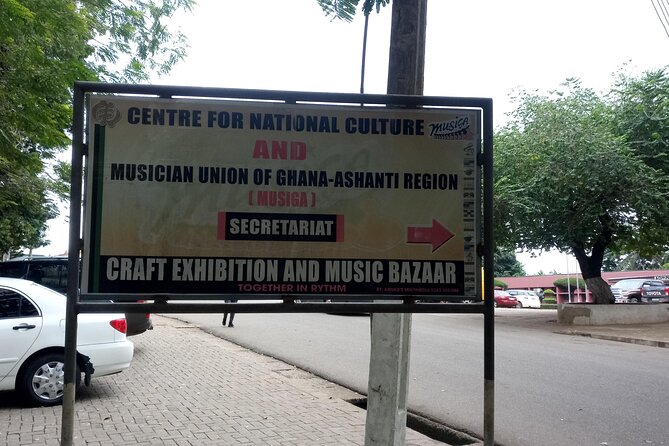
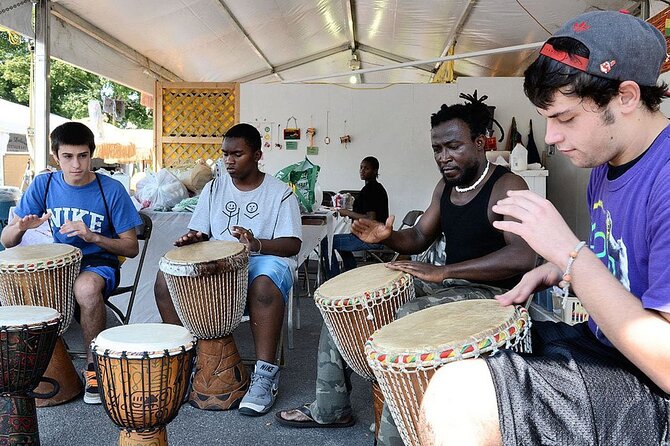
At the Center for National Culture, you’ll spend about an hour around a craft-focused area. The craft centre is where you can observe artisans working with traditional methods, including making things like kente cloth and brass items, plus pottery. If you want to try something active, you might also get a chance to learn how to play local drums.
The stop is free for visitors, and that alone makes it a good value slot in a day where time is tight. More importantly, you’re not only shopping here. You’re watching. That helps you understand why some products cost what they cost, and you can ask more specific questions.
Shopping at this type of craft centre is usually easier than at a market because the environment is more organized. Your guide can also help with negotiation so you have less guesswork and you’re not losing time.
One consideration: if you dislike shopping pressure, tell your guide early. You’ll still get the cultural part, you just want to set boundaries on buying.
Kente weaving in Bonwire or Adanwomase: learning from the start

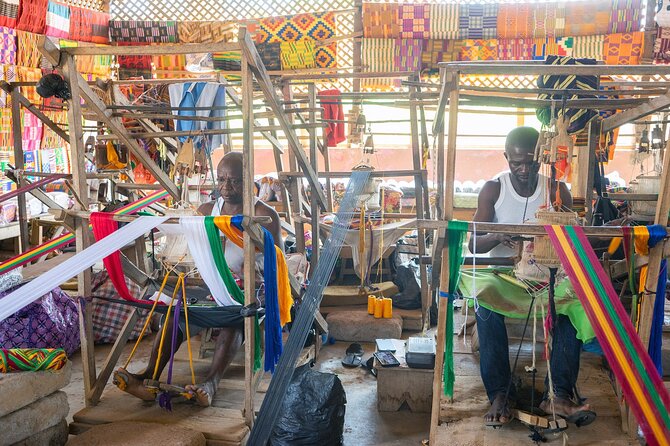
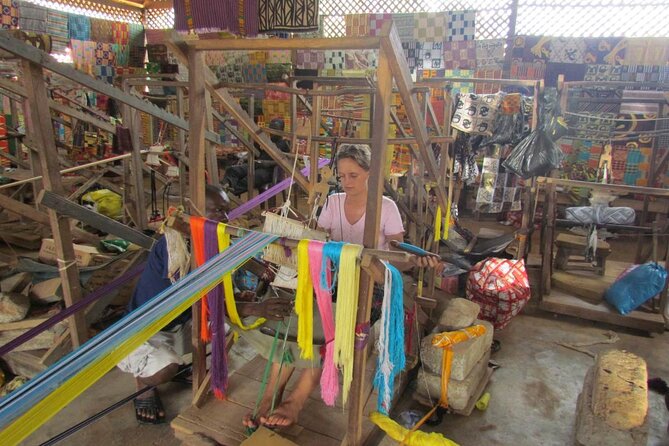
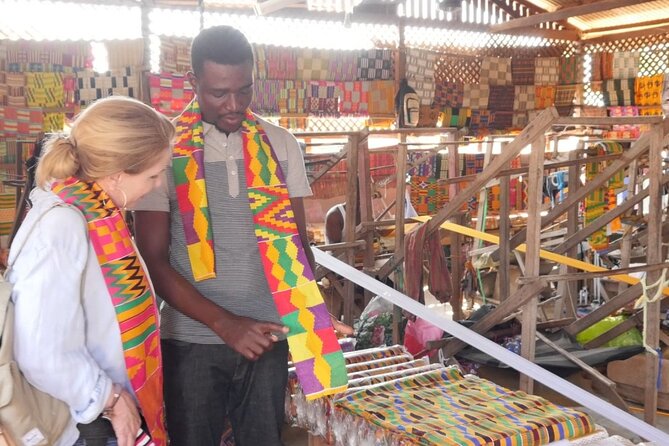
Next comes one of the most hands-on parts of the day, kente weaving. You’ll visit Bonwire or Adanwomase Kente Village, where you can learn the process from scratch. Bonwire is especially known as the home of famous Akan Kente cloth, and the local story links weaving knowledge to watching how a spider spins its web.
What you get here is time with the actual craft workflow, not only a showroom view. Even if you do not buy, watching how the process turns into cloth helps you appreciate kente as a craft tradition with logic and labor behind it. And if you do buy, you’re shopping with better context.
Kente is also the kind of souvenir that can range wildly in price and quality depending on how it’s made and finished. Your guide’s job is not just translation, it’s helping you avoid overpaying because you lack the local baseline.
If you want to maximize what you learn, take photos of steps (where permitted), and ask about what you’re seeing instead of only focusing on the final product.
Adinkra at Ntonso: making banners, and understanding the local process
One of the biggest cultural highlights is Ntonso Adinkra Village, described as the only place in Ghana where traditional adinkra is made locally from scratch. In this stop, you’ll make adinkra banners of your choice and also make something for yourself.
This is a step up from watching, because you’re actively making. Adinkra symbols carry meaning, and when you choose a design, you’re not only picking an image, you’re choosing a message. The learning part tends to stick because your hands are involved.
What to know going in: adinkra craft can take longer than you expect, because you’re not just stamping something and leaving. If you care about the final look, you’ll want to pay attention to steps and take your time.
Also, this is the kind of village stop where you should expect warm human interaction. People tend to explain and guide in a way that helps you feel included, not watched from the outside.
Museum and fort time: the Ashanti story goes beyond craft
The tour description also includes time for Prempeh II Jubilee Museum and a visit to Kumasi Fort, described as Ghana’s only inland fort, a military garrison from colonial rule. Even without getting stuck in details, these stops add balance.
The palace museum and sword site anchor the Ashanti origins and authority, while the museum and fort help you understand how later periods changed the story. That matters because Ghanaian culture today is shaped by older systems and later pressures, not by one neat timeline.
Time management is the key here. You’re stacking multiple sites into one long day, so if you feel you’re running short on energy, prioritize whatever connects to your biggest interests, then let the rest be background texture.
Lake Bosomtwe for a reset: nature break after the city
After Kumasi’s sights and craft areas, you get a chance to slow down at Lake Bosomtwe, described as the only natural lake in Ghana. The area also includes a rain forest feel, and you’ll have views of Kumasi from higher points as you approach.
There’s an easy logic to this last stretch. After hours of museums and markets, you need a different kind of stimulus, and the lake delivers it. You’ll also have the option of extra activities.
- Boat cruise is available for an extra fee
- A nearby horse ranch is managed by a German, and horse rides through the forest to surrounding villages are also extra fees
- Swimming is possible, so bring a swimsuit and plan for it
This is also where you can take a real breath before heading back to Accra. If you’re prone to motion sickness on long rides, give yourself time here to stretch, eat something light, and settle before you get back on the road.
Price and value: what $280 buys in a full-day schedule
Let’s talk value in plain terms. $280 per person can feel steep until you break down what you’re paying for:
- Pickup and return from Kotoka Airport
- A day plan that includes multiple landmarks and cultural stops
- Included admission tickets at several specific sites like Manhyia Palace Museum, Okomfo Anokye Sword Site, Kejetia Market, and Bonwire Kente Weaving Centre
- Center for National Culture time is free
You’re also paying for guide support that makes the day smoother. The biggest cost in a trip like this is usually time loss, and a good guide helps reduce that through sequencing, navigation, and practical help with negotiations at markets.
If you are traveling with family members or older relatives, that’s another value angle. In at least some group experiences, guides have planned with senior mobility in mind. Still, you should tell your guide about any walking limits before you start.
Who is this best for? People who want culture, crafts, and history in one day, and who do not mind a long schedule. It is ideal if you love seeing the craft process, not only buying a finished product.
Should you book this Ashanti and Kumasi full-day tour?
Yes, book it if you want one structured day that covers the major Ashanti landmarks plus hands-on craft experiences. You’ll get a strong mix, palace museum context, the Okomfo Anokye Sword Site, Kejetia Market with real shopping, and craft stops like kente and adinkra with participation. The best reason to choose it is that it connects places, so your day feels coherent instead of random.
Skip or ask extra questions before booking if your group hates long drives, prefers slow walking, or wants a more relaxed schedule. This is a full day with lots of movement, and Lake Bosomtwe is the main decompression moment, not the whole trip.
If you decide to go, pack smart for a long day: water, sunscreen, comfortable shoes, and cash for purchases and the optional extras like the boat cruise or horse ride at Lake Bosomtwe.
FAQ
How long is the tour from Accra to Kumasi?
The experience runs about 12 to 16 hours, and the remaining hours are used for travel time between places you visit.
Where do we get picked up, and where do we end?
Pickup is at Kotoka Airport in Accra, and the activity ends back at the meeting point.
Is this a private tour or a shared group?
It’s a private tour/activity, meaning only your group will participate.
Are museum and landmark tickets included?
Admission tickets are included for Manhyia Palace Museum, Okomfo Anokye Sword Site, Kejetia Market, and Bonwire Kente Weaving Centre. The Center for National Culture stop is listed as free.
Are there any extra-cost activities at Lake Bosomtwe?
Yes. A boat cruise is available for an extra fee, and horse rides are also for an extra fee. Swimming is mentioned, so you might want to bring a swimsuit.
What should I bring for the markets and craft villages?
Wear comfortable shoes for walking in markets and craft areas, and bring cash for shopping and any optional activities.
What is the cancellation policy if plans change?
You can cancel for a full refund up to 24 hours before the experience’s start time. If you cancel less than 24 hours before, the paid amount is not refunded.
Newly reviewed around Accra
- Private Slave Castles and Dungeons Tour in Cape Coast, Ghana★ 5.0 · 3 reviews
- Day Tour to Kakum National Park, Cape Coast and Elmina Castles★ 5.0 · 3 reviews
- Half-Day Guided Fabric Tour in Ghana★ 5.0 · 3 reviews
- Cultural Tour Of Ghana And South Africa 12 Days★ 5.0 · 3 reviews
- Cape Coast Day Tour★ 5.0 · 3 reviews
- Experience the Culture of Ashanti Kingdom in 5days★ 5.0 · 3 reviews
- Full Day Accra Guided Tour★ 5.0 · 3 reviews
- Experience Aburi Botanical Gardens And Boti Water Falls In A Day.★ 5.0 · 3 reviews
Ashanti Region Tours, compared.
Bonwire Namimg Ceremony and Kente Tourist Center
Read our review →
Kumasi Heritage Tours And Naming Ceremony In A Day
Read our review →
Traditional naming ceremony For African Diasporas in Kumasi
Read our review →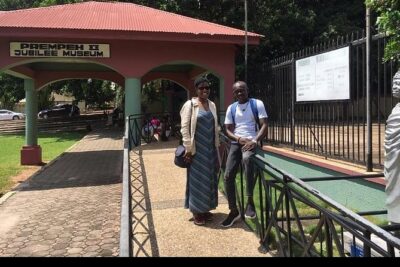

Lake Bosomtwe Boat Cruisely and Kumasi City Tours
Read our review →Browse the lists this tour appears in