
Reviewed · HALF-DAY
Half-Day Guided Fabric Tour in Ghana
This Accra fabric tour is interesting because you start with the names and meanings of Ghanaian prints, then you end up making your own cloth at Exmac Fabrics. It is not just shopping. You learn how fabric is understood, bought, and worn.
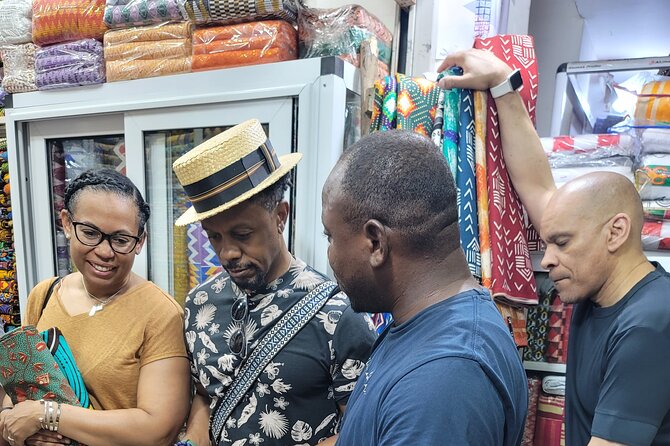
I especially love the Makola Market part, where you see how buyers and sellers talk fabrics, prices, and occasions. I also like that the guide, Albert, is a designer who can answer questions about textiles and Ghanaian society while you move.
One possible drawback: the market segment means some walking in a busy marketplace. If you have mobility limits, this is not the best fit, since it is not set up as a slow, step-free stroll.
Key things you’ll notice on this tour
- Makola Market basics for real cloth buyers, including fabric names and symbol meanings
- Hands-on batik tie and dye, with you choosing designs and taking your fabric home
- Designer-guide support from Albert, including textile and culture questions answered clearly
- Small group size, up to 10 people, which keeps the pace from feeling chaotic
- 20% off custom African wear clothing, if you want clothes made during or after your visit
- Pickup in Accra plus air-conditioned private transport, so you spend less time negotiating rides
Getting Ready: What a 6-Hour Fabric Tour Actually Feels Like
The tour is called a half-day tour, but plan for about 6 hours in total. That is normal for a format like this, because you are not just visiting one spot. You move from a big open market to a fabric workshop, and you get time to shop, ask questions, and make something with your hands.
You also get a practical comfort layer. There is private transportation with air-conditioning, plus hotel or residence pickup and drop-off within Accra. You should still expect the market area to feel crowded and active, so bring an open mind and wear shoes you can stand in.
The experience is led by a fashion professional with 12 years of industry experience, and it is described as fully customizable. In real terms, that means the guide can steer you toward the cloth styles and questions that interest you most. If you want to buy fabric for a specific purpose, or you are curious about how symbols work, you will get more out of your time.
More trips leaving Accra:
- The Cape Coast Day Tour
★ 5.0 · 525 reviews - Experience the Beauty, History and the Culture Of Accra in a Day
★ 5.0 · 323 reviews - The Cape Coast Tour
★ 5.0 · 177 reviews
Stop 1, Makola Market: How Fabric Names Turn Into Smart Buying
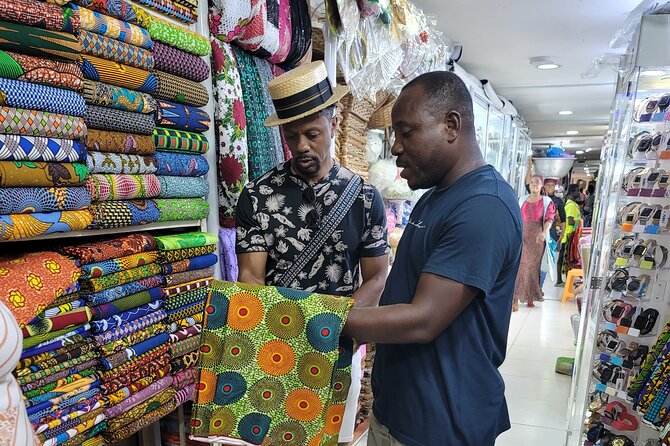
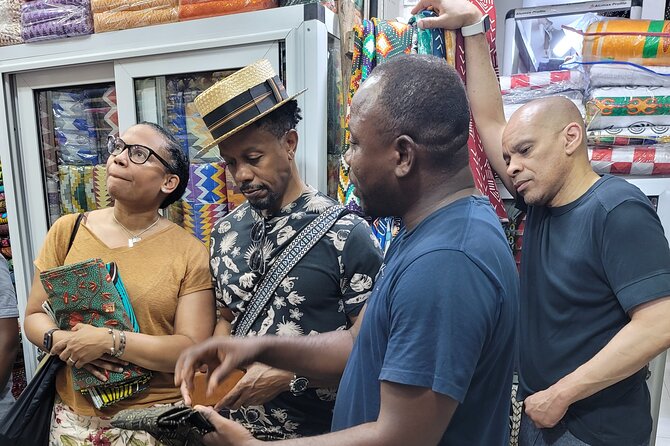
Makola Market is the kind of place where shopping is a conversation. In this tour, you begin at the market and go into the African print seller’s market area. You spend about 2 hours here, and the goal is to understand the flow between buyers and sellers, not just to look around.
Here is what I like about this approach. Fabric can be confusing if you only see colors. At Makola, you learn the names of fabrics and the symbols on them, plus what those symbols can mean. You also learn how fabrics get matched to occasions, like when certain prints are worn or used. That turns your shopping from guesswork into something closer to informed decision-making.
You also get a concrete chance to buy. The tour gives you time and guidance to purchase local fabrics at affordable prices or wholesale prices, depending on what you are after. Even if you do not plan to buy much, this is a good way to see how people discuss quality, fabric types, and value.
A quick reality check: you will be walking among stalls in an open-air market environment. Even with a guide, this is not the kind of experience that feels like a museum visit. If you know you struggle with standing or walking for long stretches, you may want to choose a different style of tour.
Stop 2, Exmac Fabrics: Tie-Dye Batik You Make, Then Take Home
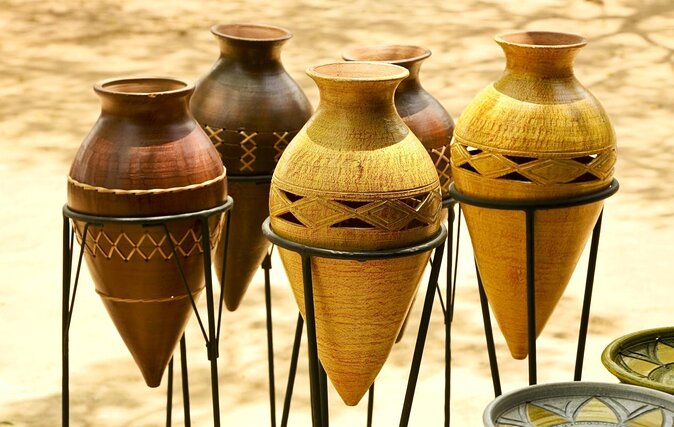
After the market, you head to Exmac Fabrics for the hands-on portion. This segment runs about 3 hours, and it is all about the process of making hand-made batik tie and dye.
This part is genuinely different from a typical shopping tour. Instead of only watching, you choose a design and make your own batik tie and dye fabric with your own hands. You are not just observing techniques. You are involved in how the pattern forms.
The best part is what you leave with. You get to take home the batik fabrics you create, so your time becomes a real souvenir, not only photos. If you have ever bought a cloth print and wondered how it actually becomes that pattern, this is your chance to understand the step-by-step logic.
A practical tip: your finished fabric may not be the kind of item you want to fold and shove into a bag immediately. If you are taking it back with you, think ahead about how you will pack it carefully so it does not get damaged.
Albert the Guide: When Textiles Become a Culture Conversation
In this tour, the guide is not a generic “here’s the market” host. Albert is a designer himself and he knows textiles deeply. That matters because you get more than a translation of words. You get context.
What you get from Albert is clear, straight talk. He can answer questions about Ghanaian society alongside the fabric education. That makes the market stop feel less like a scavenger hunt and more like learning how people use cloth in everyday life.
If you are the kind of person who asks why certain prints show up in certain settings, you will enjoy how the guide connects the dots. And if you are more practical, the explanations help you make better choices when you are buying fabric or deciding what kind of custom piece you might want.
A few more Accra days to weigh up
- Accra Guided City Tour Experience
★ 4.7 · 88 reviews - Accra Guided City Tour Experience
★ 5.0 · 76 reviews - Accra: Guided City Tour with Lunch
★ 4.5 · 40 reviews - Private Aburi Hill Guided Tour
★ 5.0 · 34 reviews
Custom African Wear: The 20% Discount Opportunity
There is a 20% off included for custom African wear clothing. That is one of those details that can quietly change the value of the entire day.
If you look at the tour as only two stops, you can treat it like a learning experience plus a craft souvenir. But if you like the idea of getting something made, the discount gives you a reason to consider it while you are already there. One of the best parts of the reviews was how people, after learning from the designer, decided to go ahead and make custom clothes. It is a natural progression when you realize you can connect your fabric knowledge to a finished garment.
I would treat this as an option, not a must. Ask questions early, because the pace matters. You will get more from the custom-clothes idea if you know what you want before you move into the workshop time.
Price and Value: Is $160 a Good Deal for This Format?
At $160 per person, you are paying for three things at once: guided market learning, guided workshop time, and a packaged level of transport and inclusions.
Look closely at what is included and you start to see where the money goes:
- Air-conditioned vehicle
- Hotel or residence pickup and drop-off within Accra
- Bottled water and soda
- All fees and taxes
- Admission tickets for both main stops
- Costs of the activities
- Private transportation
- 20% off custom African wear clothing
What is not included is also important. Lunch and breakfast are not included, and you will need to handle any meals on your own. That means you should plan your timing so you do not hit the late day hungry and frustrated.
Compared to paying separately for guides, entry, and transportation, the bundled value can make sense. You are also getting an item you make yourself at Exmac, which is not typical in many “fabric shopping” half-days.
Is it expensive? It is a mid-range price. But it can feel like a good deal if you actually want fabric knowledge plus a hands-on takeaway, and you will likely use the guide’s expertise to shop smarter.
What to Bring, and How to Avoid Market-Day Friction
This is a practical tour, but it still has a market reality. You are walking through a big open market and dealing with physical fabric choices.
Bring:
- Comfortable shoes with grip for uneven spots
- A bag plan for anything you buy, including your batik fabric
- A curious mindset for fabric names and symbol meanings
Consider skipping it (or choose another option) if:
- You cannot walk comfortably in market areas
- You do not want to navigate crowds at all
One more thought: markets can make you feel like every stall is the same until you learn what to look for. This tour helps you learn the language of prints, symbols, and occasions. Once you have that, your shopping becomes easier and more confident.
Who This Tour Fits Best
I think this experience is ideal for:
- Fabric lovers who want to understand prints beyond just buying
- People who enjoy making things, not only watching demonstrations
- Travelers who want a guide who can explain textile culture clearly
- Small groups, since the group size is capped at 10 travelers
It is less ideal for:
- Anyone with difficulty walking in a market environment
- People who want a relaxed sit-and-look kind of tour
- Travelers who prefer long meals, because lunch is not included
Should You Book This Fabric Tour in Accra?
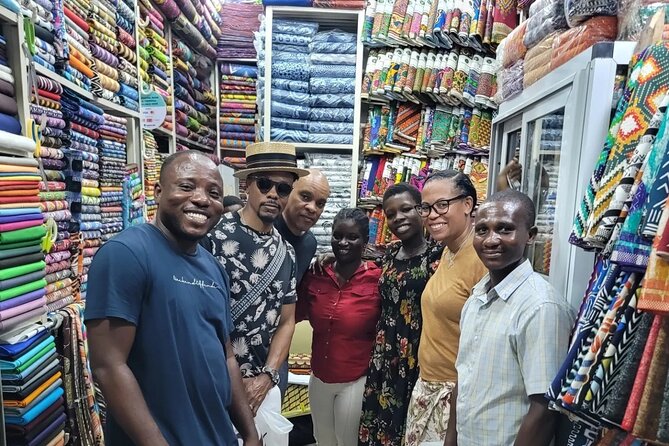
Book it if you want more than shopping. The best reason is the mix of market learning and hands-on tie-dye batik you take home. The second reason is the guide factor. Albert being both a designer and a strong textile teacher makes the day feel coherent, not scattered.
Skip it if your mobility limits make market walking hard, or if you only want a quick photo-stop. This tour asks you to participate, stand, and make choices.
If you are on the fence, do this simple check: Do you want to learn fabric meanings and make something, or do you mainly want souvenirs? If it is the first one, this tour is a strong match.
FAQ
How long is the guided fabric tour?
It runs about 6 hours.
Do you pick me up and drop me off in Accra?
Yes, pickup and drop-off are offered within Accra.
What’s included in the price?
Air-conditioned private transportation, bottled water, soda/pop, all fees and taxes, admission tickets for the activities, and the activity costs are included. You also get a 20% off custom African wear clothing.
Is lunch included?
No, lunch is not included.
How large is the group?
This tour has a maximum of 10 travelers.
Do you provide a mobile ticket and confirmation?
You receive confirmation at booking, and there is a mobile ticket.
Can I cancel for a full refund?
Yes. You can cancel up to 24 hours in advance for a full refund.
Is it suitable for people who have trouble walking?
It is not recommended for travelers who cannot walk or have difficulties walking in the market place.
Newly reviewed around Accra
- Private Slave Castles and Dungeons Tour in Cape Coast, Ghana★ 5.0 · 3 reviews
- Day Tour to Kakum National Park, Cape Coast and Elmina Castles★ 5.0 · 3 reviews
- Cultural Tour Of Ghana And South Africa 12 Days★ 5.0 · 3 reviews
- Cape Coast Day Tour★ 5.0 · 3 reviews
- Full Day Accra Guided Tour★ 5.0 · 3 reviews
- Experience Aburi Botanical Gardens And Boti Water Falls In A Day.★ 5.0 · 3 reviews
- Experience the Culture of Ashanti Kingdom in 5days★ 5.0 · 3 reviews
- Experience Cape Coast Castle and Kakum National Park★ 4.5 · 3 reviews
Half-Day, compared.
Half-Day Private History Tour in Nkyinkyim Museum
Read our review →

City Highlights Half-day Guided Tour with Transfers
Read our review →
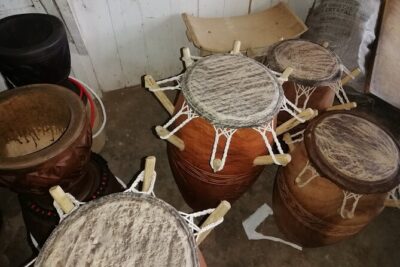
Half-Day Private African Drumming Lessons with Pick Up
Read our review →Browse the lists this tour appears in