
Reviewed · ASHANTI REGION TOURS
Experience the Culture of Ashanti Kingdom in 5days
A trip like this is interesting because it traces Ashanti culture through places you can see and touch, not just sites you pass by. You start in Accra, move to Kumasi, then work your way through village craft workshops and spiritual landmarks before ending back in the capital.
I especially like the royal and museum side of the Ashanti story at Manhyia Palace Museum and the hands-on creativity you get at Adinkra and kente workshops. In the team members people name most often, you may run into guides such as Nuru-Deen, along with support from Eazi and Maxwell, who are praised for planning that keeps your days smooth.
One consideration: the schedule is full, with most days running around 8 hours of touring. If you do not handle long road days well, you will feel it, especially when you go from Kumasi to villages and then back toward Accra.
Key highlights worth your attention
- Manhyia Palace Museum in Kumasi gives you the Ashanti and Ghana story, including how it’s presented through the colonial era.
- Prempeh II Jubilee Museum adds more context on the Ashanti Kingdom’s history and legacy.
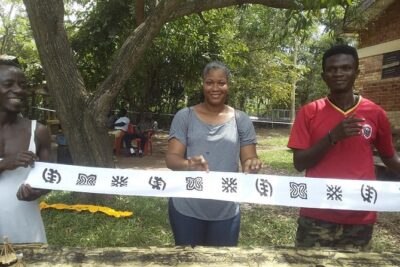
- Ntonso Adinkra Village focuses on Adinkra symbols, meanings, and a textile printing workshop where you can print your choices.
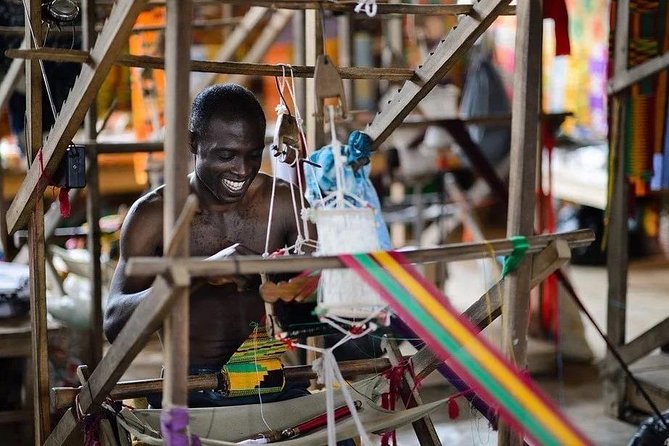
- Adanwomase Kente Weaving Village offers a kente weaving workshop plus time to shop for kente products.
- Okomfo Anokye Sword Site links a very old sword legend with the golden stool story at a single, specific place.
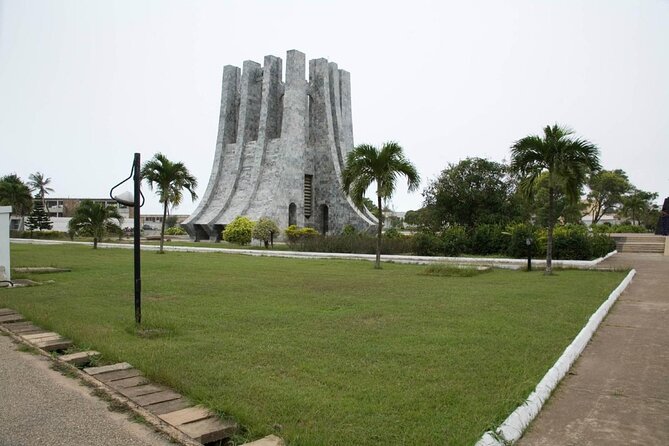
- Accra wrap up includes the Kwame Nkrumah Memorial Park plus a city tour before airport transfer.
A 5 day Ashanti Kingdom route that makes culture feel real
This is the kind of Ghana trip that helps you connect dots. You land in Accra, then you work your way inland to Kumasi, the cultural heart of the Ashanti Kingdom, where the schedule turns from arrival comfort into focused learning. The next days spread out into village life, with craft workshops that are not just watching, but doing. Then you return to Accra to finish with a major national figure site and a practical city orientation.
If your idea of a great trip is a blend of museums, markets, craft, and meaningful landmarks, you will probably enjoy the pace here. If your idea is mostly downtime or slow wandering, you may find the days feel packed.
More of the Ashanti region:
- Kumasi Heritage Tours And Naming Ceremony In A Day
★ 5.0 · 11 reviews - Full-Day Tour to Ashanti Region, Kumasi and Ghanaian History
★ 5.0 · 8 reviews - 4 Days Trip in Accra, Cape Coast,Kumasi culture & heritage tours
★ 5.0 · 5 reviews
Price and what you truly get for $1,350
At $1,350 per person for 5 days, the price makes sense if you value organization and included logistics. The package lists a private tour setup with an air-conditioned vehicle, insurance, fuel, accommodation with air-conditioned rooms, and support that is available 24 hours. It also lists all fees and taxes and includes breakfasts on 4 mornings, plus attraction and activity fees.
That matters because Ghana tours can get expensive once you add up entrance fees, guide time, and transport. Here, you are paying for a bundled experience rather than piecemeal decisions every day. The result is simpler: you show up, get guided, and move from stop to stop without having to negotiate each leg on your own.
Two practical cautions:
- International airfare is not included, and that can be a big part of your total cost.
- Meals beyond breakfast are not included in the stated inclusions, so you will want a daily food budget.
One extra thing to double-check before booking: the details list a private tour guide as included, but the non included list also mentions private tourguide. If you want certainty, confirm exactly what is covered for your specific departure.
Day 1 in Accra, airport to hotel with minimal friction
On day one, you are met at Terminal 3 of Kotoka International Airport. The process is straightforward: staff meet you and send you to your hotel. This is a small detail, but it is one of the biggest quality-of-life wins for first-time arrivals. After a flight, you do not want to figure out transport, currency steps, and routes all at once.
You will have some time to settle in, since day two is where the main cultural push begins. If you arrive with a little energy, I’d suggest using the remainder of the day to do practical basics: confirm your next morning start time, locate a nearby place to eat, and rest.
Kumasi’s royal core: Manhyia Palace Museum and Prempeh II Jubilee Museum
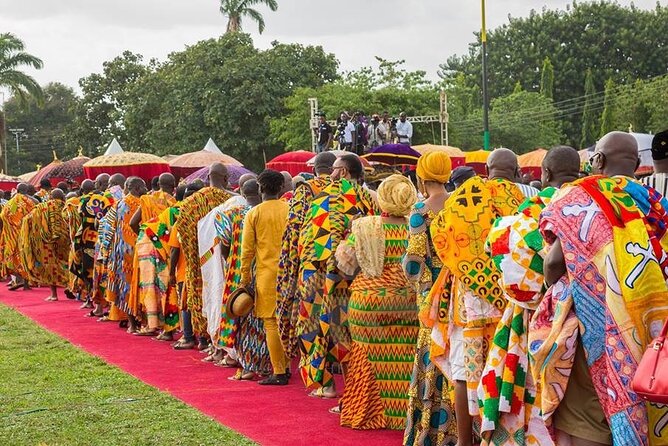
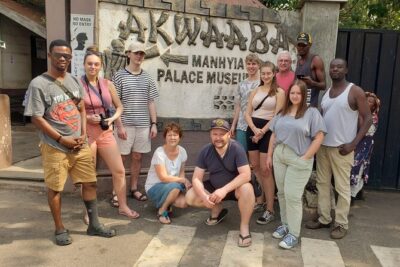
Kumasi is where Ashanti culture becomes more than a concept. The schedule starts with Manhyia Palace Museum, set within the grounds of Manhyia Palace, the residence of the Asantehene (the King of the Ashanti Kingdom). Even if you only know the basics, walking through a palace museum helps you understand power and symbolism in one place.
What I like about this stop is the way it connects culture to time periods. The museum provides information on Ashanti culture and Ghana’s cultural heritage during the colonial era. That means you are not getting only traditional themes. You also see how the story was shaped and documented as colonial rule intersected with local kingdoms.
Next comes the Prempeh II Jubilee Museum, located within the Kumasi Cultural Center. This stop is focused on history and context. You tour the facility and learn more about the Ashanti Kingdom, which is especially useful if you want the “why” behind what you see later in village crafts and spiritual sites.
More trips leaving Accra:
- The Cape Coast Day Tour
★ 5.0 · 525 reviews - Experience the Beauty, History and the Culture Of Accra in a Day
★ 5.0 · 323 reviews - The Cape Coast Tour
★ 5.0 · 177 reviews - From Accra: Cape Coast, Elmina Castle & Kakum Park Day Tour
★ 4.6 · 144 reviews
Kejetia Market in Kumasi, a real place to practice local shopping

After museum time, the day shifts into everyday Kumasi with a visit to Kejetia Market. The description calls it one of the biggest open-air markets in West Africa. Whether or not you measure that by foot traffic, the point is clear: this is not a staged craft bazaar. It is a functioning market area.
This is where you can practice smart shopping habits:
- Decide what you want before you arrive. Kente is easier to buy when you know what you are shopping for.
- Ask what something is made for, not just how much it costs.
- If you want souvenirs, consider buying toward the later part of the tour, once you’ve seen what different villages produce.
Markets also help you understand how culture lives outside museums. People are trading, eating, working, and moving. You get a sense of the city’s rhythm, not just its monuments.
Ntonso Adinkra Village: symbols, meaning, and printing workshop time
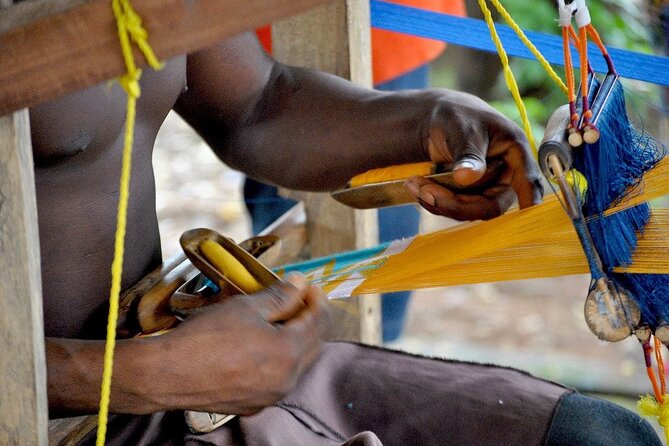
One of the most rewarding parts of the trip is the village day built around Ntonso Adinkra Village. This is the Adinkra symbols stop, where you learn that these marks have proverbial meanings rather than being decorative only.
The workshop element is the key here. You visit a local textile printing workshop where you can learn the background behind the symbols, choose what you want, and then print with them. That hands-on process is what makes the symbols memorable later, because your brain stores the meaning alongside your own finished product.
If you enjoy crafts and explanation, ask your guide to slow the story down. Many symbol meanings connect to values, family, and social messages. Even if you only catch part of the lesson, seeing how the symbols turn into printed textile makes the culture feel practical.
Adanwomase kente weaving: seeing the cloth become cloth
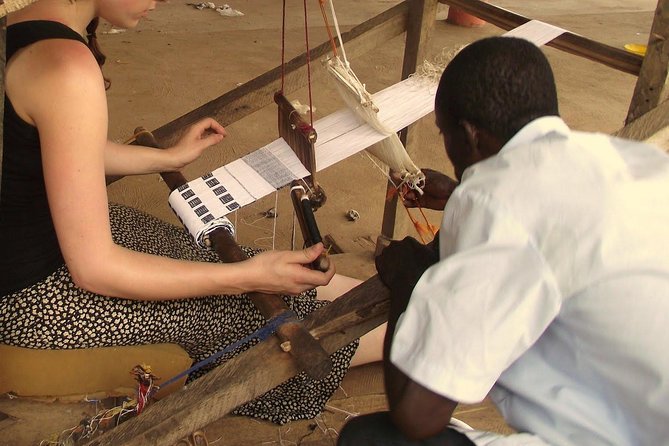
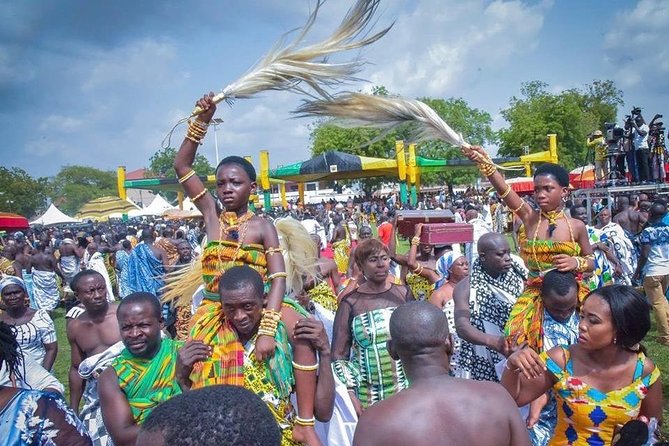
After Adinkra, the tour moves to Adanwomase Kente Weaving Village. Kente is described as a colorful silk and cotton fabric made with interwoven cloth strips, used by the Akan ethnic group for special occasions. In other words, you are looking at a tradition that shows up in ceremonies, not just as fashion.
Here, you get a kente weaving workshop plus time to buy products. That last part matters. If you have ever bought textiles too early while you still do not know what quality looks like, you will appreciate this chance to see and compare.
A practical tip: if you want kente as a souvenir, decide whether you want something wearable (like a smaller piece or finished item) or something more display focused. The workshop and shopping time are your chance to ask about what you are purchasing, since the guide is there and the day is structured for learning.
Okomfo Anokye Sword Site and Abono Village: spiritual legends tied to place
Day four starts with a stop that sounds like legend but is treated as a concrete landmark: the Okomfo Anokye Sword Site. It is situated on the premises of the Okomfo Anokye Teaching Hospital in Kumasi.
According to the history explained at the site, there is an over 300-year-old sword planted into the grounds by Okomfo Anokye, a famous fetish priest. The story also includes that several attempts to remove the sword have proved futile. You can also learn about a key Ashanti legend tied to the site: it is described as the exact place where the priest conjured a golden stool for the Ashanti Kingdom.
Even if you are skeptical of the supernatural parts, you can still approach this as a study in cultural meaning. This place matters because people attach identity, authority, and belief to a physical location. That is a useful lesson for understanding how kingdoms remember themselves.
Afterward, you depart to Abono Village. The provided details do not specify what you will do there beyond the village visit, so keep your expectations flexible. Think of it as part of the tour’s intent: to get you out of the city and into village settings that reflect Ashanti life.
Lake Bosomtwe: why a water stop works in a packed cultural schedule
The tour also includes Lake Bosomtwe as a stop on day four. Even without extra detail on activities, a lakeside break is a smart choice inside an otherwise heavy cultural and workshop-heavy trip. It gives your body a change of scenery and helps break up the long days that start early and end later.
I like this kind of stop for travelers who want meaningful sights but also want a chance to breathe, take photos, and recharge before the trip’s final push back toward Accra.
Accra’s history marker: Kwame Nkrumah Memorial Park and a final city tour
You end in Accra, and day five includes a visit to Kwame Nkrumah Memorial Park, then a city tour of Ghana’s capital. Nkrumah is central to modern Ghana’s story, and the memorial park gives you a clear, focused stop before you head out.
This final day is not only about monuments. It is also about orientation. A city tour near the end helps you connect what you learned inland with how Ghana frames its national identity in the capital. Once the city tour is done, you transfer to the airport to depart home or your location.
How long is this, and what it feels like day to day
Most days run long. The schedule notes around 8 hours for multiple days, and you start with a set time of 7:30 am. That means you should plan for:
- Early mornings
- Full days of transport plus guided walking or workshop time
- Limited downtime during the day
This tour can still be a great choice if you like structure. You are not left guessing what to do next. But you should go in ready for a packed rhythm, not a slow vacation.
Who this tour is best for, and who should reconsider
This works well for you if:
- You want a culture heavy Ghana trip focused on the Ashanti Kingdom
- You like guided context at museums and spiritual sites
- You want hands-on craft time at Adinkra and kente workshops
- You prefer a private, organized schedule with air-conditioned transport and included attraction fees
You might consider a different pace if:
- You want more free time in each place
- You hate long road travel days
- You want all meals included, since lunch and dinner are not listed as included beyond breakfasts
Practical tips to make the most of your week
- Bring cash for shopping. Even when entries and workshops are covered, markets and craft purchases still need payment.
- Wear something you can walk comfortably in. Village and market stops often mean uneven ground and lots of walking.
- Ask your guide to help you understand what you are buying. With kente and printed textiles, a short explanation can save you from a disappointing purchase.
- Plan for sun and heat. The tour includes many outdoor parts, and you will feel it if you are not prepared.
- If you are arriving on day one, use the first night to rest and reset. Day two in Kumasi starts strong.
Should you book this Tripafrica Ashanti Kingdom in 5 days tour?
My take: book it if you want a guided, culture-focused route that covers the Ashanti story from royal heritage to village craft. The value is in what is bundled, especially the private guide, air-conditioned transport, included attraction fees, and multiple mornings of breakfast support.
I would hesitate only if you know you struggle with long days and constant movement. This is not a quiet, slow itinerary. It is active, structured, and designed for learning through several different kinds of stops.
If you decide to go, do one quick thing before you pay: confirm that your private tour guide coverage is clear for your departure, since one part of the package text suggests it is included and another part suggests it is not.
FAQ
How do I get from the airport to my hotel on day one?
You are met at Terminal 3 of Kotoka International Airport in Accra, and staff send you to your hotel after arrival.
Where does the tour start and what time does it begin?
The tour start time is listed as 7:30 am.
What’s included in the tour price?
The package includes an air-conditioned vehicle with insurance and fuel, accommodation with air-conditioned rooms, all fees and taxes, 24 hour ongoing support, private tour guide, breakfasts (4), and admission and attraction fees.
What is not included?
International airfare, meals not included beyond the stated breakfasts, visa fees, and private tourguide are listed as not included. Because the text includes a potential contradiction about the private guide, you should confirm for your departure.
What are the main places you visit?
You visit Accra on the beginning and end of the trip, including Kwame Nkrumah Memorial Park and an Accra city tour. In between, you spend time in Kumasi at Manhyia Palace Museum, Prempeh II Jubilee Museum, and Kejetia Market, plus village visits connected to Adinkra symbols and kente weaving, and a visit to the Okomfo Anokye Sword Site and Lake Bosomtwe.
Is this tour private?
Yes. It is a private tour/activity, and only your group participates.
Can I cancel and get a full refund?
Yes. You can cancel up to 24 hours in advance for a full refund, and cancellation cutoff is based on local time.
Newly reviewed around Accra
- Private Slave Castles and Dungeons Tour in Cape Coast, Ghana★ 5.0 · 3 reviews
- Day Tour to Kakum National Park, Cape Coast and Elmina Castles★ 5.0 · 3 reviews
- Half-Day Guided Fabric Tour in Ghana★ 5.0 · 3 reviews
- Cultural Tour Of Ghana And South Africa 12 Days★ 5.0 · 3 reviews
- Cape Coast Day Tour★ 5.0 · 3 reviews
- Full Day Accra Guided Tour★ 5.0 · 3 reviews
- Experience Aburi Botanical Gardens And Boti Water Falls In A Day.★ 5.0 · 3 reviews
- Experience Cape Coast Castle and Kakum National Park★ 4.5 · 3 reviews
Ashanti Region Tours, compared.
Bonwire Namimg Ceremony and Kente Tourist Center
Read our review →
Kumasi Heritage Tours And Naming Ceremony In A Day
Read our review →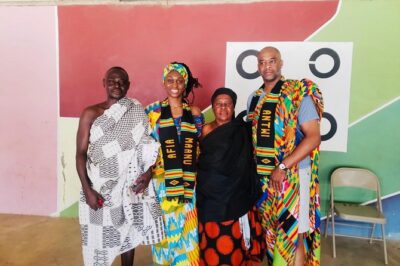
Traditional naming ceremony For African Diasporas in Kumasi
Read our review →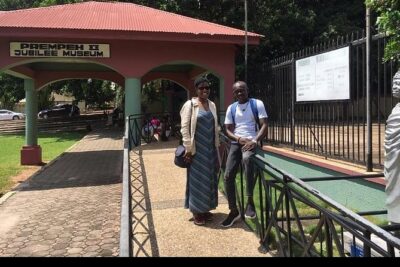
Full-Day Tour to Ashanti Region, Kumasi and Ghanaian History
Read our review →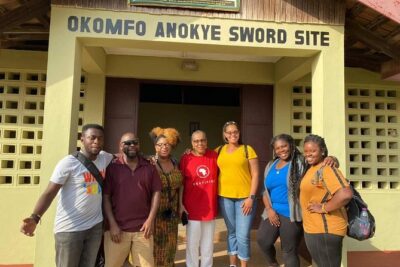
Browse the lists this tour appears in