
Reviewed · HISTORICAL TOURS
Cultural Tour Of Ghana And South Africa 12 Days
What makes this tour interesting is how it links Pan-African history in Accra with the UNESCO sites tied to the forced Atlantic journey at Cape Coast. I like that you travel with one expert guide throughout, so the story stays connected from day one, not chopped into random facts.
I also like the mix of hard history and big “wow” scenery, especially the Pilanesberg Big Five safari followed by South Africa’s Cape Town highlights. One possible drawback to plan for is the pace: you have multiple transfers and several active days, and the tour asks for moderate physical fitness.
Key highlights that make this trip worth a look
- Accra’s big-name history stops: W.E.B. Du Bois Centre, Flagstaff House, and the upgraded Kwame Nkrumah Memorial Park
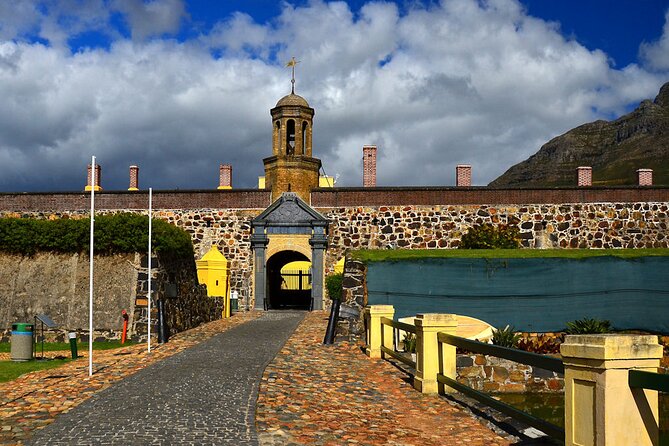
- UNESCO Cape Coast and Elmina sites with meaning: Cape Coast Castle, Door of No Return, and the Elmina Slave Castle
- The fiankra Return to the Homeland ceremony: a powerful cultural moment tied to family separation
- Kakum National Park forest-floor walk: birds, butterflies, and a chance to spot wildlife
- Soweto freedom-fighter route: Hector Pieterson Memorial, Regina Mundi Church, Chris Hani Baragwanath Hospital, Mandela’s House
- Cape Town by cable car and coastline drives: Table Mountain plus Cape Peninsula viewpoints and Constantia wine tasting
Day 1 in Accra: settling in at Movenpick Ambassador Hotel
Your trip starts in Accra at Kotoka International Airport, where you’re met and assisted before heading to your hotel in a private air-conditioned vehicle. After check-in, your guide gives you the lay of the land for Ghana, which is a big deal when you’re landing in a new country and want your first day to feel manageable.
You stay at the Movenpick Ambassador Hotel, a familiar base near the core of the city. I like that the tour also includes bottled water per person per day, because it means you do not have to stop and think about essentials right away.
A few more Accra days to weigh up
- Experience the Beauty, History and the Culture Of Accra in a Day
★ 5.0 · 323 reviews - Ghana Heritage Tours – Beyond The Return
★ 5.0 · 36 reviews - 10 Days Ghana Cultural and Heritage Trip
★ 5.0 · 31 reviews
Accra history you can walk through, from Du Bois to Nkrumah
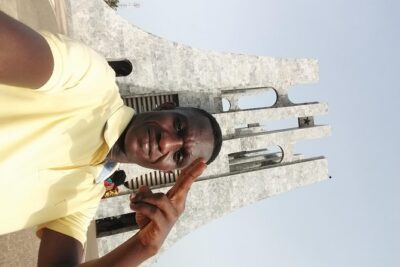
The Accra day is built like a guided “context tour.” You start with the W.E.B. Du Bois Centre, which sets the tone with Pan-African thinking rather than just local sightseeing. Then you pass Flagstaff House, the president’s residence, and you move into Ghana’s post-independence story at the Kwame Nkrumah Memorial Park.
That memorial park is more than a monument. The site is described as a 5.4-acre space with a library, conference center, synchronized fountain, mini-amphitheater, and picnic area. In plain terms, it’s designed so the history can feel present, not stuck behind a fence.
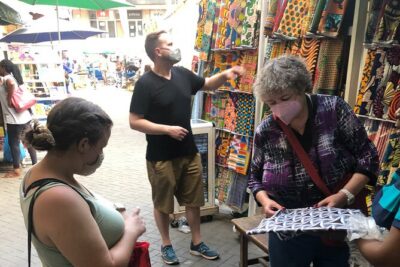
Next comes the Accra Arts and Crafts Centre, where you browse and bargain for things like Kente cloth, sculptures, and jewelry. This is where you can slow down and interact with makers, and it’s also where your “what should I buy and why” instincts get tested. If you enjoy markets, this stop is the right place to sharpen them.
Practical note: this day is mostly city driving and structured stops, so it suits you if you want guidance and clear pacing on your first full day.
Cape Coast and Elmina’s UNESCO castles: Door of No Return, minus the tourist fog
Then you head west to Cape Coast in Ghana’s Central Region, one of the places that shaped the lives of Africans in the diaspora. The emotional center here is the UNESCO heritage tied to departure during slavery, and the tour does not treat it like a quick photo stop.
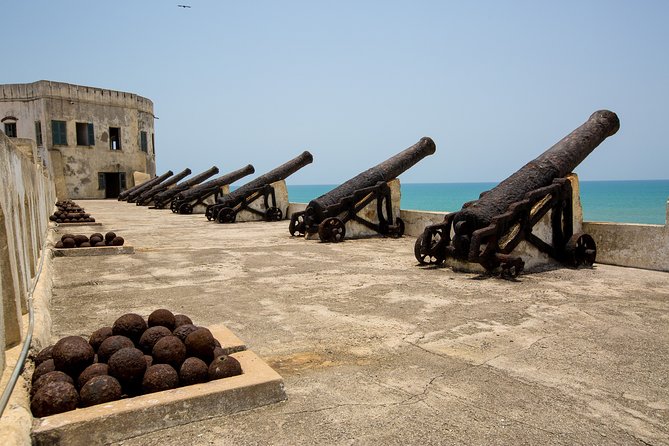
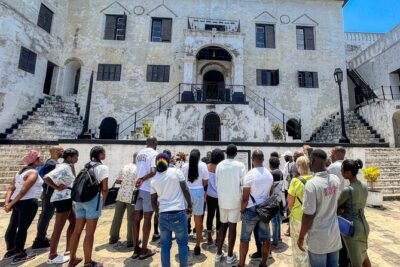
Day 3 starts with a visit at Mankessim, where you explore the Posuban Shrine and Fante Village. After that, Cape Coast Castle and the Castle Museum are next, both approached with a guided tour. Cape Coast Castle is described as a UNESCO World Heritage Site and one of the departure points for enslaved Africans headed to the Americas.
That brings you to the famous “Door of No Return.” The name hits hard, but what matters is how the visit is framed: this is about understanding the system and the human cost, not just checking a box.
In the evening, you shift to Elmina’s old town for a guided walk. You get to the harbor for colorful fish activity, which is a good reminder that these coastal towns are not frozen in the past. They are living places with daily rhythms.
Day 4 continues with Elmina Slave Castle, built in 1482, and described as the first European structure built in sub-Saharan Africa. The tour then includes the “Return to the Homeland” ceremony, called fiankra, which is presented as both an illustration of taking people without saying goodbye, and an initiation rite for African returnees.
I appreciate that this sequence is not only architectural. It mixes site history with a cultural ritual, so your understanding shifts from “what happened” to “what it meant.”
Kakum National Park: a forest walk that actually makes sense
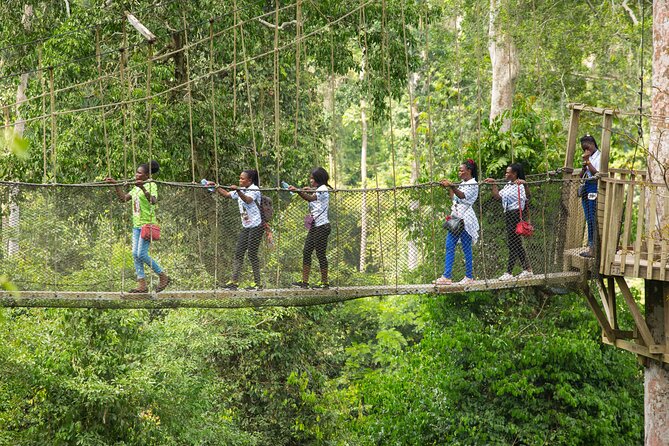
Later on Day 4, you go to Kakum National Park, one of Ghana’s most famous parks. The highlight is a brief walking tour on the forest floor, with birds and butterflies, and the chance to see wildlife that includes monkeys.
What I like here is the pacing. After two intense days focused on Cape Coast and Elmina, you get a nature break that still feels connected to the region. Kakum is also described as holding over 40 species of mammals, including the reclusive forest elephant. You should not count on seeing any one animal, but the park’s reputation tells you the ecosystem is worth the time.
For this stop, keep your expectations realistic. It’s a walk, not a full-day trek, and the tour frames it as a brief forest experience. If you enjoy getting out of the vehicle and listening for birds, you’ll get more out of it.
More trips leaving Accra:
- The Cape Coast Day Tour
★ 5.0 · 525 reviews - The Cape Coast Tour
★ 5.0 · 177 reviews - From Accra: Cape Coast, Elmina Castle & Kakum Park Day Tour
★ 4.6 · 144 reviews - Accra Detailed City Tour
★ 4.5 · 118 reviews
The Accra rest day before flying: a breather, not wasted time
By Day 5, you’re transitioning toward South Africa. You check out of your Ghana hotel and head back to Accra with time built in. The tour notes early afternoon leisure in Accra, plus you can revisit sights you might have missed, with your guide and driver supporting you.
A day room is provided so you can rest and refresh before the flight. That small detail is practical value. Long-haul travel tends to feel worse when you have no reset between checkout and departure.
The itinerary also notes that nonstop flights from Accra to Johannesburg are available on Tuesday, Thursday, and Saturday. So if you are flexible, those day-of-week options can make the travel smoother.
Johannesburg and Soweto: history tied to specific names and places
South Africa starts with Johannesburg, and the first full Johannesburg day is about memory and resistance. You’re met on arrival in the morning, then you tour with stops that read like a map of apartheid-era courage.
Day 6 highlights include Hector Pieterson Memorial, noting that 12-year-old Hector was shot during the Soweto uprisings. You also visit Regina Mundi Church, described as a sanctuary for activists during apartheid, with bullet holes that remain as reminders of clashes.
Then you go to Chris Hani Baragwanath Hospital, described as the world’s largest hospital, honoring ANC leader Chris Hani. You also visit Mandela’s House, and finally Freedom Square, where the historic Freedom Charter was adopted.
This is one of the tour’s strongest parts because it uses geography as a learning tool. When you see sites tied to names and dates, your understanding becomes more than general history. It becomes a place-based story.
A possible consideration: some stops are emotionally heavy. If you prefer lighter pacing on your vacation, you might feel these days more than the nature days. I recommend balancing your energy by giving yourself quiet time during free moments, so you do not feel overloaded.
Pilanesberg National Park safari: Big Five country with a real payoff
On Day 7, the tour shifts from city history to wildlife. You drive to Pilanesberg National Park, which the itinerary describes as home to the Big Five: lions, buffalo, leopards, elephants, and rhinos, plus lots of other species and over 360 bird species.
Safari days can vary, but the structure is clear: you go into the park for game drive time, then later you head to Lesedi Cultural Village for cultural programming. That sequencing is smart. It keeps your excitement high and prevents the cultural portion from feeling like a chore right after a long day of sightseeing.
If you’ve never done a safari before, this is the kind of day that can change how you understand a country. Wildlife is not an optional extra here. It’s a centerpiece.
Lesedi Cultural Village: four villages, language and performance
Later in the day, you continue to Lesedi Cultural Village, with a stop at a market offering Southern African goods en route. At Lesedi, you’re welcomed in the Ndebele village, followed by a multimedia presentation on South Africa’s history, then a guided tour through four villages.
The tour adds a traditional performance and a buffet dinner to close the day. I like that this is not only “watch and walk away.” You get a structured presentation, then you move through cultural areas, which makes the experience feel more organized than random cultural demos.
The best fit for this part of the tour is simple: if you enjoy learning through explanation and watching performance, you’ll likely feel satisfied by the end of Day 7.
Flying to Cape Town: your base near the Victoria and Alfred Waterfront
On Day 8 you fly from Johannesburg to Cape Town. Once you arrive, you’re met and transferred to a hotel near to the Victoria and Alfred Waterfront. The rest of the day is at leisure, and the itinerary points out that Cape Town offers a wide range of activities, shopping, dining, and entertainment.
I like having a location near the Waterfront because it gives you options if you want a gentle first day. You can also use this afternoon to get your bearings before a very active next day.
Robben Island by ferry and Cape Town townships with community stops
Day 9 combines two sides of Cape Town’s story: imprisonment and the everyday reality of township life today. You start with a ferry ride to Robben Island, described as a UNESCO World Heritage site and the prison where Nelson Mandela spent many years.
Robben Island has a special kind of gravity. If you want to understand apartheid beyond museum panels, this is the kind of place that makes the past feel physical.
After Robben Island, the tour turns to a Cultural Tour of the Cape Townships. You interact with different communities, including Langa, described as Cape Town’s oldest formal township. You also see Gugulethu, and the itinerary includes a community-driven project where you can observe artisans and crafters at work.
This is one of the places where your mindset matters. Treat it as meeting people and learning how they create and sustain community, not as a “photo mission.” If you approach it that way, you’ll get more from the experience.
Your overnight is at the Protea Hotel and Hotel Sea Point, which keeps you close enough to do more on your free time without commuting long distances.
Table Mountain and the Cape Peninsula in one major day
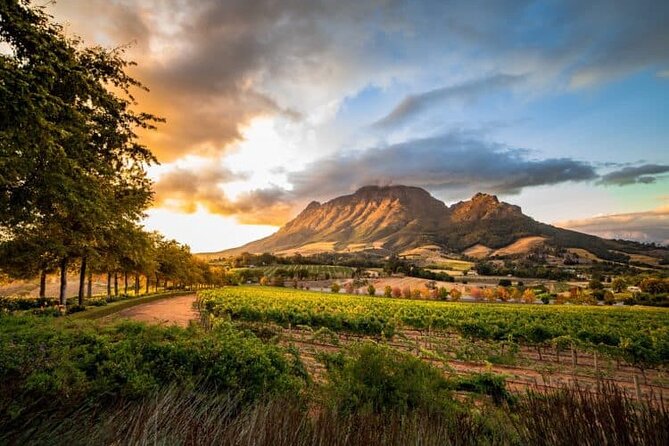
Day 10 is a big one, in the best sense. You start with a ride on the 360-degree rotating cable car up Table Mountain. The tour then includes Cape Peninsula driving, with stops that cover Clifton, Camps Bay, and Hout Bay, plus Chapman’s Peak Drive through Scarborough to the Cape of Good Hope.
You pause at the Cape of Good Hope signboard for tea or coffee, then continue to the Flying Dutchman Funicular for views from the old Cape Point lighthouse. After that, lunch is at Seaforth near Boulders, then you go to Constantia Valley for a wine tasting at a selected estate before returning past the Botanical Gardens.
This day works because it combines city-adjacent viewpoints with coastline immersion. You also get a structured wine tasting, which is often where tours either go too short or feel rushed. Here, the itinerary keeps it clearly slotted after lunch and before the return drive.
One consideration: it’s an all-day drive with many scenic stops. If you get motion sickness, bring what helps you normally. And if you want the photos, bring a camera strap or plan for frequent stops and quick walks.
Two Cape Town leisure days: use them on purpose
Day 11 is mostly your time. Breakfast and dinner are included, and you’re free to explore Cape Town at your own pace. The itinerary calls out shopping and dining options, including Greenmarket Square Flea Market and the larger malls.
Day 12 continues with leisure until transfer to the airport for your onward flight.
What I recommend is deciding in advance what you want your free days to do. If you loved the waterfront area, you can build around it. If you’d rather shop, pick one market and one shopping zone so you do not spend the entire day “wandering” without ending up with anything you care about.
Price and value: what $8,695 gets you, and what it does not
At $8,695 per person, this is a premium priced, multi-country cultural and safari package. What helps justify the cost is how many moving parts the tour covers directly: meeting and assistance, private air-conditioned transportation, round-trip airport and hotel transfers, bottled water daily, admission to the listed sites, and an experienced cultural tour guide.
Meals are also built in. The tour lists breakfast for 11 mornings and dinner for 9 nights, which is not nothing when you are moving across several cities. And you get assistance with visa application, which can save real time if paperwork is slowing you down.
Flights are not included, so you will need to budget for air travel to and within the region. Also, gratuity for driver and guide is not included, and that matters for your planning.
My take: if you want a guided route that pairs history, culture, and a safari without you having to design the logistics, the value can be solid. If you already know you hate structured days and prefer fully independent travel, you may feel this is more organized than you want.
Who this Ghana and South Africa tour fits best
This tour fits you if you want an organized route that still feels meaningful. The history stops in Accra, Cape Coast, Elmina, Johannesburg, and Soweto are specific and names-and-places driven. The nature and scenery are not just a break, they are key parts of the pacing, from Kakum to Pilanesberg and Table Mountain.
It’s also a good fit if you like small groups, since the tour has a maximum of 10 travelers. That size helps you feel less lost in a crowd and makes it easier to ask questions.
If you want a very slow travel style with lots of unscheduled time, the schedule may feel full. But if you like a guided structure that gets you to the right places on time, this one likely works.
Should you book this Ghana and South Africa tour?
Yes, if your idea of a great trip is learning with context and then rewarding yourself with nature and views. The pairing of UNESCO slavery sites and freedom-fighter stops with Pilanesberg and Cape Town’s big scenic moments is a rare combination that stays grounded in people, not just places.
I’d skip it or rethink it if you know you will feel overwhelmed by emotion-heavy history stops or long driving days. The tour asks for moderate physical fitness, and the pace is built for you to do a lot rather than rest between locations.
If you book, do one thing before you go: decide what you want from each half of the trip. Ghana is about Pan-African roots and the Cape Coast story. South Africa is about liberation history, safari awe, and Cape Town’s coastal identity. When you travel with that focus, the whole route clicks.
FAQ
Are flights included in this tour price?
No. Flights are not included in the tour cost. The itinerary also notes nonstop flights from Accra to Johannesburg are available on Tuesday, Thursday, and Saturday.
What meals are included during the trip?
Breakfast is included for 11 days, and dinner is included for 9 nights, based on the tour’s included meals list.
Do I get admission tickets to the sites?
Yes. Admission to the listed sites is included.
Is airport and hotel transfers provided?
Yes. The tour includes round-trip airport to hotel transfers, and you are met and assisted upon arrival and transferred in a private vehicle.
Is help with visas included?
Yes. The tour includes assistance with visa application.
How big is the group?
The tour has a maximum of 10 travelers.
Is travel insurance included?
No. Travel insurance is not included.
What’s included for comfort and practical needs during the tour?
The tour includes bottled water per person per day, private transportation in an air-conditioned vehicle, meeting and assistance, and an experienced cultural tour guide.
Newly reviewed around Accra
- Private Slave Castles and Dungeons Tour in Cape Coast, Ghana★ 5.0 · 3 reviews
- Day Tour to Kakum National Park, Cape Coast and Elmina Castles★ 5.0 · 3 reviews
- Half-Day Guided Fabric Tour in Ghana★ 5.0 · 3 reviews
- Cape Coast Day Tour★ 5.0 · 3 reviews
- Experience Aburi Botanical Gardens And Boti Water Falls In A Day.★ 5.0 · 3 reviews
- Experience the Culture of Ashanti Kingdom in 5days★ 5.0 · 3 reviews
- Full Day Accra Guided Tour★ 5.0 · 3 reviews
- Experience Cape Coast Castle and Kakum National Park★ 4.5 · 3 reviews
Historical Tours, compared.
Experience the Beauty, History and the Culture Of Accra in a Day
Read our review →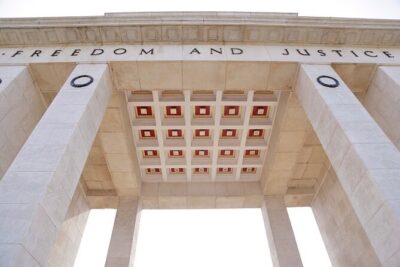

Full-Day Private Culture and History Tour of Accra
Read our review →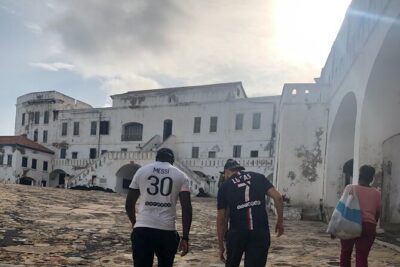
Ghana Private Historic Tour through Castles and Nature
Read our review →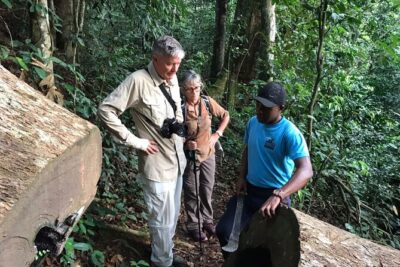
The Historic Cape Coast and Elmina Tour (The Land of History).
Read our review →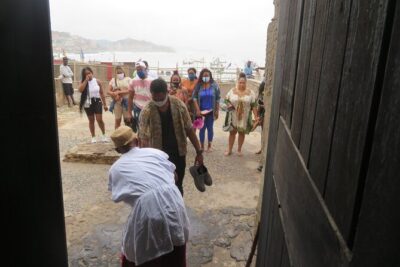
7-Day Private Cultural and Heritage Tour in Ghana
Read our review →Browse the lists this tour appears in