
Reviewed · CAPE COAST CASTLE TOURS
Accra and Cape Coast Escape
This is an interesting mix of nature, big ideas, and hard history. I like that the day is split between the Kakum canopy experience and the Elmina and Cape Coast castles, so you get contrast, not just museums. One thing to consider: Day 1 carries serious emotional weight, and the drive time can make it a long day.
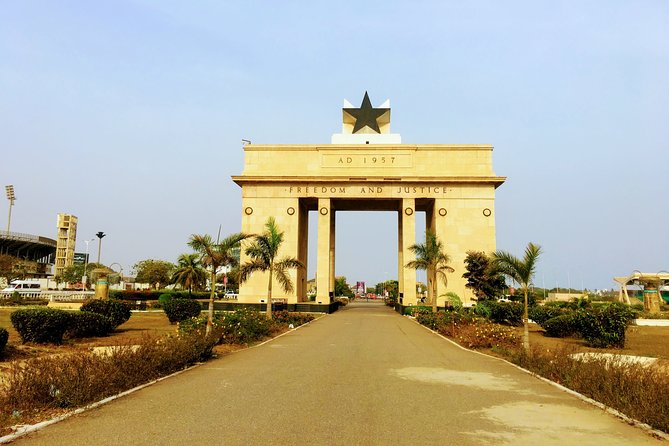
On Day 2, Accra slows down just enough to help you connect the dots. You’ll see places tied to William Edward Burghardt Du Bois and Kwame Nkrumah, plus Independence Square and the Center for National Culture. I also love that your time includes both interpretation and shopping, so you can go home with memories and practical souvenirs.
Logistically, this runs as a two-day loop from Accra with pickup and drop-off, and it caps at 40 travelers. Just plan your energy for a full schedule, and be ready for possible itinerary adjustments if something changes on the ground.
Key things to know before you go
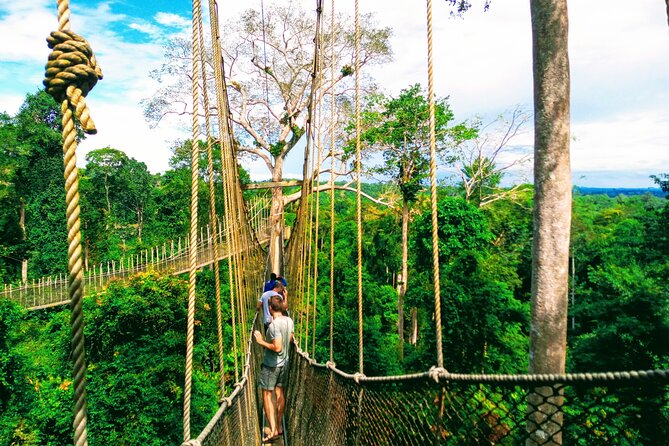
- Canopy Walk at Kakum National Park: a suspended walkway about 30 meters above the ground, plus rainforest trails and bird spotting (over 200 species are reported in the park).
- Elmina Castle first stop in Atlantic trade history: founded by Portuguese in 1482, later tied to the Atlantic slave trade route.
- Cape Coast Castle layers of European power: Portuguese trade lodge, then Swedish and Danish fortifications, handed back and forth over time.
- Du Bois Center is personal, not just a statue stop: named for Du Bois, featuring his library, small museum items like graduation robes, and a mausoleum setting.
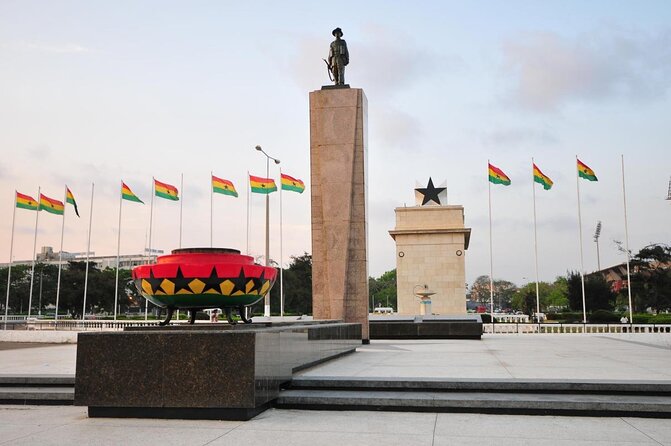
- Independence Square is huge scale, practical photos: built to honor the Queen Elizabeth II visit, with seating capacity around 30,000 in the surrounding stands.
- Local handicrafts shopping is built in: the Center for National Culture is one of the easiest places on this route to buy things like Kente cloth and wood carvings.
Kakum National Park Canopy Walk: nature plus real time in the forest
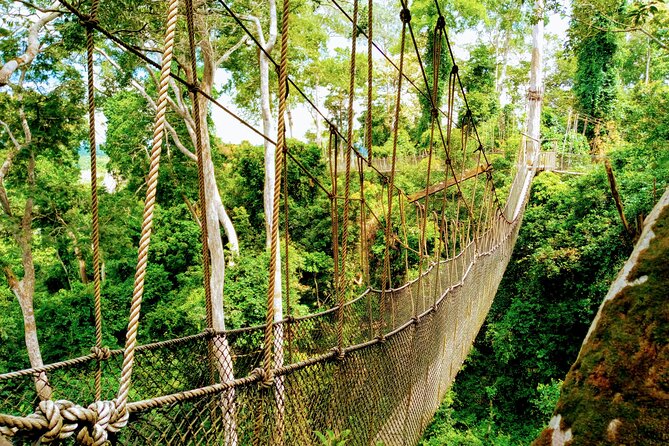
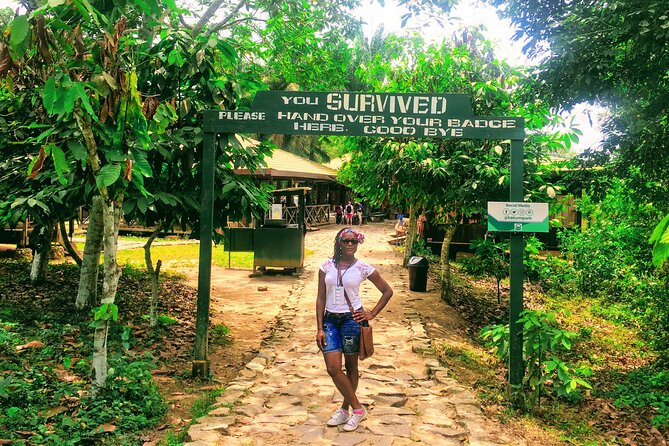
Kakum National Park is the first stop, and it sets the tone in a very Ghana way, green and alive. The park protects what’s left of undisturbed tropical rainforest, with trails that are set up for self-guided day hiking. You also get a sense of why this area matters for conservation, since it shelters plant and animal treasures of the African tropical forest.
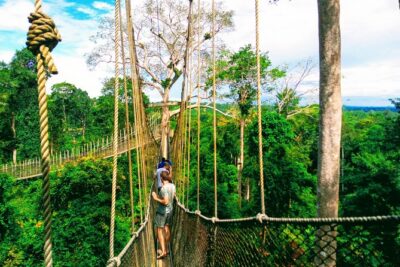
The headline experience is the Canopy Walkway. It’s suspended about 30 meters above the ground, which means you’re not looking at the forest from the bottom. You’re looking across the treetops, where the light changes and birdlife is easier to spot than you’d expect. If you like birds, this is a standout: the park has over 200 bird species represented, including parrot types, bee-eaters, hornbills, and kingfishers.
You’ll also be walking through dense vegetation at ground level before or after the canopy portion. That gives you a different feel than the “quick photo stop” style of sightseeing. You might see monkeys, and the park also protects globally endangered species such as forest elephant and bongo, the largest forest antelope.
Time on site is about 2 hours, so you’re not rushed. For that duration, wear shoes you trust on uneven paths and bring a light rain layer if the weather looks questionable. And if you’re the type who gets chilly on suspension bridges, plan for it, even in warm weather, because height can make it feel cooler.
Other visits to Cape Coast Castle:
- The Cape Coast Day Tour
★ 5.0 · 525 reviews - The Cape Coast Tour
★ 5.0 · 177 reviews - From Accra: Cape Coast, Elmina Castle & Kakum Park Day Tour
★ 4.6 · 144 reviews
Elmina Castle and Cape Coast Castle: facing the Atlantic slave trade on purpose
Day 1 then turns serious, with two castle visits that you can’t really speed-run. Elmina and Cape Coast are some of the most important stops on the Atlantic slave trade story in Ghana, and you’ll visit both locations rather than relying on a single site.
Elmina Castle, Portuguese origins and the trade route reality
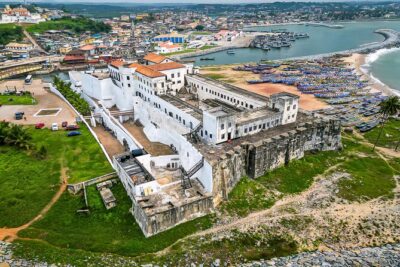
Elmina Castle started with Portuguese involvement in 1482, built as São Jorge da Mina, or St. George of the Mine. The key detail here is the long timeline. This is described as the oldest European building below the Sahara, and it began as a trade settlement. Later, Elmina became one of the major stops on the Atlantic slave trade route.
Expect the visit to feel informative but heavy. Even if you already know the basics, you’ll likely pick up new context through the way the castle evolved and changed hands. There’s a difference between learning the topic and standing in a place that functioned as part of a system.
Your time at Elmina is about 1 hour, with admission included. Use that hour to slow down, look for the specific sections tied to trade and confinement, and ask your guide questions if something feels confusing.
Cape Coast Castle, shifting powers and a bigger footprint
Cape Coast Castle is often more expansive and, in practice, it takes a bit more mental space. It began as a trade lodge constructed by Portuguese in 1555 on the Gold Coast. Later history becomes a chain of takeovers: Sweden’s conquest in 1653 led to a wooden fortress, and about a decade later the Danes reconstructed it in stone after seizing power.
The castle then passed through multiple European hands. That “who controlled the fort” history matters, because it shows how a location could be turned into a machine for commerce and coercion, not just a building with one era.
You’ll get about 1 hour here too, with admission included. If you’re the kind of traveler who needs a moment between stops, build that into the schedule, even if you have to do it quietly. You don’t want to leave one site and rush straight into the next without letting your brain catch up.
More trips leaving Accra:
- Experience the Beauty, History and the Culture Of Accra in a Day
★ 5.0 · 323 reviews - Accra Detailed City Tour
★ 4.5 · 118 reviews - Accra Guided City Tour Experience
★ 4.7 · 88 reviews - Accra Guided City Tour Experience
★ 5.0 · 76 reviews
Day 1 from Accra: expect travel time and pace yourself
This tour is described as two full-day tours from Accra, and Day 1 follows that promise. You start with Kakum National Park and then continue to Elmina and Cape Coast castles. That sequence is smart, because it gives you contrast, but it also means you’re in motion for a good chunk of the day.
Road time can be substantial. One practical detail I’d plan around is that the drive to Kakum is often in the ballpark of a 4-hour trip each way depending on conditions. You won’t get to do “stop-and-stretch” sightseeing during that drive, so bring along what you need to stay comfortable.
Meals are not included, so you’ll want to make a decision before you go. Either plan to pick up snacks and keep water on hand, or rely on your schedule for breaks where you can buy food. Since your time on Kakum is fixed at about 2 hours, you don’t want hunger or low energy to sabotage the nature portion.
And here’s a balanced point from my perspective on tours like this: you’re dealing with weather, traffic, and site rules. One past issue that can happen on routes like this is changes to the planned itinerary that do not get explained clearly. My advice is simple: when you get your confirmation and any day-of updates, double-check the order and timing before you start moving. If something changes, ask what’s different and why. A good guide will handle that calmly.
W.E.B. Du Bois Center: more than a name, it’s a lived story
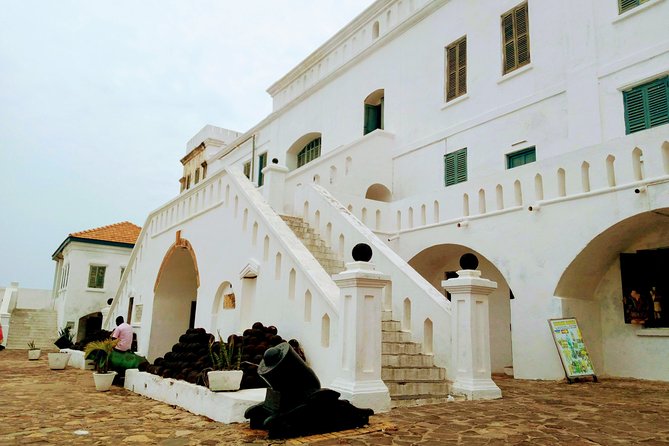
Day 2 begins with the W.E.B. DuBois Center, named for William Edward Burghardt Du Bois. The center connects Du Bois’s life and legacy to Ghana in a very direct way. He became a citizen in the 1960s, and the center is where he once lived with his wife. It also holds his burial site.
This stop is great if you want history tied to a person, not just a timeline. The center includes his personal library, and there’s also a small museum with a handful of personal items, including graduation robes. You can also visit the mausoleum setting, which is surrounded by Asante stools, plus areas like a seminar room, a restaurant, a gallery, an amphitheater, and a research center for Pan-African history and culture.
Your visit is about 40 minutes, with admission included. That might sound short, but it’s the right length for this kind of place, because you’re not trying to read every panel. Use the time to find the main threads: Pan-Africanism, Du Bois’s later life in Ghana, and how the center preserves tangible pieces of his story.
Kwame Nkrumah Memorial Park and Independence Square: a tour of ideas made into space
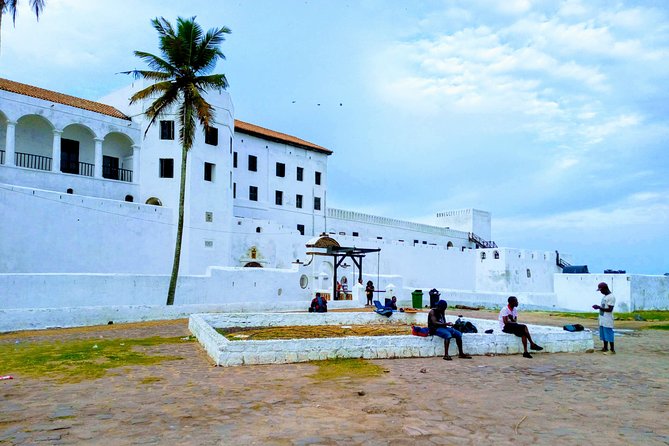
Next comes the Kwame Nkrumah Memorial Park, also known as the Kwame Nkrumah Mausoleum. This is the last resting place of Ghana’s first President, Osagyefo Dr. Kwame Nkrumah. The museum is dedicated to honoring his dedication to liberating Ghana, formerly known as the Gold Coast, from colonial rule.
The museum houses his personal effects and publications, along with pictures that show his life history and connections with famous people from his era. Even if you don’t know his full political biography, the focus here is clear. You’re seeing how a leader’s role became a physical place you can visit, and how memory is built into institutions.
Plan on about 1 hour at the memorial park, admission included.
After that you’ll move to Independence Square, also known as Black Star Square. This is one of those places where scale hits you fast. It’s described as a vast, empty expanse of concrete, overlooked by spectator stands that can seat about 30,000 people.
The square was commissioned by Nkrumah to honor the visit of Queen Elizabeth II. There’s also an Independence Arch and the Flame of African Liberation. In the roundabout before the square, you’ll find the Black Star Gate, also known as the Black Star Monument, built in 1961.
Your time here is about 20 minutes, admission included. That length is exactly what I’d want for a big public space like this. You get to walk it, orient yourself, and take photos without feeling trapped in a long stop that never ends.
Center for National Culture: shop like a local, not like a mall
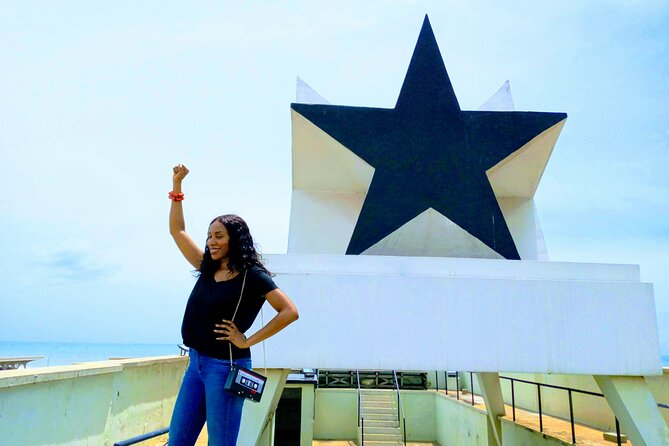
The final stop is at the Center for National Culture, often described as an arts center. This is where your tour turns into shopping you can actually use later.
The site is a crafts market with lots of stalls. You’ll see Ghanaian inspired arts and crafts, including woven Kente cloth, wooden sculptures, earrings, and other fashion accessories that pair with different styles of African attire from across Ghana.
Your time is about 30 minutes, with admission included. That’s enough to do one solid round, compare a few stalls, and decide what you’ll buy. It’s not enough for casual wandering for an hour, so come with a quick plan in your head.
Practical advice: buy things that travel well. Textiles can be folded and packed, carvings should be protected, and jewelry is usually easier to manage. If you’re hoping for something very specific, like a certain pattern or size, you might find it helpful to ask for a matching set or a comparable option when the first choice sells out.
Price and logistics: is $250 good value for two days?
The price is $250 per person for a tour that runs about 2 days. On average, it’s booked about 43 days in advance, which tells me demand can build if you wait too long.
What makes the value feel real is what’s included:
- Local transportation
- Entrance fees to the tour sites
- Hotel pick-up and drop-off within Accra
- Fuel charge and taxes
- Guide support
- Cost of activities in the itinerary
What’s not included is also clear:
- Daily meals
- Accommodation
- Sightseeing not listed in the itinerary
So you’re paying for the big ticket logistics and the site access. The main “budget shock” to plan for is food. If you assume meals are included and they are not, you’ll feel it fast on day 1 after Kakum and between castles and park time.
Also, this tour has a maximum of 40 travelers, which is important. Smaller groups generally mean less chaos at entry points, better control over timing, and more chances for your guide to actually explain what you’re seeing.
One more practical point: the tour requires good weather. If rain or poor conditions affect the canopy walkway or outdoor parts, the experience can shift. I like that your options in that situation are either a different date or a full refund, because you avoid the feeling of paying for something you never got.
Who should book this Accra and Cape Coast escape?
I think this tour fits best if you want Ghana beyond the quick highlight reel. You’ll like it if:
- You care about Ghana’s history and culture in Accra and also want to pair that with the Atlantic slave trade story in the castles.
- You want a real nature stop, not just a roadside viewpoint, and Kakum’s canopy is on your bucket list.
- You prefer guided interpretation when visiting intense, historical sites like Elmina and Cape Coast.
It also works for solo travelers and people who want structure. One strong signal from this type of tour is that a standout guide can make the whole experience feel safe and smooth. In at least one case, the guide was named Zainab, and that name popped up for a reason: kind, engaging, and informative.
If you hate long days or you’re emotionally sensitive to topics like the slave trade, plan your pace carefully. You can still go, but you should go with intention, not as a rushed checklist.
Should you book? My straight answer
Book it if you want a two-day Ghana plan that combines canopy forest time with history you can’t learn properly from a book alone. The value is solid because entrance fees, transport, and guide support are bundled, and the stops are genuinely different from each other.
I’d think twice if you dislike long travel days, because Kakum can mean serious road time. And I’d do one extra step before you go: when confirmation or day-of updates arrive, confirm the order and timing so you’re not surprised if anything shifts.
Overall, this is the kind of trip that can leave you quiet after the castles and then energized again by Accra’s landmarks and the shopping at the Center for National Culture.
FAQ
How long is the Accra and Cape Coast Escape tour?
It runs for about 2 days.
What are the main stops included in the tour?
You’ll visit Kakum National Park, Elmina Castle, Cape Coast Castle, the W.E.B. DuBois Center, Kwame Nkrumah Memorial Park, Independence Square, and the Center for National Culture.
Are entrance fees included?
Yes. Entrance fees to the tour sites and costs of activities in the itinerary are included.
Does the price include meals and accommodation?
No. Daily meals and accommodation are not included.
Is pickup and drop-off included?
Yes. Hotel pick-up and drop-off within Accra are included, and the meeting point is Accra Mall (Plot C11, Tetteh Quarshie Interchange, Spintex Rd).
What happens if the weather is bad?
This experience requires good weather. If it’s canceled due to poor weather, you’ll be offered a different date or a full refund.
Newly reviewed around Accra
- Private Slave Castles and Dungeons Tour in Cape Coast, Ghana★ 5.0 · 3 reviews
- Day Tour to Kakum National Park, Cape Coast and Elmina Castles★ 5.0 · 3 reviews
- Half-Day Guided Fabric Tour in Ghana★ 5.0 · 3 reviews
- Cape Coast Day Tour★ 5.0 · 3 reviews
- Cultural Tour Of Ghana And South Africa 12 Days★ 5.0 · 3 reviews
- Experience the Culture of Ashanti Kingdom in 5days★ 5.0 · 3 reviews
- Full Day Accra Guided Tour★ 5.0 · 3 reviews
- Experience Aburi Botanical Gardens And Boti Water Falls In A Day.★ 5.0 · 3 reviews
Cape Coast Castle Tours, compared.

Cape Coast, Elmina Castle & Kakum Park Day Tour
Read our review →
Cape Coast ,Elmina Castle and Kakum Full-Day Tour
Read our review →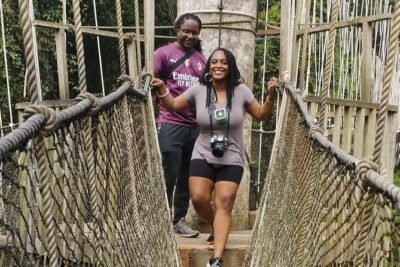
10 Days Trip to Cape Coast and Elmina Castles from Accra
Read our review →
Assin Manso Slaves River and Cape Coast Castle Tour
Read our review →Browse the lists this tour appears in