
Reviewed · ACCRA CITY TOURS
Accra City Tour Experience
This Accra city tour is interesting because it follows Ghana’s story in a practical order, from nature and medicinal plants to independence-era monuments and Pan African culture. I like having a private guide who keeps the day organized and explains what you are seeing.
I also like the time at Makola Market, where you can shop for locally made souvenirs and get a real feel for daily trade. One drawback to plan for is a long outing, about 5 to 8 hours, and lunch isn’t included.
Quick hits before you go
- Private guide, your pace, your group: You are not stuck with a huge crowd deciding where to stand.
- Makola Market in the middle of it all: A trade hub built in 1924, with time to browse or buy.
- Independence Square photos and horse rides: A fun stop tied to Ghana’s March 6, 1957 independence moment.
- Museum time with context: The National Museum opened March 5, 1957, and you get an hour there.
- W.E.B. Du Bois centre with real landmarks: Library and grave yard visits, plus Pan Africanism background.
- Admissions and transport handled: Admission tickets, a/c vehicle, and bottled water are included, with pickup and drop-off within Accra.
Why this Accra day tour works as a first-time plan

Accra can feel big and loud fast. This tour helps you get your bearings without wasting half a day trying to figure out what matters. Instead of jumping randomly between landmarks, you move through themes: nature, trade, politics, art, and Pan African culture.
You also get the kind of guidance that makes outdoor stops much more meaningful. When someone explains the why behind a place, your photos turn from proof-of-life shots into a story you can actually tell later. And because it is private, your group can ask questions and slow down when a market stall or museum detail grabs your attention.
The schedule is built for a full, productive day. That is great if you like structure. It is less great if you want a leisurely afternoon or if you only want the “pretty” parts. Also, do plan for walking and heat. Even with an air-conditioned vehicle doing the shuttling between stops, you will still be out there.
More Accra city days:
- Accra Detailed City Tour
★ 4.5 · 118 reviews - Accra Guided City Tour Experience
★ 4.7 · 88 reviews - Accra Guided City Tour Experience
★ 5.0 · 76 reviews
Getting oriented: pickup, timing, and what to expect
The tour starts at 9:30 am. From there, you are looking at roughly 5 to 8 hours total, depending on your pace and how long you spend at places where you can browse and take photos.
Pickup and drop-off are included within Accra city, and you travel by air-conditioned vehicle. Bottled water is provided, which is a small thing that helps a lot on a long day. You also get a mobile ticket, which makes entry smoother at the sites where tickets are needed.
This is listed as a private tour/activity, meaning it is only your group. That matters because your guide can time the stops around your comfort level, whether that means standing in the shade a moment longer or buying souvenirs at a more relaxed rhythm.
Tip for your comfort: wear shoes you can walk in without thinking about it. Market stops and museum time both tend to involve short bursts of movement.
Aburi Botanical Gardens to set the story with plants and medicine
Your day begins with Aburi Botanical Gardens. This is a smart first stop because it grounds the rest of the tour in something immediate and human: the relationship between plants and traditional medicine.
You will learn about various plants and their medicinal purposes. Even if you know little about botany, you can still enjoy this as a “how people used the natural world” lesson. It also gives you a calmer start before you head into the busier central Accra sites like Makola Market and Independence Square.
A consideration: because it is a garden setting, you will likely be walking a bit and looking around closely. Plan to keep your pace steady and ask your guide to point out the plants that relate most to what you want to learn about.
If your goal is to understand Ghana beyond monuments, starting with Aburi is a great move.
Makola Market, built in 1924, where you shop and learn trade
Makola Market is the kind of place where Accra is easy to understand. It was constructed in 1924 and has long been described as the heart of urban Ghanaian life. It is the main wholesale and retail marketplace in Accra, and it plays a big role as a social and cultural institution, not just a place to buy stuff.
You get about 45 minutes here, with admission ticket included. That time is enough to window shop without rushing and still buy locally made souvenirs if you want. The best way to use this stop is to do two passes: one quick scan to see what is for sale, then a second walk to make actual decisions.
Practical reality check: markets can get crowded. Your guide helps you navigate, but you still want to keep your things secure and your head on a swivel in the busy lanes. If you like negotiating, keep it friendly and simple. If you do not, tell yourself you are browsing first and buying second.
This is one of the stops that most strongly turns a tour into a personal experience. It is not just looking. It is interacting, choosing, and taking a small piece of the place home.
More trips leaving Accra:
- The Cape Coast Day Tour
★ 5.0 · 525 reviews - Experience the Beauty, History and the Culture Of Accra in a Day
★ 5.0 · 323 reviews - The Cape Coast Tour
★ 5.0 · 177 reviews - From Accra: Cape Coast, Elmina Castle & Kakum Park Day Tour
★ 4.6 · 144 reviews
Kwame Nkrumah Memorial Park, the independence legacy made physical
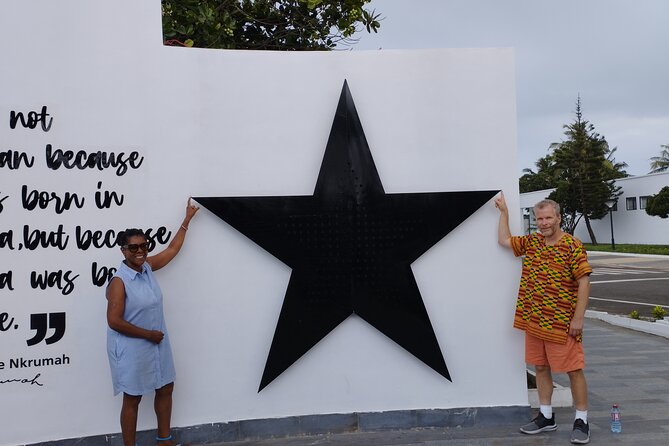
Next up is Kwame Nkrumah Memorial Park, also known as the Kwame Nkrumah Mausoleum. This is the final resting place of Ghana’s first President of the republic, Osagyefo Dr. Kwame Nkrumah. The memorial is dedicated to his campaign to liberate Ghana.
You get about 45 minutes here. The time works well because it gives you a chance to slow down, read what is available, and absorb the meaning without feeling like you are constantly rushing to the next photo spot.
What I like about this stop is how it links directly to the wider independence story you will see later in the day. When you visit Independence Square, you are no longer taking in that place as a generic monument. You understand it as part of a timeline, with a name and a movement behind it.
Consideration: this is a reflective stop. If your group is mostly in “shopping mode” you might feel the pace change a bit. That can be a good thing. It keeps the day from becoming one long line of noise and purchases.
Centre for National Culture and Independence Square, art plus the 1957 moment
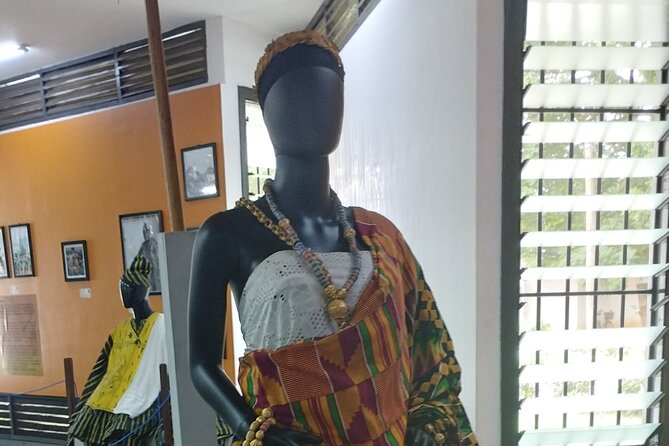
The Centre for National Culture gives you a different kind of Ghana. This stop is about seeing artworks by local people, with time to buy as souvenirs.
You get about 45 minutes. That is the sweet spot for art shopping without losing the rest of the day. When you browse locally made work in a dedicated culture space, you are more likely to find pieces that connect to the place rather than generic “tourist trinkets.”
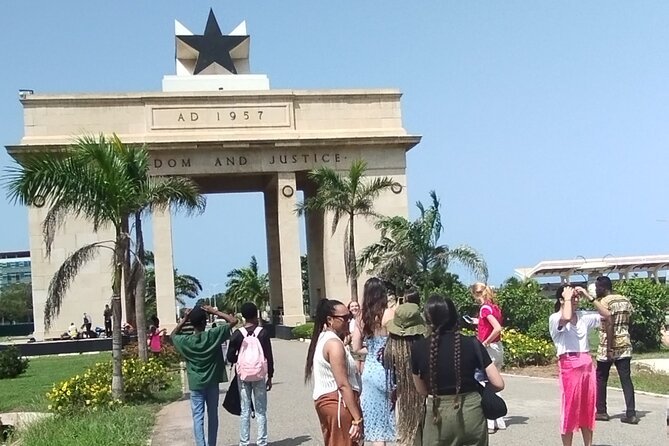
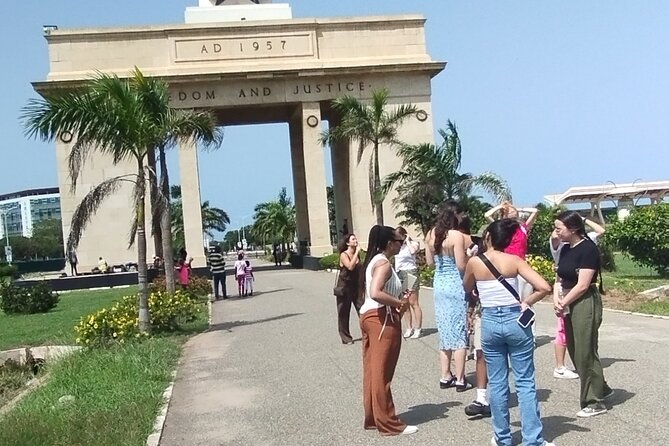
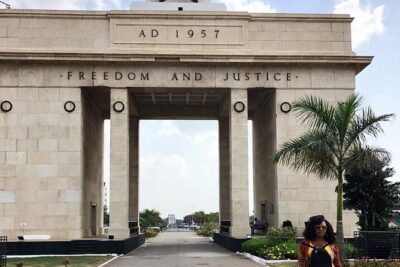
Then comes Independence Square, tied to a very specific date: Ghana declared independence on March 6, 1957. You get about 45 minutes here as well, and yes, it is built for pictures. It is also one of those places where you can add a bit of fun, including horse rides, if you want.
This pairing, culture centre first then Independence Square, makes sense. The culture centre shows you creativity as a living practice. Independence Square shows you national identity made visible in stone, space, and ceremony.
A note to keep your expectations realistic: if you want silence and solitude, these two stops might not be your mood. If you want energy, history, and a chance to move around, they hit the mark.
National Museum of Ghana, why the building opened in 1957 matters
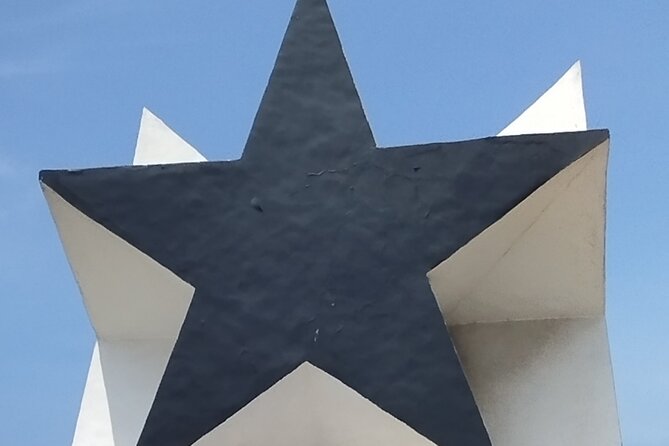
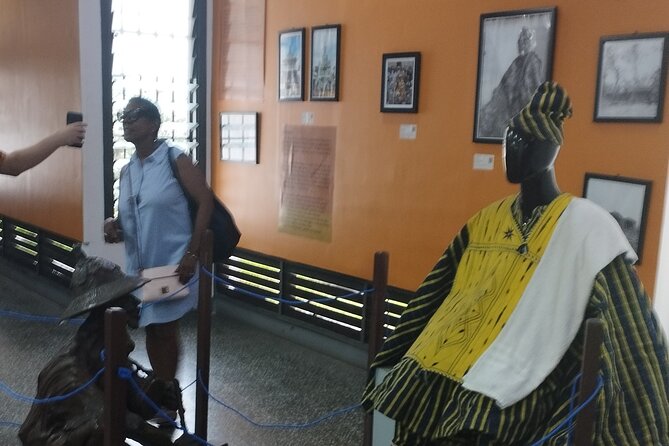
The National Museum of Ghana is both old and important. It is the largest and oldest of the six museums under the Ghana Museums and Monuments Board. The museum building was opened on March 5, 1957, as part of Ghana’s independence celebrations.
You get about 1 hour here, and admission ticket is included. One hour is enough to see highlights without treating the museum like a marathon. You can also focus your attention based on what you are most curious about. The museum includes paintings and all sorts of art, from sculptures to fabric art and materials used in earlier times.
What makes this stop valuable is that it gives you a “big picture” view after the more location-specific stops. You have already visited trade and independence landmarks, and now you get a place where the culture and creativity are presented in one indoor setting.
Consideration: indoor museums can feel warm or dark depending on the galleries. Bring a bit of patience for signage and crowd flow, especially if you are the type who likes to read every placard.
W.E.B. Du Bois Memorial Centre for Panafrican Culture, library, grave yard, and ideas
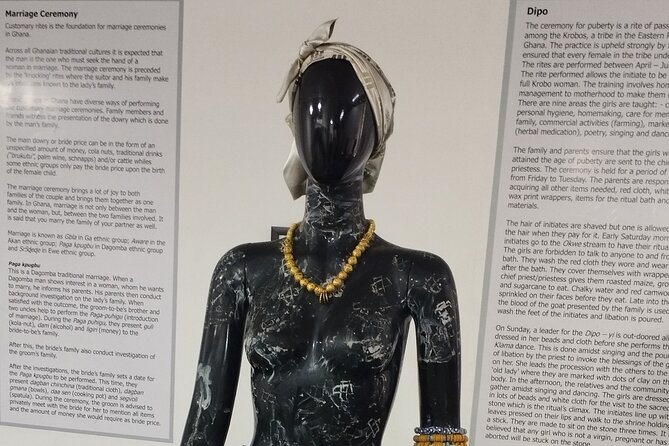
If you want the intellectual backbone of the day, this is it. The W.E.B. Du Bois Memorial Centre for Panafrican Culture in Ghana is where you learn about Dubois’ history as a Pan Africanist and his contribution to Pan Africanism.
You spend about 45 minutes here. The focus is not just on biography as dates. You also visit his library and grave yard. Those are the kinds of details that make the story feel grounded and human.
This stop pairs really well with everything else. You have already seen Ghana’s independence legacy through Kwame Nkrumah and Independence Square. Then you shift to a global frame, where Ghana’s story connects to wider Pan African movements and thinkers.
If your interest runs toward social history, ideas, and how movements travel across borders, you will likely feel the day “click” here.
Practical tip: this is the part where you will benefit most from asking your guide questions, especially if you want connections between Ghana’s independence story and Pan Africanism.
Price and value: what you get for $72 per person
At $72.00 per person, this is priced for a full guided day with multiple paid admissions included. The big value factors are not just the guide. You also get:
- Air-conditioned vehicle transport across Accra
- All fees and taxes
- Car rental fees and fuel cost handled
- Free pickup and drop-off within Accra city
- Bottled water
- Admission ticket included at each stop
So you are not paying extra at every site for entry. That saves money, and it saves mental load. You spend your time thinking about what to see instead of hunting for tickets and figuring out logistics on the fly.
One potential budget issue: lunch. Lunch is specifically listed as not included. If you care about a sit-down meal, you should plan on buying lunch during the day or arranging your own food stop so you do not get hangry by the time you reach the museums.
Also, this tour is typically booked about 12 days in advance on average. If you are traveling in a busy period, booking earlier helps you lock in the day and the guide.
Who should book this Accra city tour, and who might skip it
This tour is a good fit if you want a structured introduction to Accra with clear context. You will enjoy it if you like history and culture that you can connect to specific places: Makola Market for trade, Kwame Nkrumah for independence legacy, the National Museum for art and collections, and the W.E.B. Du Bois centre for Pan African ideas.
It is also a solid option if you prefer planning support. With pickup, transport, admission tickets, and a professional guide, you are not piecing together a half-dozen separate activities.
You might consider a different style of tour if you want lots of unscheduled time. The day is designed to cover major highlights in sequence, so there is less room for drifting. Also, if you only want a quick tour under a few hours, the 5 to 8 hour commitment might feel too long.
Finally, if your priority is a food-focused day, you will need to handle lunch on your own since lunch is not included.
Should you book it?
Yes, if you want an organized, guided way to understand Accra from multiple angles in one day. This is especially worth it when you value included admissions, air-conditioned transport, and a private setup where you can ask questions.
I would book it if you are the type who likes learning the why behind the what, and you are comfortable spending time in markets and monuments as part of the experience, not just a photo stop.
Skip it only if the long day would stress you out, you need lunch taken care of, or you prefer a slower, neighborhood-by-neighborhood rhythm instead of a highlights loop.
FAQ
How long is the Accra city tour?
The tour runs about 5 to 8 hours.
What time does the tour start?
The start time is 9:30 am.
Is pickup and drop-off included?
Yes. Pickup and drop-off within Accra city are included.
Are admission fees included?
Yes. Admission tickets are included for the stops listed.
Is lunch included?
No. Lunch is not included.
Is this a private tour?
Yes. This is a private tour/activity, and only your group participates.
What is included in the price besides the guide?
You get an air-conditioned vehicle, all fees and taxes, car rental and fuel cost, bottled water, and free pickup and drop-off within Accra city, along with admission tickets at the stops.
Can I cancel for a full refund?
Yes. You can cancel up to 24 hours in advance for a full refund.
Is the tour suitable for most people, and are service animals allowed?
Most people can participate, and service animals are allowed.
Newly reviewed around Accra
- Private Slave Castles and Dungeons Tour in Cape Coast, Ghana★ 5.0 · 3 reviews
- Day Tour to Kakum National Park, Cape Coast and Elmina Castles★ 5.0 · 3 reviews
- Half-Day Guided Fabric Tour in Ghana★ 5.0 · 3 reviews
- Cultural Tour Of Ghana And South Africa 12 Days★ 5.0 · 3 reviews
- Cape Coast Day Tour★ 5.0 · 3 reviews
- Experience Aburi Botanical Gardens And Boti Water Falls In A Day.★ 5.0 · 3 reviews
- Experience the Culture of Ashanti Kingdom in 5days★ 5.0 · 3 reviews
- Full Day Accra Guided Tour★ 5.0 · 3 reviews
Accra City Tours, compared.


Escape Accra City to Aburi Gardens and Tetteh Quarshie Cocoa Farms
Read our review →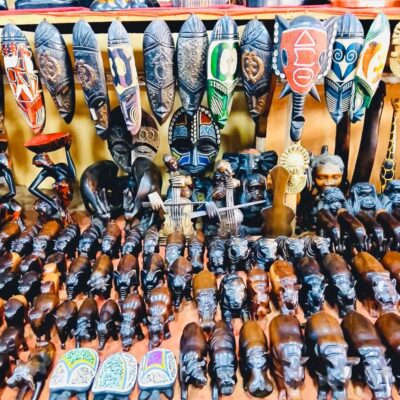
Browse the lists this tour appears in