
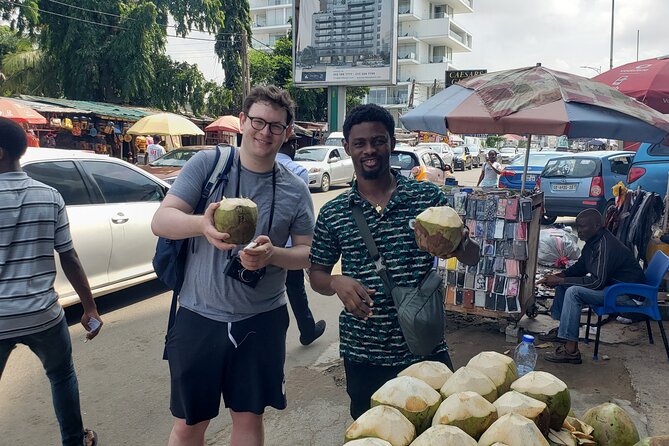
Reviewed · ACCRA CITY TOURS
Accra Detailed City Tour
Accra is one of those cities where you learn fast, partly because you are surrounded by history in everyday life, and partly because the pace here is always a little bit different from what you expect. This tour is a smart way to get your bearings while still seeing the big-name sites, from national monuments to old forts, plus a beach finish.
What I like most is the way you get a guided orientation to Ghanaian culture, not just a list of stops, and the fact that your time is organized around practical sightseeing blocks that fit a half-day. I also like that you end with Labadi Pleasure Beach, so you can cool off after walking and heat. A possible drawback: the day can run on local realities like road congestion and site closures, so transport and timing may shift a bit.
Key points at a glance
- Ghana National Museum opened on 5 March 1957, with archaeology and ethnography collections
- Makola Market time with women traders and room to bargain while taking photos
- Jamestown walk plus the colonial-era forts, James Fort and Ussher Fort
- W.E.B. DuBois Center as both museum and library, tied to his life and final resting place
- Kwame Nkrumah Memorial Park for Ghana’s first Pan-African leader, 1909 to 1972
- La Pleasure Beach ends the tour in the city’s most-visited beach zone
Why this Accra route works (and what you’ll really get out of it)
This is a highlights circuit built for people who want meaning, not just movement. You’ll spend a few hours moving through key neighborhoods and institutions, and your guide is there to translate what you’re seeing into something you can actually connect with Ghanaian life today.
You get value in two ways. First, the stops are grouped so you can compare big themes in one day, national identity at Independence Square, older Accra at Jamestown, and Pan-African thinking at the Du Bois and Nkrumah sites. Second, the beach finish makes the whole plan feel less exhausting. It’s a relief to know you aren’t being asked to keep going after the long sightseeing stretch.
One thing to keep in mind: Accra traffic can be intense, and some days the operator may use alternative ride options to keep the schedule moving. In other words, the tour is designed to be flexible, so you should be flexible too.
More Accra city days:
- Accra Guided City Tour Experience
★ 4.7 · 88 reviews - Accra Guided City Tour Experience
★ 5.0 · 76 reviews - Know Ghana in 4 hrs – Accra City Tour
★ 4.5 · 47 reviews
National Museum of Ghana: where the story starts in real objects
Your tour kicks off at the National Museum of Ghana, the largest and oldest of the museums under the Ghana Museums and Monuments Board. It opened on 5 March 1957, and that date matters because it places the museum right in the early era of Ghana’s independence story.
What makes this stop worth your time is the range of objects. In the archaeology section, you’ll find material that stretches from the Stone Age through more recent historical periods. In the ethnography gallery, expect displays tied to everyday culture and status, like chief’s regalia, indigenous musical instruments, gold weights, beads, traditional textiles, stools, and pottery.
If you like museum visits that feel like you’re learning through hands-on detail, this is the kind of place where you can spend more time just looking carefully. One more thoughtful touch: the museum also includes objects from other African countries collected through exchange, including Senufo masks from Ivory Coast, Zulu wooden figures, and bead-ware from Southern Africa. It’s a reminder that cultural connections are older than borders.
Time on site is about an hour, so you won’t be stuck in museum purgatory. But if you’re the type who likes to read every label, plan to focus on the sections your guide points you toward.
Makola Market and Independence Square: street life and national pride close together
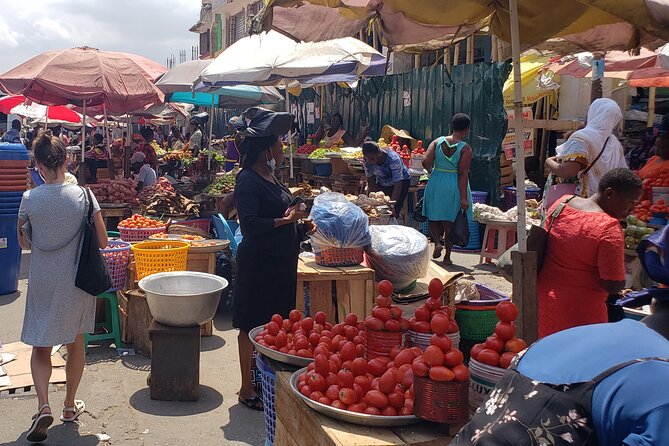
Next comes Makola Market, Accra’s major shopping district. The focus here is your time with traders and the sensory rhythm of the market, where you’ll see busy outdoor and indoor areas and get a chance to shop while you watch how people do business day to day.
This isn’t just a drive-by. You’re meant to experience the push and pull of bargaining, and you’ll likely be photographing colorful scenes and faces while you’re at it. A helpful approach here is to treat it like a conversation, not a contest. If you go in with small, flexible goals, you’ll have a much smoother time.
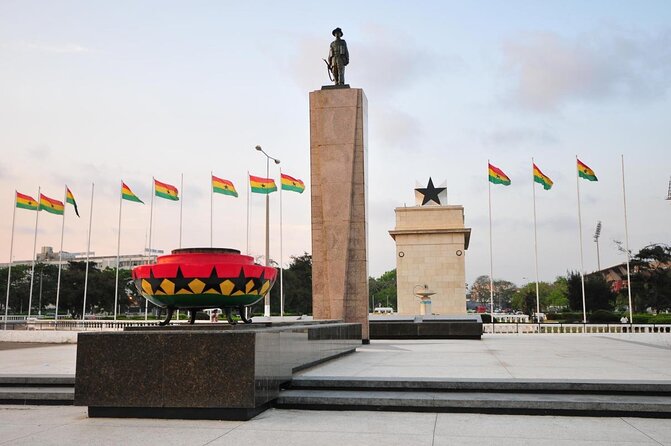
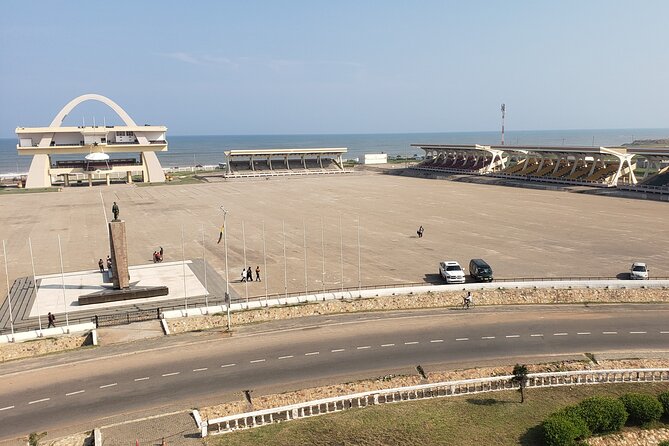
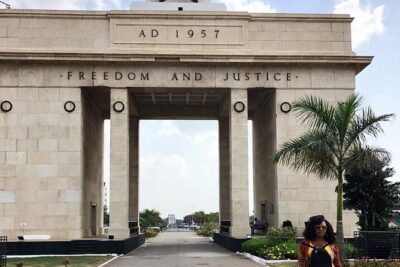
After the market energy, you switch gears at Independence Square. This area is centered on monuments tied to Ghana’s independence struggle, including the Independence Arch, the Black Star Gate, and the Liberation Day Monument. Even if you know the headlines already, seeing these structures in the open air helps them land differently.
You get about 30 minutes at this stop, so think of it as a “moment to orient your understanding.” It’s the kind of place where your photos turn into context, not just pictures.
Centre for National Culture: crafts, bargains, and the chance to learn
The Centre for National Culture is where the tour leans hard into hands-on Ghanaian craft culture. It’s described as the largest craft market in the country, and the vibe is built around stalls where you can shop for souvenirs and bargain with confidence.
This is also where the tour adds a fun element that goes beyond shopping. You may have the chance for extra drum and local instrumental lessons with locals. If you’ve ever watched drumming and thought, I want to understand what I’m hearing, this is the sort of moment that helps.
The practical takeaway: come ready to slow down a little. You don’t want to rush through the stalls if you’re hoping to find something authentic at a fair price. And because this is a market, the sun and heat will do their thing, so keep water nearby and take breaks when you can.
More trips leaving Accra:
- The Cape Coast Day Tour
★ 5.0 · 525 reviews - Experience the Beauty, History and the Culture Of Accra in a Day
★ 5.0 · 323 reviews - The Cape Coast Tour
★ 5.0 · 177 reviews - From Accra: Cape Coast, Elmina Castle & Kakum Park Day Tour
★ 4.6 · 144 reviews
Jamestown on foot: old Accra, colonial-era forts, and a sense of place
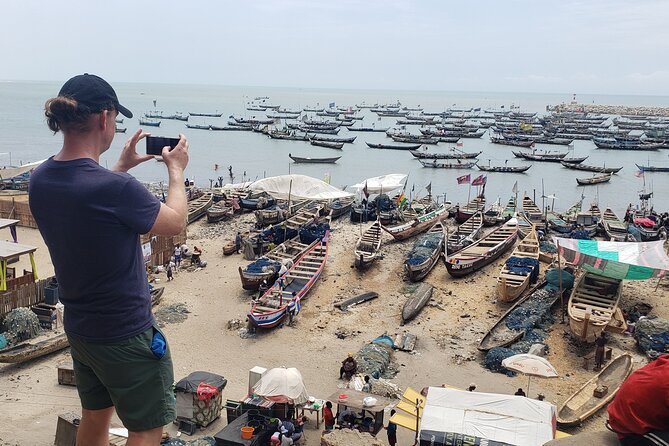
Jamestown is one of Accra’s oldest districts, and the tour’s plan is to give you a walking orientation through the area. You’ll move through historic streets and then visit the two major colonial-era forts in old Accra: James Fort and Ussher Fort.
These forts matter because they help explain why the coast of Ghana has always been about more than beach days. They are physical reminders of the colonial period, but they also show how layers of history build into the present-day neighborhood pattern.
A walking tour here is a good choice because you can feel the district as a living place, not just a museum setting. The drawback is simple: you can end up walking in full sun. If that would bother you, bring sunscreen, a hat, and shoes you can tolerate for a while.
In a perfect scenario, this stop gives you that “I get it now” moment, where map lines become real neighborhoods.
W.E.B. DuBois Center and Kwame Nkrumah Memorial Park: Pan-African ideas in one day
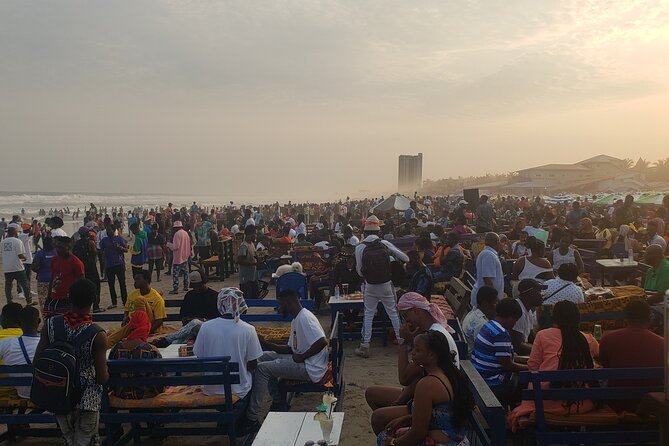
After Jamestown, the tour shifts from colonial-era landmarks into Pan-African thought and legacy. First up is the W.E.B. DuBois Center.
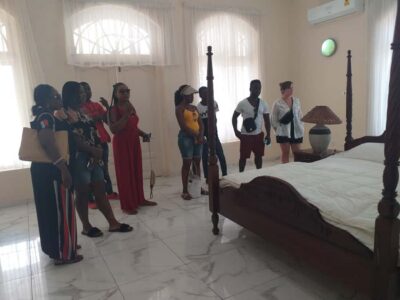
This center is the home, library, and final resting place of American-born social justice crusader William Edward Burghardt Du Bois. That combination is powerful. A museum is one thing, but a library and a final resting place add weight, and it changes how you walk through the space.
The Du Bois Center also includes an Open Air Theatre where intellectual seminars, lectures, workshops, and cultural events take place. If your goal is to connect the dots between Ghana and global civil rights ideas, this is one of your best stops.
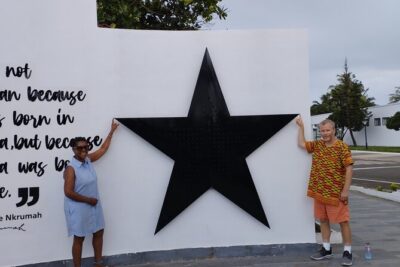
Next is Kwame Nkrumah Memorial Park, dedicated to Ghana’s first Pan-African Prime Minister and President, Dr. Kwame Nkrumah. He lived from 21 September 1909 to 27 April 1972, and the site is meant as a place of memory for his legacy.
This pairing works well. Du Bois helps you see one thread of Pan-African social justice thinking. Nkrumah helps you see how political leadership and Pan-African identity shaped Ghana’s modern era. You end up with a “two perspectives, one theme” day.
You’ll spend around 45 minutes at each of these stops, which is long enough to absorb the basics, but not long enough to overcook it.
Labadi Pleasure Beach: your easy landing after a hot day
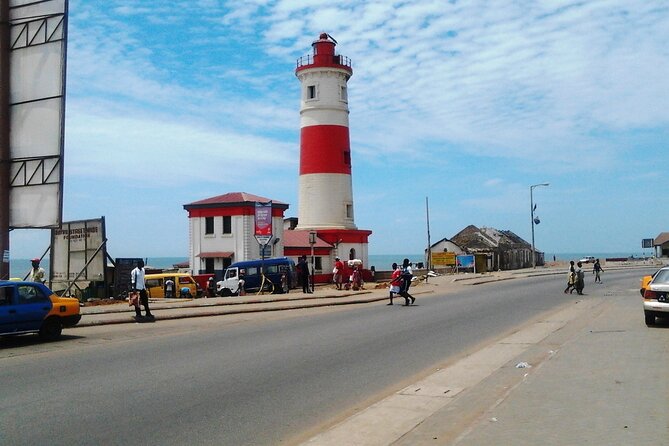
To finish, you’ll head to Labadi Beach, more properly known as La Pleasure Beach. It’s described as the busiest beach on Ghana’s coast and a well-used local hangout, not just a scenic detour.
This is your chance to sit down and reset. After museums, markets, and walking in the heat, the point isn’t sightseeing perfection. It’s recovery. You’ll find a mix of local, continental, and international foods and drinks, which makes it easier to choose what feels good to you.
One practical note: because it’s busy, you’ll want to keep your belongings secure and stay aware. A beach ending is great for morale, just treat it like a public space, because it is.
Price and pacing: is $80 per person good value?

At $80 per person for a 3 to 6 hour tour, this is positioned as a mid-priced city highlights option. The value comes from having the itinerary stitched together for you, including admission tickets at the stops listed as included, plus a guide to give context while you move between locations.
In practice, you’re paying for three things:
- Access to major sites like the National Museum and the Du Bois and Nkrumah memorials
- Help with interpretation, so you know what you’re seeing and why it matters
- Time efficiency, meaning you are not trying to plan and order tickets and routes on the same day
The “3 to 6 hours” range matters. It signals that your day can stretch when traffic or closures force adjustments. That flexibility can be good, especially if the guide reorders visits or focuses on what is open. It can be frustrating if you’re the kind of person who needs a tight, clock-perfect plan. So choose based on your style.
One more value point: this is offered with pickup, group discounts, and a mobile ticket. Those extras reduce friction, especially if you are doing Accra as part of a short visit.
Transportation reality in Accra: how to avoid surprises
Here’s the honest logistics lesson. The operator notes that to navigate congested streets efficiently, the tour may use alternative transportation options such as Uber, Yango, or local taxi services, and they say these are air-conditioned. The goal is to keep your sightseeing flow intact.
That said, not every trip goes the same way. One concern raised is that transportation arrangements can feel different than what you might expect from a tour description, including worries about waiting time or cars not matching expectations on a given day.
My practical advice: if you are booking with the assumption of one consistent pre-arranged air-conditioned vehicle the entire time, confirm what will happen in your case. Also, don’t schedule a tight second activity immediately after this tour. Build in buffer time, because Accra traffic is the kind of variable you can’t outsmart.
Guides and the difference between a sight list and a real day out
The tour’s quality often comes down to the guide. Names that show up in this tour’s experiences include Clinton and Alex, and both are described as punctual, engaging, and able to answer questions as you move. That matters because Accra can feel layered and sometimes confusing if you’re only reading signs and plaques.
You’ll also benefit if your guide is willing to adjust the pace. Some people found the timing flexible enough to skip a stop or spend more time where something grabs your interest. That flexibility is a quiet advantage of a smaller, private setup.
And yes, market time can be easier when your guide helps with bargaining. If you don’t want shopping to become stressful, this is worth it.
If Sunday or closures happen, expect changes
A common travel reality is that some places operate on schedules that differ by day. On days when a stop is closed, you may not visit every planned location. In those cases, the guide may work around it, either by shifting visits to another day or by reworking what you can see.
This isn’t a failure. It’s part of doing tours in real cities, not postcard cities. If you want the safest bet, plan the tour for a weekday where possible and keep a little flexibility in your calendar.
Who should book this tour, and who should think twice
This tour is a strong fit if you want:
- A guided introduction to Accra’s key sites without doing serious planning
- A mix of museum learning, market culture, and memorial sites
- A relaxed finish at Labadi Pleasure Beach
It may be less ideal if:
- You need a very strict, minute-by-minute timetable
- You expect one specific type of vehicle every moment, and you know you’ll be upset if the plan uses Uber, Yango, or local taxis
If you’re traveling solo, this private format can feel like a customized day even though you’re covering group highlights. If you’re traveling with friends, the orientation style still works, because everyone gets context rather than just directions.
Should you book it?
I’d book it if your goal is to learn Accra in a few hours, while still getting to enjoy the city in a normal human way, markets, monuments, forts, and then a beach ending. The $80 price feels reasonable when you factor in admissions and the guide’s role in helping you connect what you see to Ghana’s culture and public memory.
I’d hesitate if you have zero tolerance for schedule shifts or if you need the transport setup to be exactly one consistent vehicle. If that’s you, contact the operator before you go, and ask how transportation works on the day you’re booked.
FAQ
FAQ
How long is the Accra detailed city tour?
The tour runs about 3 to 6 hours.
What’s included in the tour price?
Admission tickets are included for the stops listed with included admission. Pickup is offered, and you receive a mobile ticket.
Does the tour include pickup?
Yes. Pickup is offered, and the tour starts at Accra Mall, Plot C11 Tetteh Quarshie Interchange, Spintex Rd, Accra, Ghana, and ends back at the meeting point.
What places do you visit during the tour?
You visit the National Museum of Ghana, Makola Market, Independence Square, the Centre for National Culture, historic Jamestown including James Fort and Ussher Fort, the W.E.B. DuBois Center, Kwame Nkrumah Memorial Park, and Labadi Pleasure Beach.
Is the tour private?
Yes. Only your group participates.
Will there be time to shop at the markets?
Yes. At Makola Market and at the Centre for National Culture, you’re allowed time to shop and bargain.
Does the tour use air-conditioned transport?
The operator notes that alternative transport options such as Uber, Yango, or local taxis may be used to handle congestion, and they state these options are air-conditioned.
What if some sites are closed?
If closures happen on the day you choose, some stops may not be completed, and the guide may adjust the plan.
Is there free cancellation?
Yes. Free cancellation is available up to 24 hours in advance for a full refund.
Are service animals allowed and is the tour accessible?
Service animals are allowed, and it is near public transportation. Most travelers can participate.
Newly reviewed around Accra
- Private Slave Castles and Dungeons Tour in Cape Coast, Ghana★ 5.0 · 3 reviews
- Day Tour to Kakum National Park, Cape Coast and Elmina Castles★ 5.0 · 3 reviews
- Half-Day Guided Fabric Tour in Ghana★ 5.0 · 3 reviews
- Cultural Tour Of Ghana And South Africa 12 Days★ 5.0 · 3 reviews
- Cape Coast Day Tour★ 5.0 · 3 reviews
- Experience Aburi Botanical Gardens And Boti Water Falls In A Day.★ 5.0 · 3 reviews
- Experience the Culture of Ashanti Kingdom in 5days★ 5.0 · 3 reviews
- Full Day Accra Guided Tour★ 5.0 · 3 reviews
Accra City Tours, compared.


Escape Accra City to Aburi Gardens and Tetteh Quarshie Cocoa Farms
Read our review →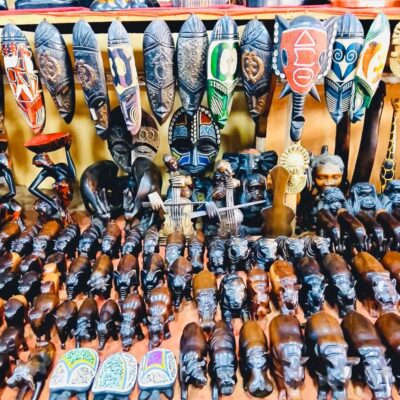
Browse the lists this tour appears in