
Reviewed · HISTORICAL TOURS
Private Multi-Day Ghana Tour about Culture History and Wildlife – 7 Days
This 7-day private Ghana tour is interesting because it strings together three very different sides of the country: modern Accra, Ashanti heritage inland, and rainforest wildlife in the Cape Coast area. I love the culture and wildlife mix, and I love traveling with local expert guides who can explain the context behind what you see. One drawback to plan for is the pace. You will have full days, and once you hit the coast, you will do a lot of walking plus emotionally heavy history.
I also like that this is built like a true private experience, not a bus-tour shove-and-go. You get an air-conditioned vehicle, airport transfers, and meals mapped across the week, which makes it easier to focus on the places rather than the logistics.
Key highlights to know before you book

- Private, guided routing from Accra to Kumasi to Cape Coast and back, with 24/7 local guide support
- Accra history on foot, including James Town, Fort James, and the Independence Square flame lit in 1961
- Hands-on craft stops tied to Ashanti culture, from Kente weaving to Adinkra stamping and brass casting demonstrations
- Kakum National Park canopy walkway with seven bridges over the rainforest floor, about 40 meters up
- Cape Coast and Elmina castles at UNESCO sites, with visits that include dungeons and the Door of No Return
- Batik and local artisans via Global Mamas, plus time in Elmina’s fishing market and boat builders’ area
Why This Ghana Tour Feels Like the Right Mix of History and Wildlife
If you want one trip that gives you a working picture of Ghana, this itinerary makes sense. You start in Accra with the big national story, then you move inland to Kumasi for the Ashanti world of symbols and craft, and finally you land in the Cape Coast and Elmina area for both wildlife and the darker chapters of the transatlantic slave trade.
What I like most is that the tour treats each stop as a living story. At the National Museum of Ghana, you see how ethnographic displays connect to daily life. In the Ashanti villages, you do not just look at cloth, you learn what the symbols mean and how the process works. At Kakum National Park, you are not just “at nature,” you get a guided path through the rainforest environment and even the stingless bees.
The main thing to keep in mind is workload. This is culture-heavy plus a full wildlife day, so you will want comfortable shoes and a good attitude for long drives and early starts.
A few more Accra days to weigh up
- 15-Day Ghana Wildlife Private Tour
★ 4.5 · 9 reviews - 9 Day Ghana Wildlife and Culture Tour
★ 5.0 · 5 reviews - 5 Days Adventurous Wildlife Safari
★ 4.5 · 49 reviews
Accra in One Tight Arc: Museum, James Town, Independence Square, Teshie
Your first days are built to help you get your bearings fast. You arrive at Kotoka International Airport and are met on arrival with pickup arranged, so you are not left figuring out transportation. Then the tour heads to the National Museum of Ghana, where the focus is ethnographic. You get a solid overview of West African culture, and you can also check the adjoining garden with sculptures that explain tradition and customs. There is time to view and purchase traditional fabrics and crafts, which is handy if you want to start building a collection early.
Next comes James Town, Accra’s oldest suburb. You take a walking tour through historical structures predating the colonial era. You also see the British-built lighthouse from 1871, plus the fishing boats near the beach, and you continue toward Fort James. The fort story is layered, since Fort James connected later into the wider network that included Dutch and Danish forts.
After that, you shift to political history at Black Star Square and Independence Square, including the enclosed flame of African liberation lit by Kwame Nkrumah in 1961. You follow up with the Kwame Nkrumah Memorial Park, plus its museum with photos and artifacts. The park’s gardens are a quiet reset after the stronger symbolism earlier in the day. Then you reach the National Cultural Center, Ghana’s largest outdoor arts and crafts market, where locals sell traditional crafts from across West Africa.
To end the Accra chapter, you head to Teshie Nungua for the famous Fantasy Coffins. These are tied to Ghanaian funeral and burial traditions, where burial is solemn and the celebration comes after. The coffin designs can reflect the person’s occupation or something important to them, from cars and cocoa pods to crocodiles, airplanes, and boats. The day feels busy, but it is also one of the most memorable cultural stops because it is both artistic and meaningful.
Up to Aburi, Then to Kumasi: Beads and Botanical Views Before the Ashanti World
On day three, the tour slows down a bit by moving toward the hills. Before leaving Accra, you stop at TK beads, where traditional bead-making happens using older methods. Beads here are symbols of wealth and beauty, and the guide explains how they tie into traditional durbars and festivals. The nice part is that you see the process, then you can shop for what you like in the onsite shop.
Then you head to Aburi Botanical Gardens in the Akuapem hills. The payoff is both the setting and the learning. Founded by the British in 1890, the gardens contain a mix of indigenous and exotic flora, plus great views across Accra and Tema on a clear day. Your guide identifies trees and plants, including notes on medicinal properties and how locals use them. There is also a nearby Aburi craft village where you can find traditional drums and sculptures, and the mood here is relaxed compared with the big-city history.
By the time you reach Kumasi, you have already learned how craft and symbolism matter in Ghana, not just as souvenirs but as part of cultural identity. Arriving in early evening helps you settle in without losing the whole night to travel. You then get dinner and free time to reset.
Ashanti Heritage in Kumasi and Villages: UNESCO Shrines, Kente, Adinkra, Brass
This is the heart of the cultural story, and it is where the tour feels most specific to Ghana. You start with the remaining material remains of the great Asante Empire, visited through traditional Asante buildings recognized as UNESCO World Heritage Sites. The details matter here: there are 10 active shrines made from bamboo, timber, and mud, with thatched roofs. The walls use motifs tied to symbolic meanings connected to Adinkra symbols, and you learn that background as part of the walk-through.
From there you move into village visits that connect directly to Ghana’s textile language. At Adanwomase, you learn about Kente. This area is described as the birthplace of Kente cloth, and the tour includes time interacting with families who weave for generations. You get time to see weavers outside their homes and hear how designs carry meaning, not just decoration.
Next is Ntonso, where Adinkra symbols originate. You see the symbols carved from calabash shells, then printed onto cloth using natural dyes from the bark of specific local trees. There is also a practical moment here that I really value: you can make your own strip of Adinkra cloth using symbols with personal significance. That is the kind of souvenir that feels earned, because you are understanding the logic behind it.
To round out the craft theme, you visit Sokoban Krofrom for traditional brass casting. The tour focuses on methods that have not changed much over generations, and it includes a demonstration plus time to browse items like beads and jewelry, plus traditional statues. It is one of those stops that helps you understand Ghanaian craftsmanship as a broader skill set, not a single-commodity industry.
A slower Accra day, if you have one spare:
- The Cape Coast Day Tour
★ 5.0 · 525 reviews - Experience the Beauty, History and the Culture Of Accra in a Day
★ 5.0 · 323 reviews - The Cape Coast Tour
★ 5.0 · 177 reviews - From Accra: Cape Coast, Elmina Castle & Kakum Park Day Tour
★ 4.6 · 144 reviews
Manhyia Palace, Kejetia Market, and the Road to Elmina
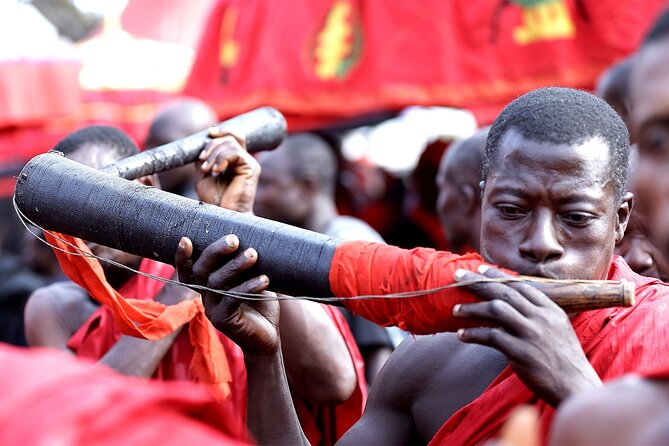
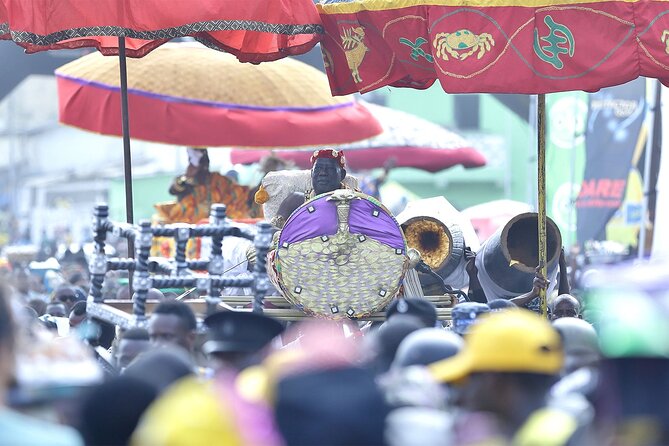
Day five brings you back into Kumasi for political and everyday-life context. You start at the Manhyia Palace Museum, home of the Asantehene. The museum is framed as an informative look at Ashanti history and culture, with the palace offering perspective on how the Asanteman kingdom shaped identity over time.
You then continue to the National Cultural Center again, adding another angle to the earlier arts and crafts market experience. The goal is to see craft and tradition as ongoing economic and social life, not just a staged visit.
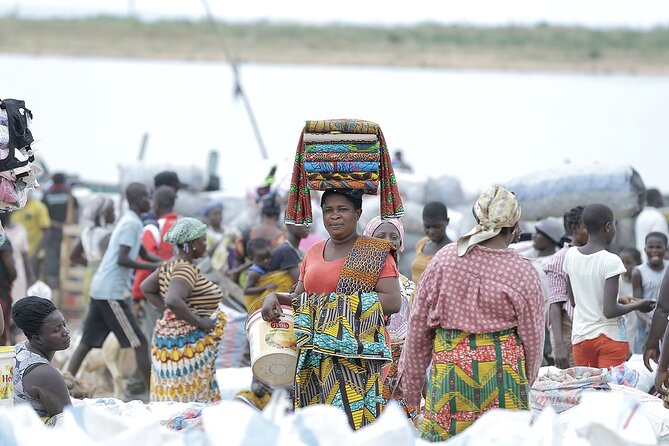
Next comes Kejetia Market, described as the largest outdoor market in West Africa. This is where you shift from museums to noise, color, bargaining, and the daily rhythm of a major city. The tour includes lunch at a local restaurant, serving both local and continental dishes, which is useful if you want a predictable meal before another long travel section.
After lunch, you travel south toward Elmina, with a planned stop at Assin Manso. This place is important because it sits along enslaved African trade routes, centered around the Ndonkor Nsuo, called the Enslaved African River. When you reach Elmina, you check into your hotel in the early evening. It is a long day, and the schedule sets you up to rest before the emotional and hands-on days that follow on the coast.
Kakum Canopy Walk, Stingless Bees, Castles, Batik, Fishing Boats
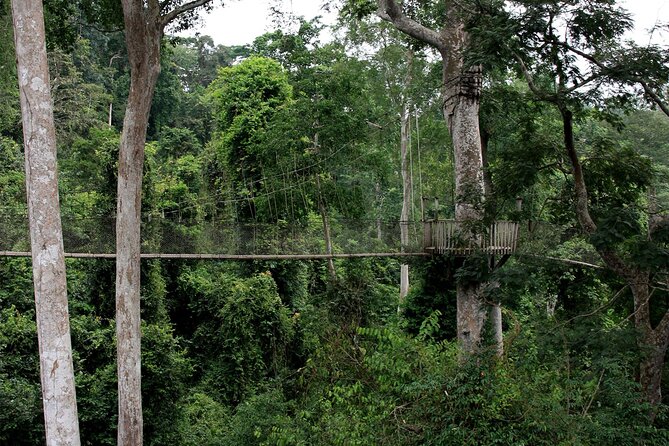
Day six is packed, but it is also the day that makes the word wildlife feel real. The morning goes to Kakum National Park for the rainforest canopy walkway. The walkway is built with seven bridges attached to seven emerging trees, about 40 meters above the rainforest floor. That height matters because it changes how you experience the forest. You are looking across miles of treetops, and you can feel how the rainforest’s layers connect.
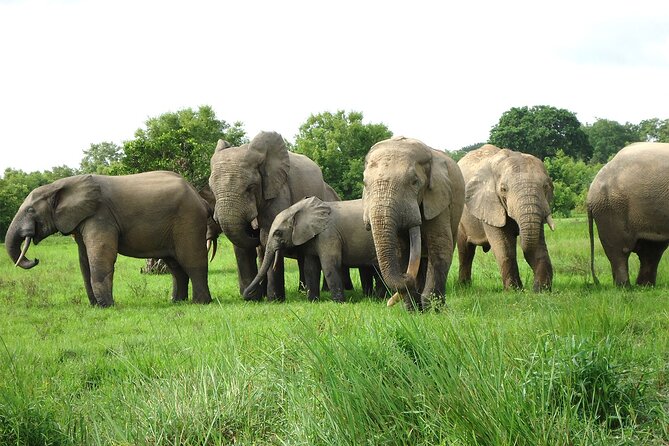
After the walkway, you return to park headquarters for an information center about flora and fauna. The tour specifically notes that over 40 mammal species are recorded in the park, including forest elephants and leopards, plus six primate species. Then you head to the International Stingless Bee Centre, also near the forest border. This part is a smart addition because it connects wildlife to local ecology. The tour talks about about nine species of stingless bees identified in Ghana and emphasizes their importance to the ecosystem. There is also mention of medicinal qualities, which gives you a reason to pay attention beyond cute insects.
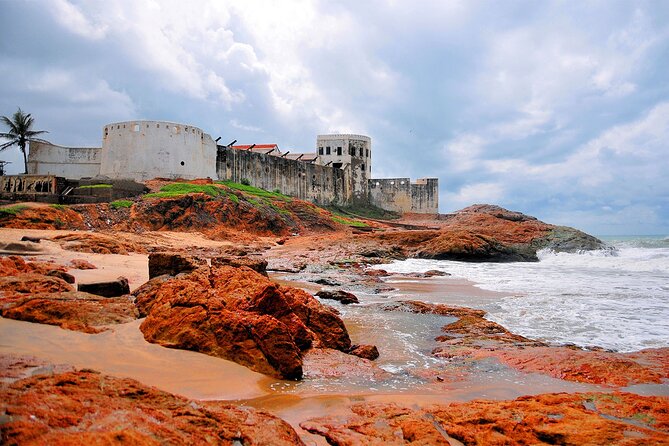
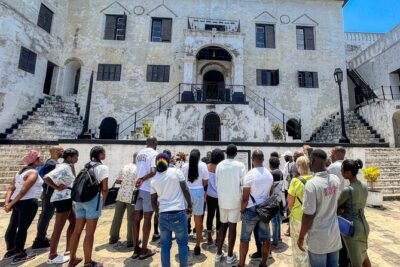
From there, you go to Cape Coast Castle, a UNESCO-designated site. This is an emotional stop, and the tour highlights why: it was used to hold more enslaved Africans captive than any other fort in West Africa, including dungeons and the infamous Door of No Return. A guided visit helps you handle the heaviness in context, instead of just reading signs alone.
In the afternoon, you switch back to art and modern livelihoods through a batik session. The tour uses Global Mamas, described as a fair-trade style organization that empowers local women to learn artistic skills and sell finished products to support their families. You get time for wax stamping, drying, and batik production, and you are given cloth to take home as your own garment or piece of work.
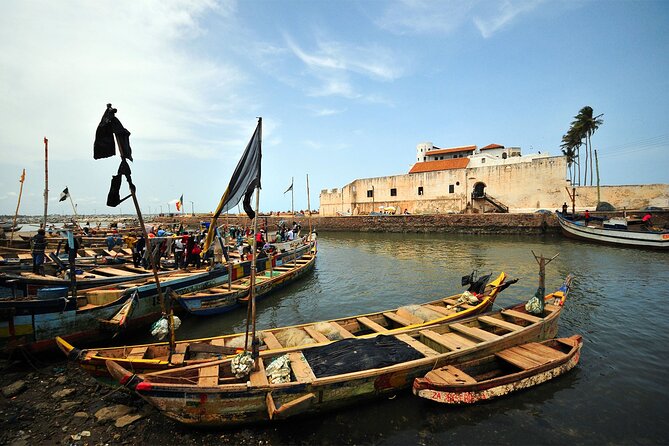
You then continue into Elmina’s local scenes with a stop at the fishing market and a walk to see boat builders. The tour notes that many fishing boats are traditional wooden boats, so you see the practical design that keeps this community going.
Finally, you visit Elmina Castle, St. George, described as the oldest extant colonial building in sub-Saharan Africa, dating from 1482. Inside, there is a museum focused on local history, and it is also UNESCO-designated. This pairs well with Cape Coast Castle earlier, giving you two different but linked views of the coastal past.
Abandze, Fort Amsterdam, and Ending With Accra Mall Time
Your final day keeps the pace gentle at first. You start with a relaxing morning at the accommodation, with options like swimming or simply taking in the Gold Coast. Before heading back to Accra, you enjoy lunch overlooking the coast, which is a nice mental reset after castles and canopy heights.
On the way back, you stop at Fort Amsterdam in Abandze. The tour notes it was the first British fort built between 1631 and 1638, later becoming headquarters for English Gold Coast activities. In 1665, after a battle, the Dutch captured it, which is why it carries the name Fort Amsterdam.
Then you finish in Accra, where you may have time at Accra Mall for a quick look at modern-day Ghana and to grab last-minute souvenirs. The tour ends with an early evening meal at a locally owned restaurant, followed by airport transfer for departure. It is a clean wrap-up that makes your last hours feel like a real sendoff rather than a rushed exit.
Price and Logistics: What You Pay For, and What to Watch
At $3,095 per person for about 7 days, you are paying for a full, private setup: accommodation, an air-conditioned vehicle, an experienced driver, and expert local guides available 24/7, plus airport transfers and excursion fees. You also get unlimited mineral water, and meals are covered across the week (breakfasts 6, lunches 6, dinners 7). For a trip that spans several regions and includes both UNESCO sites and major wildlife infrastructure like Kakum, this is not just “sightseeing.” It is transport, planning, and guided interpretation bundled together.
The value sweet spot is obvious if you hate arranging drivers and tickets yourself, or if you want a guide who can connect the dots between craft, politics, and colonial-era history. The drawback is that you cannot treat the tour like a slow vacation. You will be active each day, and you will be walking through places that can be physically demanding and emotionally heavy.
Also remember this is described as requiring good weather. If rain hits at the wrong time, outdoor elements can shift. Pack light layers, solid shoes, and keep some energy for the long travel segments.
Should You Book This 7-Day Ghana Tour?
I think you should book this if you want one trip that covers Accra history, Ashanti culture and crafts, and Kakum rainforest wildlife in a single, guided rhythm. It is especially a good fit if you like learning with context, like the symbolism behind Adinkra and the cultural purpose behind Fantasy Coffins.
I would skip it or look closely at your expectations if you prefer totally unstructured time, or if you get overwhelmed by long schedules. The castles and Door of No Return are not a quick stop, and the day is long around them.
If you do book, my practical advice is simple: bring comfortable shoes, plan for emotions, and ask your guide to explain what you are seeing before you move on. That small habit is what turns a list of stops into a real understanding of Ghana.
FAQ
How long is the tour?
It lasts about 7 days.
Where does the tour take place?
The tour is based in Ghana, starting in Accra and including visits through the Ashanti region (including Kumasi) and the Cape Coast and Elmina area.
Is airport pickup included?
Yes, airport transfers are included.
Is this a private tour?
Yes. It is listed as a private tour/activity, meaning only your group will participate.
Are entrance tickets included?
All excursion fees are included, and the itinerary notes admission is included for key stops like the National Museum of Ghana, Independence Square areas, Kwame Nkrumah Memorial Park, and Kakum National Park canopy walkway, among others.
What meals are included?
Breakfast is included 6 times, lunch is included 6 times, and dinner is included 7 times. Unlimited mineral water is also included.
What is not included in the price?
Visa, international flights, and soft and alcoholic drinks are not included.
What kind of transportation do you use?
An air-conditioned vehicle is included, along with an experienced driver.
Is this tour suitable for most travelers?
It is listed as most travelers can participate, and the meeting points are described as near public transportation.
What is the cancellation window for a full refund?
You can cancel up to 3 days in advance for a full refund, meaning you must cancel at least 3 full days before the experience’s start time.
Newly reviewed around Accra
- Private Slave Castles and Dungeons Tour in Cape Coast, Ghana★ 5.0 · 3 reviews
- Day Tour to Kakum National Park, Cape Coast and Elmina Castles★ 5.0 · 3 reviews
- Half-Day Guided Fabric Tour in Ghana★ 5.0 · 3 reviews
- Cultural Tour Of Ghana And South Africa 12 Days★ 5.0 · 3 reviews
- Cape Coast Day Tour★ 5.0 · 3 reviews
- Full Day Accra Guided Tour★ 5.0 · 3 reviews
- Experience Aburi Botanical Gardens And Boti Water Falls In A Day.★ 5.0 · 3 reviews
- Experience the Culture of Ashanti Kingdom in 5days★ 5.0 · 3 reviews
Historical Tours, compared.

Experience the Beauty, History and the Culture Of Accra in a Day
Read our review →
Full-Day Private Culture and History Tour of Accra
Read our review →
Ghana Private Historic Tour through Castles and Nature
Read our review →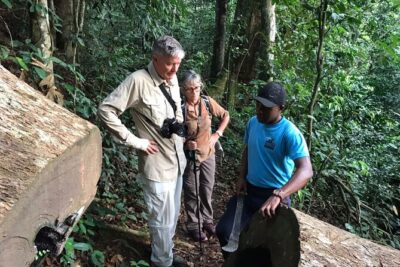
The Historic Cape Coast and Elmina Tour (The Land of History).
Read our review →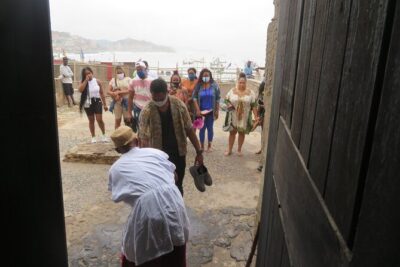
7-Day Private Cultural and Heritage Tour in Ghana
Read our review →Browse the lists this tour appears in