
Reviewed · HISTORICAL TOURS
10 Days Ghana Cultural and Heritage Trip
This 10-day Ghana tour is interesting because it mixes big-city orientation with coast heritage sites, then shifts to rainforest and Ashanti royal culture. You get a guided path through places that explain how Ghana’s identity formed, and you also get hands-on cultural moments like markets and a traditional naming ceremony in Elmina.
I especially like two things. First, the trip keeps things practical with an air-conditioned vehicle with Wi-Fi and pickup on arrival. Second, the group stays small, with a maximum of 10 people, which helps when you’re moving through crowded markets and visiting important memorials with the right pace.
One drawback to consider: this route includes emotionally heavy slavery heritage sites and physical experiences like the barefoot reverential walk at Assin Manso, plus the canopy walk at Kakum. If you want a purely light, party-style vacation, this won’t match that mood.
Key highlights at a glance
- Cape Coast and Elmina slave heritage sites with focused visits to dungeons and the Door of No Return areas
- Kakum Rainforest Canopy Walk for that rare, high-level perspective of the forest
- Traditional naming ceremony in Elmina with names tied to your birth day and African clothing
- Ashanti culture in Kumasi including Manhyia Palace Museum and the Okomfo Anokye Sword site
- Makola Market and Ghana National Museum to understand daily life and heritage in Accra
- Faana village visit as part of the cultural route, for a taste of long-standing community traditions
Arriving in Accra with pickup, a welcome dinner, and the right first-night setup

Day 1 is all about getting settled without stress. You arrive in Ghana, then you’re picked up at Kotoka Airport and transferred to your hotel. After that, there’s a welcome dinner and drinks where you meet the rest of the group and your in-country trip leaders.
I like this approach because it stops the “what do I do now?” feeling that can hit on arrival day. Instead, you can start day 2 already knowing your route, your driver, and how the group will move through town.
Expect the trip leaders to give you the tone early: this isn’t just sightseeing. It’s guided cultural learning, with time to ask questions and process what you’re seeing, especially along the coast.
A few more Accra days to weigh up
- Experience the Beauty, History and the Culture Of Accra in a Day
★ 5.0 · 323 reviews - Ghana Heritage Tours – Beyond The Return
★ 5.0 · 36 reviews - Cape Coast Historical Day Tour
★ 5.0 · 24 reviews
Day 2 in Accra: Nkrumah Memorial, Independence Square, Makola Market, and the National Museum
Accra can overwhelm you fast, so day 2 is designed to give you a framework first, then let you enjoy the city up close.
At Kwame Nkrumah Memorial Park, you’ll see the last resting place of Ghana’s first president, plus personal items and a sense of how he presented Ghana to the world. The smock he wore declaring Ghana’s independence is mentioned specifically, along with personal correspondence and photos of Nkrumah with various world leaders. For me, that’s a good start because it turns Ghana’s independence story from a vague idea into something human and concrete.
Next is Independence Square, also called Black Star Square, centered around the Independence Arch, Black Star Gate, and the Liberation Day Monument. Independence Day is March 6 each year, and this square is the big stage for that celebration. It’s also noted as the second largest city square in the world after Tiananmen Square in Beijing, so even if you’re not a monument person, you’ll feel the scale.
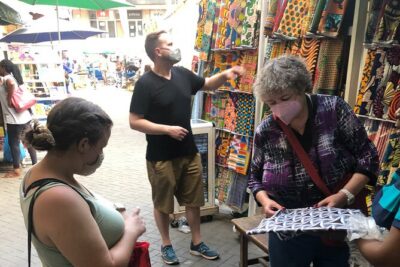
After the formal history, you shift to everyday energy at Makola Market, Accra’s largest open-air market. This is the kind of place where the smells, sounds, and narrow alleyways push you into the real rhythm of West African shopping. I’d plan this as a wandering day, not a quick stop. It’s crowded, and that can be a feature, not a bug, once you know you have a guide to help you move through interesting sections and spot good photo angles.
To tie it together, you visit the National Museum of Ghana, where the exhibits connect culture and identity to objects you can actually see and study. You’ll encounter chiefs’ regalia, Ghanaian musical instruments, gold-weights, beads, textiles, stools, and pottery. There’s also an exhibit set on the slave trade in Ghana, plus other cultural items such as Senfu masks and wooden figures. The museum is a useful pause before the coast heritage sites, because it gives context for what you’ll later read through buildings and landscapes.
Day 3 beyond the city: Aburi Botanical Gardens and the W.E.B. Du Bois Center
Day 3 keeps you moving, but in a calmer direction. You go to the Aburi Botanical Gardens, where you learn about African herbs and plants, including origin, age, and medicinal properties. Even if you’re not a “plant nerd,” the value here is understanding how people use knowledge of plants as part of daily life and culture.
Then you visit the W.E.B. Du Bois Center, a Pan-Africanism memorial center. You learn about W.E.B. Du Bois as an American sociologist, socialist, and historian. For me, this stop matters because it connects Ghana’s story to wider African and African-descended conversations, not just national events.
This day also works as a mental reset. After the busy feel of Accra, you get space to breathe and reflect, and you head toward the coast with a clearer sense of the bigger themes you’ll be studying.
Cape Coast Castle: the dungeon rooms and the Door of No Return stop you cold
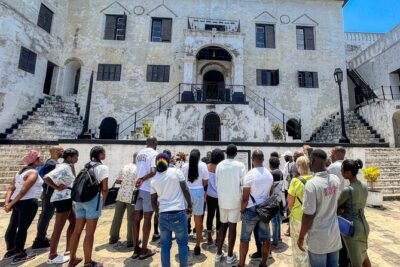
Day 4 is about the coast and the legacy of slavery. You’ll visit Cape Coast Castle, with time to understand how enslaved people were held in the dungeon area while they awaited ships. The visit also includes the door of no return.
This is not a “quick photo and go” kind of place. The value is in learning how the buildings were used and what those spaces meant. Even if you think you know the story, castle walls and dungeon corridors make it feel immediate. Plan to go slowly and let the guide’s explanations land.
You get about an hour here, which is enough to understand the core areas, but not enough to overstay. If you tend to get emotional easily, this is where I’d mentally brace yourself and keep tissues nearby, figuratively and literally.
More trips leaving Accra:
- The Cape Coast Day Tour
★ 5.0 · 525 reviews - The Cape Coast Tour
★ 5.0 · 177 reviews - From Accra: Cape Coast, Elmina Castle & Kakum Park Day Tour
★ 4.6 · 144 reviews - Accra Detailed City Tour
★ 4.5 · 118 reviews
Kakum canopy walk and Elmina’s heritage: two very different kinds of awe
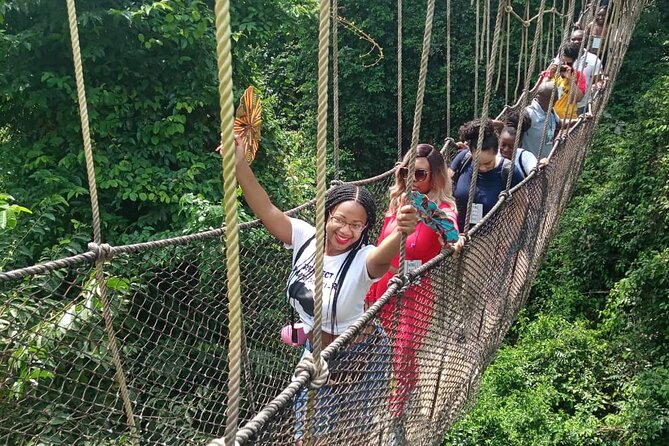
Day 5 is a strong pairing: rainforest heights in the morning, then coastal history in Elmina.
At Kakum National Park, you’ll do the Kakum Rainforest and Canopy Walk. It’s described as one of the few canopy walks in the world, and the main draw is the view you get when you walk above the forest floor. You’re literally moving through the canopy, which changes how you experience the park. Instead of seeing the forest from the ground, you feel like you’re inside it.
Then you head to Elmina, described as Ghana’s top historical town. You’ll have a walking tour of historical buildings, plus stops including the 17th-century Dutch Cemetery, the Posuban Shrine, and the Asafo post. This is where you see heritage as a lived-in set of structures and traditions, not just museum pieces.
After that, you visit Elmina Castle, including the slave dungeon, the forecourt, and the door of no return. Like Cape Coast, it’s emotionally weighty, and it’s also historically dense. The castle visit runs about an hour, so listen closely and use the guide’s timing to cover the big pieces without feeling rushed.
Practical note: this is a day where you’ll want comfortable shoes. You’re switching between rainforest and stone-and-stairs history sites.
Elmina on your feet: chief traditions and a naming ceremony tied to your birth day
Day 6 is an Elmina cultural day with less of the heavy coast-site focus and more of the living traditions.
In the morning, there’s rest and relaxation. Then later, you visit the chief palace, where you learn about local traditions. After that comes one of the most memorable experiences on the whole itinerary: a traditional naming ceremony.
During the ceremony, you’re given names based on the day you’re born, which is described as part of Ghanaian culture. You’ll also be dressed in African clothing for the occasion. This is the kind of activity that makes you feel like you’re participating, not just watching.
I like ceremonies like this because they give you something personal to take home. You leave with a story tied directly to you, and you better understand how identity works in the community.
Assin Manso: the reverential barefoot walk and the Walk of Return
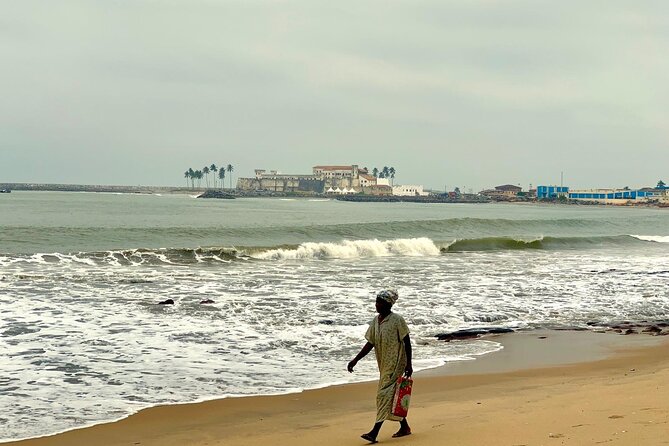
Day 7 is the spiritual and emotional center of the coastal journey. You visit Assin Manso, described as the final and last point where enslaved people had their last bath before being taken to the castles and shipped.
The highlight here is the reverential walk of return, where you reconnect back to the motherland. You walk through the process toward the slave river area, and the walk to the river is done barefoot, specifically as a sign of connecting with the motherland and paying respect to ancestors and lost souls.
You’ll also visit the memorial wall of return, where names are written to show the ability to return home.
I’m glad this tour includes this stop, because it doesn’t treat heritage like a history lesson only. It adds ritual and reflection, and that changes how you remember the rest of the sites. The personal part is what makes this feel real.
If you have any foot issues, discomfort with barefoot walking, or health reasons you can’t do it safely, I’d raise it with the guide before the day arrives, so you can plan an alternative approach. The point is respect, not stubbornness.
Kumasi and the Ashanti Kingdom: Manhyia Palace Museum, Okomfo Anokye, and a major market day
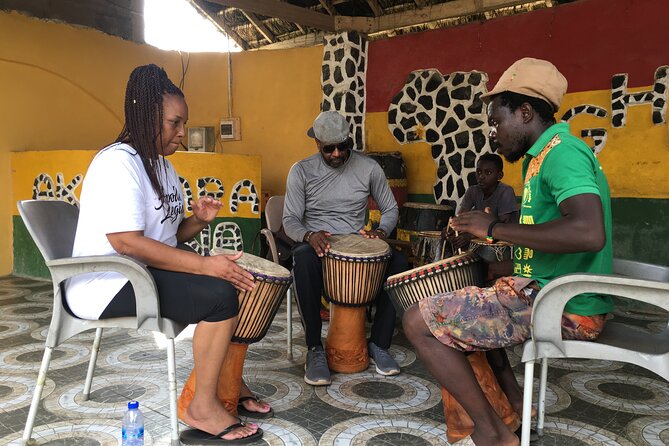
Day 8 shifts you inland to Ashanti country and the energy of Kumasi.
First is Manhyia Palace Museum, described as the seat to the King of the Ashanti Kingdom. You’re portrayed to and you discover the history of the Asante Empire. The “portrayed to” phrasing suggests you’re not just looking at objects. You’re being introduced to the place and its role.
Then you visit Okomfo Anokye Sword Site, with stops that include the Kumasi Cultural Center. At the sword site, you’ll learn the history behind the mystical sword planted for about 400 years, described as unremovable.
Between these heritage points, you also go to a major open-air market stop, noted as West Africa’s largest and busiest open-air market. I can’t name it from the information given, but I can tell you what to expect: lots of movement, lots of bargaining energy, and a feeling that you’re in the center of daily life. Keep your plans flexible here. This is where you’re most likely to lose track of time, in a good way.
Bonwire Kente weaving: symbols, cloth meaning, and why patterns matter
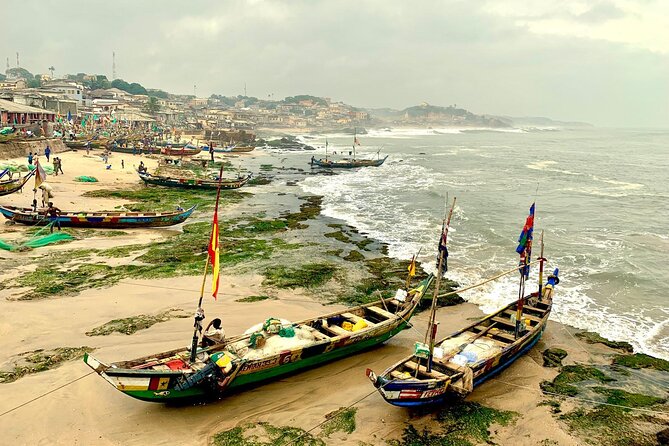
Day 9 brings you to Bonwire Kente Weaving Centre, where you learn about Ghanaian cloth types and the symbols used in them, along with their meaning and significance to Ghanaian culture.
Kente is easy to admire in a shop display, but this stop teaches you how to read it. Understanding symbolism changes how you see colors and patterns when you’re later shopping. You’ll also understand why people care so much about the cloth beyond fashion.
If you like crafts, this day is one of your best chances to buy thoughtfully instead of randomly. I suggest you ask the guide about what certain symbols represent, then pick pieces that match what you want to carry home, emotionally and culturally.
Closing days in Accra: Accra Arts Center shopping and a smooth airport drop-off
Day 10 ends back in Accra with a final cultural stop at the Accra Arts Center. This is where you do last souvenir shopping, and then you get dropped off at the airport in time for your flights with less stress.
I like ending with art shopping rather than another “must-see site,” because it lets you convert your experience into gifts and keepsakes while the story is fresh in your mind. You’ll also already know what you like after days of seeing crafts, textiles, and heritage objects.
Keep a little space in your luggage for fabric and breakable items. That sounds basic, but it’s the difference between a nice souvenir run and a stressful repacking job at the airport.
Value, comfort, and how the trip moves as a group of 10
Let’s talk value. At $3,500 per person for roughly 10 days, you’re paying for more than just transport. You’re getting a guided route that includes multiple paid admission stops, a full set of heritage site visits along the coast, a rainforest canopy walk, and structured cultural experiences such as the naming ceremony.
The comfort details are also meaningful. You ride in an air-conditioned vehicle with Wi-Fi, and you get pickup on arrival. In a country where heat and long drives can shape your energy, that matters more than people think. Group size is capped at 10 travelers, which helps keep the experience from turning into a rushed, impersonal lineup.
Meals are included too: dinner, breakfast for 8 mornings, and lunch for 4 days. That doesn’t mean every day is a full boxed package, but it keeps the core costs manageable and gives you more time to focus on the places themselves.
One more note: the tour is offered in English, Spanish, and French, and it uses mobile tickets. If you’re traveling with a language preference, this is a real convenience.
Who should book this Ghana trip, and who should think twice
This tour is a good fit if you:
- want Ghana cultural and heritage sites with a real guide, not just a route map
- care about both everyday life (like Makola Market) and major historical places (Cape Coast and Elmina)
- are comfortable with emotionally heavy topics, especially related to slavery heritage
- want at least a couple of memorable “you participated” moments, like the naming ceremony
Think twice if you:
- want a purely relaxing vacation with minimal heavy content
- are not able to do the barefoot walk at Assin Manso or won’t enjoy a canopy walk physically
- prefer a flexible schedule with few structured stops
If you’re unsure, you can treat this as a “structured meaning” trip, not a casual hangout.
Should you book the 10 Days Ghana Cultural and Heritage Trip?
If your ideal Ghana trip balances learning with personal connection, I’d book it. You’re not just passing through Accra and the coast, you’re guided through the story from multiple angles, then wrapped up with Ashanti culture and Kente weaving.
My biggest selling point is how it holds both sides of the experience: the emotional weight of slavery heritage sites, and the living culture moments like the naming ceremony in Elmina. The small group format, the comfort of an air-conditioned vehicle with Wi-Fi, and the guidance from Nana and his team also make it feel organized without feeling cold.
Go in with respect for the sites, bring comfortable shoes, and be ready to feel something. If you do that, this is one of the better ways to experience Ghana with meaning attached to the places you visit.
FAQ
What is the duration of the Ghana cultural and heritage trip?
It’s listed as 10 days approximately.
When and where does the tour start?
It starts at Kotoka Airport in Accra, Ghana, with a start time of 8:30 am.
What languages is the trip offered in?
The experience is offered in English, Spanish, and French.
Is pickup from the airport included?
Yes. On arrival day, you’re picked up at the airport and transferred to your hotel.
What kind of vehicle is used?
You travel in an air-conditioned vehicle that includes Wi-Fi.
How many people are in the group?
The tour has a maximum of 10 travelers.
Are meals included?
Yes. Dinner is included, along with breakfast (8) and lunch (4).
Are entrance fees included?
Admission tickets are included for many stops, while some stops are marked as free in the itinerary.
Is there free cancellation?
Yes, cancellation is free, and you can cancel up to 24 hours in advance for a full refund.
Are service animals allowed?
Service animals are allowed.
Newly reviewed around Accra
- Private Slave Castles and Dungeons Tour in Cape Coast, Ghana★ 5.0 · 3 reviews
- Day Tour to Kakum National Park, Cape Coast and Elmina Castles★ 5.0 · 3 reviews
- Half-Day Guided Fabric Tour in Ghana★ 5.0 · 3 reviews
- Cultural Tour Of Ghana And South Africa 12 Days★ 5.0 · 3 reviews
- Cape Coast Day Tour★ 5.0 · 3 reviews
- Experience the Culture of Ashanti Kingdom in 5days★ 5.0 · 3 reviews
- Full Day Accra Guided Tour★ 5.0 · 3 reviews
- Experience Aburi Botanical Gardens And Boti Water Falls In A Day.★ 5.0 · 3 reviews
Historical Tours, compared.

Experience the Beauty, History and the Culture Of Accra in a Day
Read our review →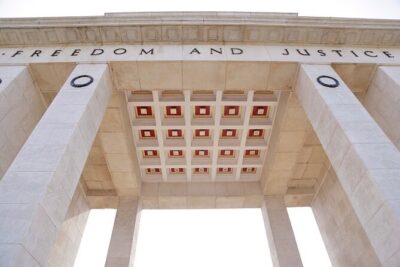
Full-Day Private Culture and History Tour of Accra
Read our review →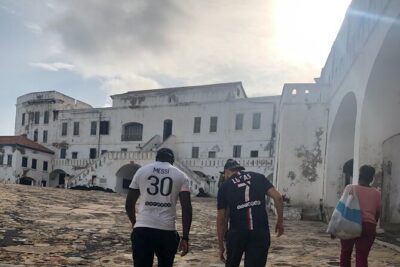
Ghana Private Historic Tour through Castles and Nature
Read our review →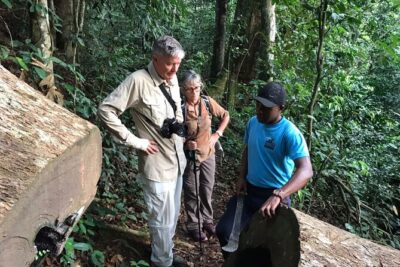
The Historic Cape Coast and Elmina Tour (The Land of History).
Read our review →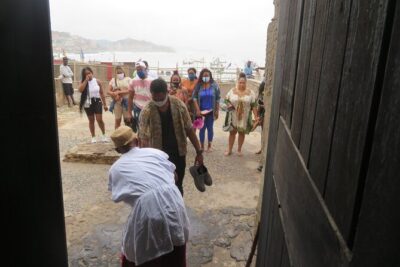
7-Day Private Cultural and Heritage Tour in Ghana
Read our review →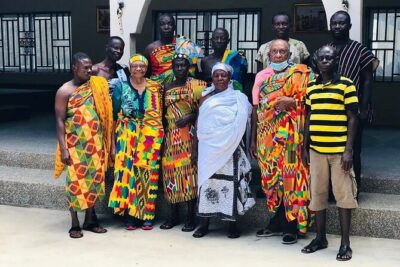
Naming Ceremony and Heritage Homecoming Experience for Diasporas
Read our review →Browse the lists this tour appears in