
History in Ghana hits different when you move through real neighborhoods, not just sightseeing stops. What makes this 12-day route interesting is that it connects Jamestown’s founding stories with hands-on craft traditions. I love how Jamestown comes alive at the W.E.B. DuBois Centre, and I love the practical touchpoints like making Kente and working with cedi beads. One possible drawback is that the itinerary is full, so expect long car days and lots of sun and walking.
You start smoothly with airport help at Kotoka International Airport and then stay with the same guide for the whole trip, which makes it easier to ask questions as you go. The small group size (max 15) also keeps the pace sensible, instead of feeling like you are herding cats. Still, with a compact group and a busy schedule, you will want to keep your days moving and your patience charged.
The other thing to know up front: this tour visits places tied to slavery, so some hours are heavy. I also appreciate that the big sites are paired with lighter, human-scale experiences like markets and nature. If you are sensitive to emotional history, plan for that, and lean on your guide to help you set the tone.
Small-group feel, with one guide staying with you from arrival.
Airport-to-hotel transfers in a private air-conditioned vehicle.
Craft-focused Ashanti and Volta stops, including Kente and cedi bead making.
Major UNESCO fort stops at Cape Coast Castle and Elmina Castle, including the Door of No Return.
Kakum National Park’s canopy walk, plus a rainforest forest-floor walk and Abandze visit.
Plenty of time to end in Accra with shopping options like Osu and Makola Market.
First Look in Accra: Airport Arrival That Sets the Tone
Your trip begins at Kotoka International Airport, where you meet your expert guide and get transferred to your hotel in a private air-conditioned vehicle. This matters more than it sounds. When you land after a long flight, you want one clear next step, not a scramble for directions.
Once you check in, your guide gives you a quick briefing on what to expect. That early context helps later, because you are not just collecting sights. You are learning how the day-to-day spaces you will visit connect to bigger national stories.
You get dinner on arrival day, so you can settle without immediately hunting for food. It is also a nice way to help you reset your energy level after travel.
Practical tip: Ghana weather can be warm and bright. Even when you think you are just doing an arrival day, wear something breathable and keep a light layer for later.
Day 2 in Jamestown: DuBois, Independence Square, and Fishing Life
Jamestown is one of Accra’s oldest areas, and it wears its history on the surface. Here, you see the mix of old structures and the city’s more modern edges. It is lively, and it is also educational without feeling like a classroom.
You start at the W.E.B. DuBois Centre, honoring the Pan-Africanist who chose to live and work in Ghana. This stop sets a bigger frame for what you will see around Accra. It is not only about colonial-era buildings. It is about the people and ideas that shaped Ghana’s path.
Then you move toward Independence Square, including the enclosed flame of African liberation. It is a powerful visual reminder that independence is not a single moment. It is an ongoing story people still care about.
A third stop is the Jamestown fishing community, which keeps the day grounded. After thinking about history and identity at monuments, you get a more everyday look at livelihoods tied to the coast.
What I like about Jamestown on this tour: it never feels like you are rushing through “checklist history.” You get a cultural and civic anchor, then you get real community life.
A few more Accra days to weigh up
- Experience the Beauty, History and the Culture Of Accra in a Day
★ 5.0 · 323 reviews - Ghana Heritage Tours – Beyond The Return
★ 5.0 · 36 reviews - 10 Days Ghana Cultural and Heritage Trip
★ 5.0 · 31 reviews
Day 3 to the Volta: Teshie Coffin Shop and the Meaning of Afterlife
On day three, you head east toward Akosombo, but the most memorable stop on the drive is the Teshie Casket or Coffin Shop. These caskets are famous for their design details, because they reflect local beliefs about life after death.
You learn the story behind the shop, started by Seth Kane Kwei in the 1950s. A key moment is how one palanquin-shaped burial and a later family grief story influenced what people built and how they shaped meaning in funerals. It is one of those experiences where you can stand back and see art, religion, and history in the same object.
This is a free admission stop, so it is easy to include without thinking about costs. And because the craft is visual, you will find it easier to connect emotionally even if you do not know the background language.
Watch for the fact that these coffin designs can look surprising at first, especially if you are used to Western funeral styles. With the guide’s context, it starts to make sense as symbolism and a way to honor someone.
If you like creative anthropology, this is your stop.
Day 4 Akosombo Region: Krobo Odumase Cedi Beads You Can Make
Day four shifts from personal symbolism to wearable craft. You drive to a small village in the Krobo area to see bead making from specially crafted glasses, often called cedi beads.
The day is structured around participation. You are not just watching. You get the chance to design your own beads using the Krobo technique. That hands-on time is a real travel win because it gives your brain something to do besides taking photos.
You also get the historical backdrop: beads have been used for ceremonies of birth, coming of age, marriage, and death for hundreds of years. That is a lot of meaning packed into something that looks small and decorative.
Then you connect this craft moment back to the Akosombo area and the Volta River setting, where industry and nature meet. It is a nice balance after the coastal emotional weight you will feel later in the fort days.
Practical tip: keep your hands moisturized if you plan to make beads for long stretches. It can get dusty or dry depending on conditions in the workshop.
Day 5 Heading to Kumasi: Ashanti Craft Villages Near Ejisu
Kumasi is the cultural seat of the Ashanti, and the route from Accra takes you through the forest zone, which helps you feel you are moving into a different Ghana. On this day, the focus turns toward craft traditions that still support local life.
In Ejisu, you visit craft villages around lush countryside, which is a contrast to the more urban feel of Kumasi. You start in Adanwomase, where kente cloth is handmade on looms. Even if you have seen kente photos before, watching the process helps you understand why the patterns carry meaning.
There is also time to view the kente styles and purchase if you want. That is useful, because you are buying something with context, not just souvenirs.
A note for budgeting: because you can buy craft items, prices vary widely. If you want control, decide on your spending limit before you arrive.
This day is about learning how heritage becomes daily work, not only ceremonial display.
More trips leaving Accra:
- The Cape Coast Day Tour
★ 5.0 · 525 reviews - The Cape Coast Tour
★ 5.0 · 177 reviews - From Accra: Cape Coast, Elmina Castle & Kakum Park Day Tour
★ 4.6 · 144 reviews - Accra Detailed City Tour
★ 4.5 · 118 reviews
Day 6 in Kumasi: Manhyia Palace Museum and Akwasidae Festival
This is one of the big days for cultural atmosphere. You visit the Manhyia Palace Museum first, the official residence of Ashanti Kings (Asantehene) until 1974. Now it is a museum with treasured items tied to the Ashanti Kingdom.
After that, you join the celebration of the Akwasidae Festival. The guide explains the pomp and pageantry, including the king riding in a palanquin and adorned with gold ornaments.
Even if you have never attended a festival like this, what makes it special is the structure. You are not only seeing costumes. You are learning how monarchy, symbolism, and collective identity are staged in public.
The admission for this day’s key sites is included, which helps the day feel smooth financially. The experience can be crowded and loud, so wear comfortable shoes and keep water handy.
Possible drawback: festivals follow a rhythm, and schedules can feel less like a strict timeline than you might expect. Go with the flow. Your guide will do their best to keep you on track.
Day 7 Ashanti Unity Symbols: Okomfo Anokye and Sokoban Krofrom Brass
Day seven keeps you in Kumasi and centers the visit on symbols tied to unity and craft industries.
You drive through the city and see British colonial buildings, which adds a layer of context to what comes later in the Ashanti sites. It helps you understand how multiple historical eras overlap in real city streets.
Next is the Okomfo Anokye sword site, tied to the legend of the golden stool descending from the sky. The story includes a warning that the Ashanti kingdom would collapse if the sword were removed, which shows how a physical marker can become a political and spiritual anchor over time.
Then you go to Sokoban Krofrom village, where traditional brass casting has provided income for generations. You see wide selections of brass items, including beads and other goods. It is another day where craft is not a side activity. It is the engine of local livelihoods.
If you are the type of traveler who loves hearing how legends connect to real behavior, this day is for you.
Day 8 to the Coast: Lake Bosomtwe Calm and Assin Manso Slave River
Now you start moving toward coastal Ghana and the Elmina and Cape Coast area. The good news is that you do not rush straight into heavy history. You break it up with a nature stop and a reflective stop.
First, you visit Lake Bosomtwe, described as the largest natural freshwater body in Ghana. You get peace and serenity, plus time for a beach walk and contact with local fishing folks. Since the lake is considered sacred by the Ashanti, it is not only scenery. It has meaning for local people.
After lunch, you continue and visit the Assin Manso Slave River site. The name alone signals emotional weight. This stop fits into the larger story of the slave route along the coast, and it gives you a different kind of moment than the fort dungeons you will see later.
What I appreciate here is pacing. You get one calm natural space, then you transition to a more solemn historical space before arriving in the fort zone.
Tip: If you get overwhelmed in intense heritage stops, take a slower walk when you can. Let your body catch up to what your brain is processing.
Day 9 Elmina and Kotokoraba Market: Watching Trade in Motion
Elmina gives you a different pace than inland Ashanti cities. Today, you focus on Kotokoraba Market, described as the economic hub of the region. It is also known as the cradle of Cape Coast.
The market has existed for decades, and it served as an important pre-independence trading site. You see the range of lively trading stores and how the market works as a central point for regional commerce.
Then you spend time around the harbor area, seeing colorful fishing boats bringing in daily catch. This is the kind of sight that does not need a guide script. You learn by looking, and your guide helps you connect what you see to context.
If you enjoy markets, this day is a strong use of time. If you do not love crowds, plan on arriving with patience and keeping an eye on your personal belongings.
Day 10 Cape Coast Castle and Elmina Castle: UNESCO Forts and the Door of No Return
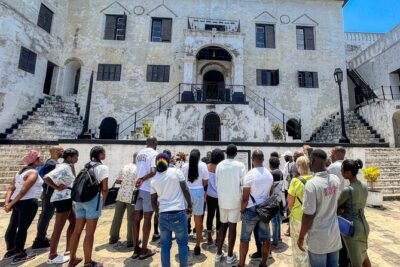
This is the day most travelers remember. You visit Cape Coast Castle, a UNESCO World Heritage site, and you take a serious, emotional journey through the fort.
The focus is on the history of slavery in the region, including the dungeons and the infamous Door of No Return. The experience also includes a significant historical museum inside that explains the history of the castle and Cape Coast itself.
Then you go to Elmina Castle, another UNESCO World Heritage site. Seeing both in sequence gives you contrast. You notice the differences in layout and storytelling, but you also feel the shared human cost behind the walls.
Practical reality: this is not a casual sightseeing day. Even if you can handle history, you should expect strong emotions. I recommend a respectful mindset and a bit of breathing room, especially if you are traveling as a couple or with family.
What makes this day valuable is that it is not only about suffering. The guides and museum context help you understand why these sites matter today.
Day 11 Kakum National Park: The Canopy Walk Above the Forest Floor
After the fort days, you get a nature reset. Day eleven brings you to Kakum National Park, Ghana’s most famous park in this itinerary.
You start with a brief walking tour on the forest floor. You learn how ancestors lived in the forest, and you look for birds, butterflies, and possibly monkeys. The guide also mentions that the area supports many mammal species, including forest elephants.
Then you go to the canopy walk, described as Africa’s only aerial walkway through the tree canopy. It is 1,000-foot-long and connects even bridges with viewing platforms above the ground, reaching heights over 150 feet.
This is where the tour turns from history-heavy to sensory and physical. You are literally above the forest, which changes your perspective fast.
After the canopy walk, you stop briefly at Abandze, described as an ancestral village. This ties back to the day’s theme, how humans connected to the forest, not only how the forest looks.
Bring: good grip shoes. The canopy walk can make people nervous if they fear heights, so go slow and hold steady.
Admission for this day’s key sites is included, which is a nice value add.
Day 12 Back in Accra: Osu and Makola Market, Plus Time for Extra Picks
Your last day is at leisure in Accra. You still have help from your driver and guide, so you can choose what feels right instead of being forced into one last scripted route.
Two suggested options: Oxford Street in Osu for shopping and a walk through Makola Market, described as the biggest open market in Accra with different sections to help bargain hunting.
This is a good time to pick up items you may have missed earlier, like colorful clothing, handcrafted jewelry, and accessories. It is also the day to buy light gifts you can carry easily.
If you want more ideas beyond the two listed options, you can ask your guide. Some past guests’ favorites have included Osu Castle, Kwame National Park, and Aburi Botanical Gardens, depending on time and route.
You end with a transfer to the airport for your onward flight.
Tip: If you are shopping, set aside enough time. Markets and streets like Osu can take longer than you think, especially if you like chatting and bargaining.
Price and Value for a 12-Day Ghana Cultural Tour
At $4,900 per person for a 12-day package, you should judge this as a bundled trip, not a bargain flight deal. Here is why the value can work:
You get 11 nights of hotel accommodation, an experienced guide, and private vehicle transport across multiple regions. That is a big cost driver in West Africa, especially with comfort built in. You also get round-trip airport and hotel transfers, so you start and end without confusion.
Admissions are included for listed sites, and on key days like the Manhyia Palace Museum, Cape Coast Castle, and Kakum National Park, the admission is specifically included. You also get breakfast nearly every day and one dinner, which removes everyday planning stress.
Where the price can feel heavy is if you are the type who only wants a few top highlights. This itinerary is broad by design: Accra civic history, Ashanti festival culture, crafts, coastal slavery heritage, and rainforest nature.
If that breadth matches your travel style, the cost makes sense. If you want one or two areas only, you might prefer a shorter, more focused trip.
Who This Tour Suits Best, and Who Should Rethink It
This tour fits you if you want a guided, structured Ghana experience that still includes hands-on moments. You will likely enjoy it if you like:
cultural context alongside famous landmarks
craft traditions you can participate in, not only watch
markets and real daily life mixed in with museum and monuments
a thoughtful pairing of heavy heritage and nature
You might want to rethink it if you have limited time, low walking tolerance, or strong sensitivity to slavery history. Cape Coast and Elmina are not soft stops. They can be profoundly moving, but they are also intense.
Group size is small, which helps, but the schedule is still full.
Should You Book This 12-Day Historical and Cultural Tour of Ghana?
I think you should book it if you want one trip that connects Ghana’s biggest stories in a way you can actually feel. The strengths are clear: Jamestown’s identity history, Ashanti culture with real festival and palace context, hands-on craft work, and then the coastal fort experience followed by Kakum’s canopy walk.
If you book, do it with two expectations: the driving days are real, and some sites are emotionally heavy. With that mindset, this tour becomes more than a checklist. It becomes a guided path through people, symbols, and survival.
FAQ
Where does the tour start and end?
It starts in Accra and ends back at the meeting point.
How long is the tour?
It is about 12 days.
Are airport transfers included?
Yes. The tour includes meeting and assistance upon arrival and departure, plus round-trip airport and hotel transfers.
What meals are included?
Dinner is included on the first day, and breakfast is included for 11 mornings. Meals not listed are not included.
Does the tour include admission fees?
Admission to the listed sites is included, with specific days showing admission included for certain attractions.
What is the maximum group size?
The tour has a maximum of 15 travelers.
Is the tour refundable if plans change?
You can cancel for a full refund up to 24 hours in advance. If you cancel less than 24 hours before the start time, the amount paid is not refunded.
What happens if weather is poor?
This experience requires good weather. If it is canceled due to poor weather, you will be offered a different date or a full refund.
Newly reviewed around Accra
- Private Slave Castles and Dungeons Tour in Cape Coast, Ghana★ 5.0 · 3 reviews
- Day Tour to Kakum National Park, Cape Coast and Elmina Castles★ 5.0 · 3 reviews
- Half-Day Guided Fabric Tour in Ghana★ 5.0 · 3 reviews
- Cultural Tour Of Ghana And South Africa 12 Days★ 5.0 · 3 reviews
- Cape Coast Day Tour★ 5.0 · 3 reviews
- Full Day Accra Guided Tour★ 5.0 · 3 reviews
- Experience Aburi Botanical Gardens And Boti Water Falls In A Day.★ 5.0 · 3 reviews
- Experience the Culture of Ashanti Kingdom in 5days★ 5.0 · 3 reviews
Historical Tours, compared.

Experience the Beauty, History and the Culture Of Accra in a Day
Read our review →
Full-Day Private Culture and History Tour of Accra
Read our review →
Ghana Private Historic Tour through Castles and Nature
Read our review →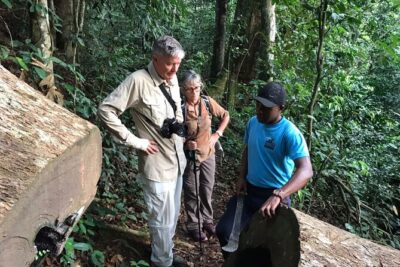
The Historic Cape Coast and Elmina Tour (The Land of History).
Read our review →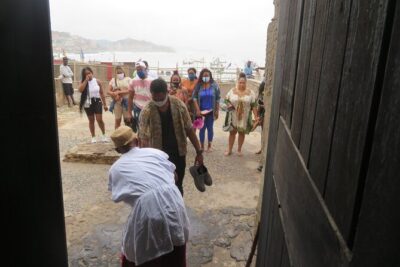
7-Day Private Cultural and Heritage Tour in Ghana
Read our review →Browse the lists this tour appears in