

Reviewed · TOURS
Explore Ghana Multi Day Tour
Ghana works best when you stop treating it like a checklist and start treating it like a conversation. This 7-day private circuit is built around that idea, with hands-on culture, history that you can walk through, and food you get to make yourself. I like how the trip blends iconic stops like the Elmina and Cape Coast castles with everyday places such as arts and craft markets and casket shops. I also like the comfort factor, since you get an air-conditioned vehicle, bottled water, and a trained guide who helps you move smoothly from city to city. The main drawback to plan for is pacing: you’ll cover a lot of ground, and you need a moderate fitness level for the park walk and the canopy walkway.
You’ll start in Accra, where you’re met at the airport and transferred to your hotel (check-in is at 3pm). From there, your team, often including guides such as Fuseini and Regina, helps you connect what you see to the people behind it. It’s also the kind of trip where the company’s style comes through, with extra care and hands-on support that some guests describe as feeling like family.
Key things to know before you go
- Private, your-group-only format means you can ask questions and set a comfortable pace.
- Two UNESCO sites in one swing: Elmina Castle (built 1482) and Cape Coast Castle (built 1652).
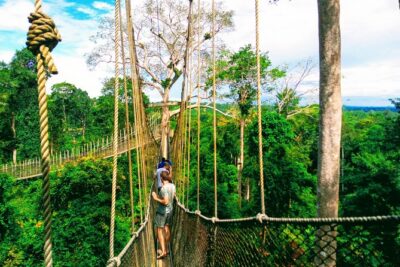
- Kakum National Park is not just a scenic stop: you’ll do the Kuntan Trail walk and the Canopy Walkway.
- Ashanti culture is hands-on with Ejisu Besease shrine history and craft village time.
- You get to cook classic dishes like fufu, ground nut soup, red-red, and palava sauce.
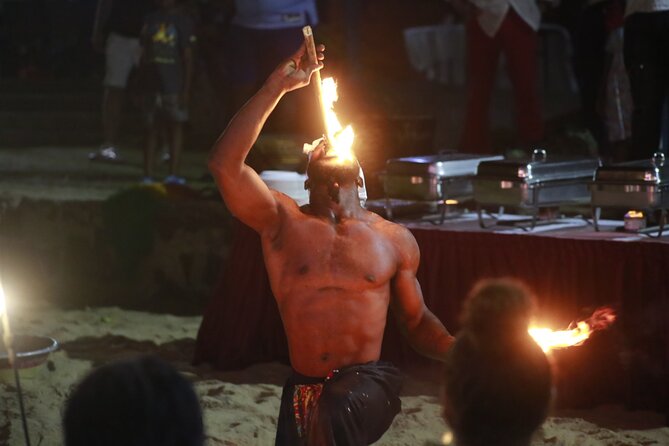
- A stop for performance and music: the Mesomagor Bamboo Orchestra show adds energy to the travel days.
Why Accra to Kumasi to the Coast works so well
This tour’s real strength is the way it links regions that feel different on the ground. Accra gives you modern Ghana energy and key institutions. Kumasi puts you in the heart of Ashanti life, with palaces, museums, and open-air market rhythm. Then the Central Region shifts the focus toward the coast, slavery-era history, and the emotional weight of places like the Door of No Return.
The other thing I like is the balance between head and hands. Yes, you’ll visit big historical sites. But you also spend time in places where you can see craft work, hear music, and practice cooking. That makes the trip easier to remember, because you’re not only watching, you’re participating.
More trips leaving Accra:
- The Cape Coast Day Tour
★ 5.0 · 525 reviews - Experience the Beauty, History and the Culture Of Accra in a Day
★ 5.0 · 323 reviews - The Cape Coast Tour
★ 5.0 · 177 reviews
Day 1 in Accra: airport meet-up and a smooth landing
On day one, you arrive in Accra and get met and assisted through your airport arrival. Then you’re transferred to your hotel, with hotel check-in at 3pm. This matters more than it sounds. Arriving day stress is real, and having a set landing plan helps you get your bearings fast.
If your flight lands early, you might find yourself waiting until check-in time. Use that time to hydrate, grab local orientation, and keep your evening low-key. You’ll appreciate it later when the days start moving faster.
Accra City Tour: Nkrumah Memorial, National Museum, casket shops, and crafts
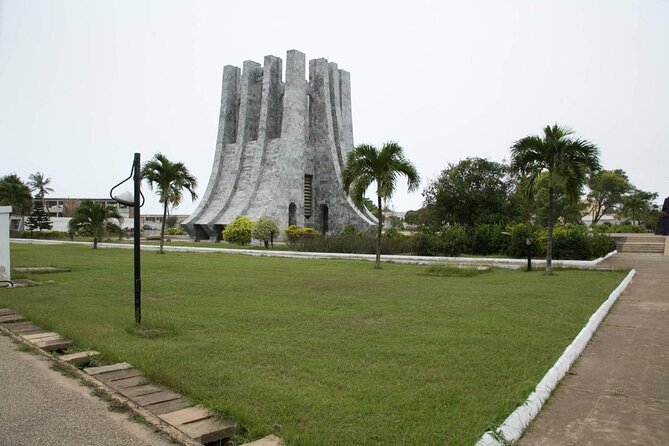
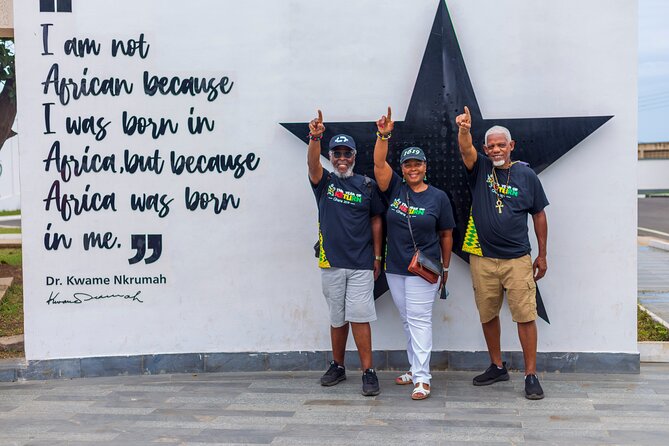
Accra on day two is a classic introduction to Ghana’s public face. You’ll visit the Kwame Nkrumah Memorial Park and the National Museum, two stops that help you understand Ghana’s modern political story and cultural context. If you want to make the rest of the trip click, start here. These places provide the baseline for what comes next in Kumasi and along the coast.
Then you’ll head to uniquely designed casket shops and arts and crafts market time. This is one of my favorite parts of the day because it shows Ghana’s creativity in a practical, visible form. Even if you’re not buying anything, the craft details are worth the stop, and the markets give you a chance to look at local materials and styles.
Tip for your visit: keep your camera ready, but also leave space in your bag for small purchases. You’ll see enough items across the week that you’ll want room for souvenirs, especially after the craft village stops in the Ashanti region.
Ashanti Country on day three: Ejisu Besease shrine and craft villages
Day three shifts you from Accra’s capital landmarks into Ashanti traditions and daily life. After breakfast, you depart for Kumasi, stopping at Ejisu Besease to visit an Ashanti ancestral shrine. The shrine was built around 1850 and is one of the few remaining examples of traditional Ashanti architecture. You’re not just looking at a structure. You’re learning about beliefs, history, and the bravery of the Ashantis in a way that feels grounded and human.
Along the drive, you pass scenic villages with traditional Ghanaian building styles. This is the part where you notice how communities shape their own environments. It can make the later palace museum visit feel less like a standalone attraction and more like a continuation.
Then you’ll visit a few Ashanti craft villages. You’ll observe craftsmen at work and have time to purchase souvenir gift items from a wide assortment of handicrafts. This is your best chance to buy pieces that feel personal and made by people you can actually see working.
A small consideration: craft villages can move quickly. If you see something you love, ask about price and shipping options on the spot. Don’t assume you’ll find the same item later.
A slower Accra day, if you have one spare:
- From Accra: Cape Coast, Elmina Castle & Kakum Park Day Tour
★ 4.6 · 144 reviews - Accra Detailed City Tour
★ 4.5 · 118 reviews - Accra Guided City Tour Experience
★ 4.7 · 88 reviews - Accra Guided City Tour Experience
★ 5.0 · 76 reviews
Kumasi day four: Manhyia Palace, Prempeh II, Okomfo Anokye Sword, and the market drive
After breakfast, day four focuses on Kumasi’s key cultural sites. You’ll visit the Manhyia Palace Museum, built by the British in 1925 to receive Asantehene Prempeh I when he returned from exile to resume residence in Kumasi. Today it functions as a museum, which helps you understand the political story behind the setting.
Next comes the Prempeh II Jubilee Museum and the Okomfo Anokye Sword. These stops connect leadership, symbolism, and cultural identity. If you’re the type who likes to understand what objects represent, this day will satisfy that urge.
You’ll also drive past Kumasi Central Market, one of the largest open-air markets in West Africa. You might not spend hours inside, but even a drive-by gives you a sense of how commercial life moves in this part of Ghana.
Later in the day, you head for Elmina. En route, you stop at the village of Mesomagor to see the Mesomagor Bamboo Orchestra. This performance uses bamboo percussion instruments and music and dance in a way that’s described as contagious. If you’ve been feeling “museum fatigue,” this stop works like a reset.
Elmina and Cape Coast on day five: UNESCO castles, Door of No Return, and cooking class
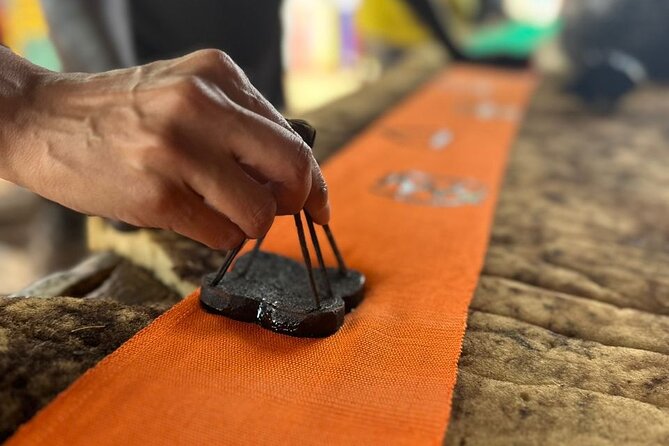
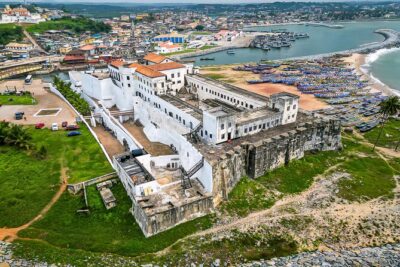
Day five is where the coast takes over. You start with Elmina Castle, a UNESCO World Heritage Site built in 1482 by the Portuguese. The castle is often noted as the first European structure built in sub-Saharan Africa. Standing in a place like this makes history feel heavy and close, so give yourself a mental pace. Don’t rush the guided portions.
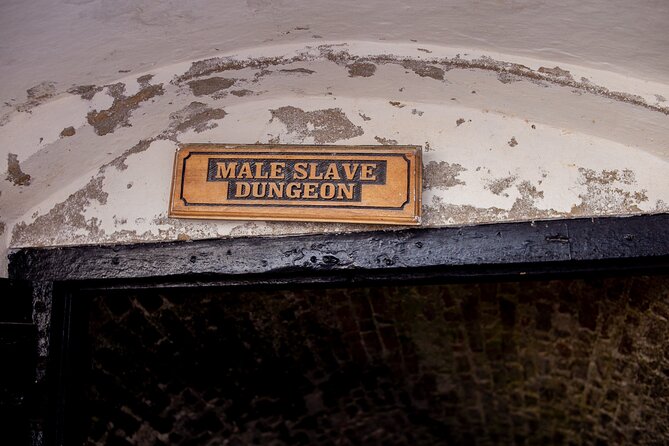
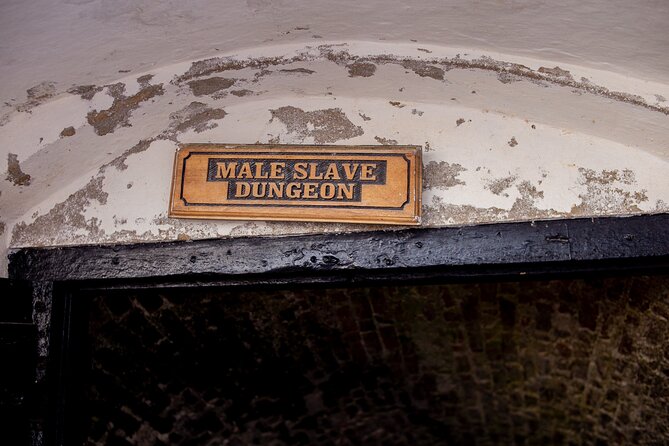
Then you head to Cape Coast Castle for a guided tour at the West Africa Historical Museum. Cape Coast Castle is also UNESCO, built in 1652 by the Swedes. This is where the infamous Door of No Return comes in. You’ll feel the emotional weight of the story here, and that’s exactly why the guided format helps. You’re not just walking through rooms, you’re being taught what you’re seeing and how it connects to people’s lives.
In the afternoon, you attend a cooking workshop where you learn to make fufu, ground nut soup, red-red, and palava sauce. You also sample popular foods. One practical note: the tour specifies that all dishes are made with purified water. That’s the kind of detail that matters when you’re managing stomach comfort on the road.
If you’re thinking about what to pack home, recipes are your best souvenir. You can recreate dishes later, and that turns the trip into something you carry beyond photos.
Kakum National Park and Abandze on day six: medicinal trees and a 100-foot canopy view
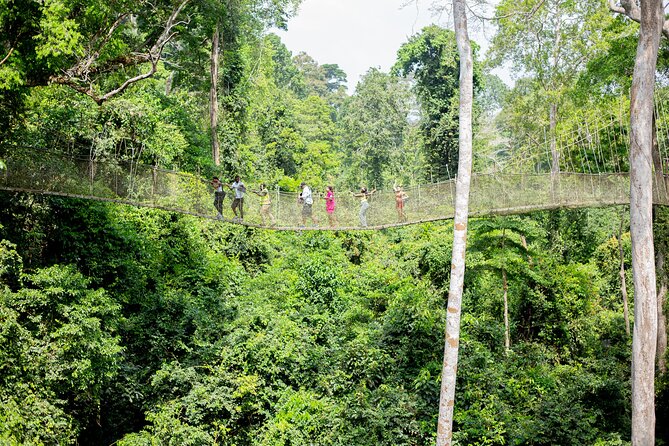
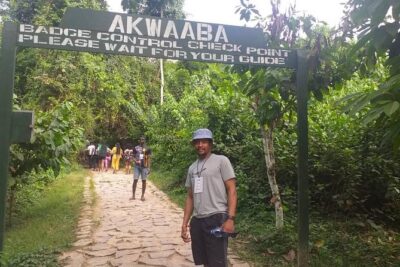
Day six is a nature day with a clear structure. After breakfast in Elmina, you travel to Kakum National Park. You’ll go on a morning walk of the Kuntan Trail, described as countless trees with medicinal properties. Even if you don’t memorize names, this walk is a reminder that forests have their own knowledge systems and uses.
Then comes the Canopy Walkway, suspended 100 feet from the forest ground. This is the part where your expectations should match the reality. You’re high enough to feel the drop, but you’re still in a controlled, established walkway setting. It’s scenic, yes, but it’s also a chance to see flora and fauna patterns from a new angle.
After the park, you drive back to Accra and stop briefly at the village of Abandze, the ancestral home of Louis Armstrong. It’s a short stop, but it’s a fascinating cultural link that helps the trip feel global in a grounded way.
You arrive in Accra by afternoon, and the rest of the day is free for last-minute shopping.
Day 7 wrap-up: last shopping and airport transfer
Day seven is your buffer day. You get free time for last-minute shopping and packing, then you’re transferred to the airport for your onward flight. In a trip like this, that last day matters. It prevents the classic problem where you rush shopping because you’re tired and the flight is looming.
Use the time to buy a few practical items you’ll actually use later, like small spices, locally made crafts, or gifts that are easy to pack. You’ll also want to take care of any paperwork or phone charging before the final transfer.
Price and value: is $2,705 per person actually fair?
At $2,705 per person for roughly seven days, this is not a budget hop. It’s a premium, private tour price. The way it can still feel like good value is in what it bundles.
You’re paying for an air-conditioned vehicle and private transportation, plus all fees and taxes and bottled water. You also get an experienced tour guide and accommodation in the listed properties, with breakfast included for six mornings. Those are the big cost buckets that often add up quickly in Ghana if you plan them yourself.
What’s not included is simply items not listed above. That usually means lunches and dinners are on you, and any extras you choose are separate. So my rule is: if you want a “no surprises” trip where your major logistics are handled, this price can make sense. If you mainly want flexibility and low daily spending, you might prefer a lighter, cheaper option.
Packing, pace, and what to ask your guide
You need moderate physical fitness. That’s because you’ll do the Kuntan Trail walk and the canopy walkway. If you have balance concerns or you get anxious at heights, tell your guide early. They can help you decide how to approach the walkway safely and comfortably.
For clothing, think warm days, cooler mornings, and sun protection. You’ll be outdoors for market time, craft village visits, and the park. Bring light layers and plan to cover up when you’re in indoor sites or traditional areas.
Two practical questions that improve the trip fast:
- Ask your guide how much time you’ll have at markets and craft villages so you can decide what you want to buy before the schedule moves on.
- Ask where you’ll be able to pause for water and rest breaks during travel days.
Also, if you care about food comfort, you’ll like the fact that the cooking workshop uses purified water. Still, keep drinking water as you go, especially between cities.
Who should book this Ghana tour, and who might not love it
This tour fits best if you want a structured route with a guide doing the connecting work. It’s also ideal if you’re interested in multiple types of cultural experiences: museums and memorials, Ashanti traditions, UNESCO castle history, a rainforest park, and hands-on cooking.
If you love history but dislike being rushed, the private format helps. You’re not sharing the day with strangers, and that can make it easier to ask follow-up questions.
You might think twice if you want a slow, unstructured trip with lots of free days. The schedule is packed with stops, and your days will move.
Should you book this Ghana multi-day tour?
I’d book it if you want a guided Ghana circuit that connects politics, culture, and coastal history in one trip, while still giving you practical experiences like cooking and craft village time. I also like that it’s organized around real logistics, airport transfers, private transportation, air-conditioned comfort, and breakfast included.
I would not book it if you need lots of free time to wander independently, or if you know you cannot do a canopy walkway style experience. For many people, the tradeoff is worth it, because the trip covers big emotional and scenic ground with a team focused on making the days run well.
If you book, do one thing before you go: decide what you want to remember most, history in the castles, Ashanti cultural sites, or the park and cooking. Then ask your guide to help you focus your attention during those stops.
FAQ
Where does the tour start, and what time does it begin?
The tour starts in Accra, Ghana, with a start time listed as 6:00 am.
How long is the Explore Ghana Multi Day Tour?
The duration is listed as 7 days, approximately.
Is pickup offered?
Yes, pickup is offered, and the tour includes airport meet and transfer service on arrival and departure.
What’s included in the price?
Included items are an air-conditioned vehicle, private transportation, all fees and taxes, bottled water, an experienced tour guide, accommodation in the listed properties, and breakfast (6).
Is it a private tour?
Yes. It’s a private tour or activity, and only your group will participate.
What food experiences are part of the tour?
You attend a cooking workshop where you learn to make fufu, ground nut soup, red-red, and palava sauce. The schedule also includes food sampling, and it notes that dishes are made with purified water.
Which major sites are visited during the trip?
The tour includes Elmina Castle (UNESCO) and Cape Coast Castle (UNESCO), plus Kakum National Park with the Kuntan Trail and the Canopy Walkway.
Does the tour require good weather?
Yes. The experience requires good weather, and if it’s canceled due to poor weather you will be offered a different date or a full refund.
What is not included?
Anything not listed in the included section is not included, stated as items not listed above.
Newly reviewed around Accra
- Private Slave Castles and Dungeons Tour in Cape Coast, Ghana★ 5.0 · 3 reviews
- Day Tour to Kakum National Park, Cape Coast and Elmina Castles★ 5.0 · 3 reviews
- Half-Day Guided Fabric Tour in Ghana★ 5.0 · 3 reviews
- Cultural Tour Of Ghana And South Africa 12 Days★ 5.0 · 3 reviews
- Cape Coast Day Tour★ 5.0 · 3 reviews
- Experience Aburi Botanical Gardens And Boti Water Falls In A Day.★ 5.0 · 3 reviews
- Experience the Culture of Ashanti Kingdom in 5days★ 5.0 · 3 reviews
- Full Day Accra Guided Tour★ 5.0 · 3 reviews
Tours, compared.

Cape Coast, Elmina Castle & Kakum Park Day Tour
Read our review →
Boti Falls, Umbrella Rock, Aburi Gardens & Cocoa Farm Tour
Read our review →Browse the lists this tour appears in